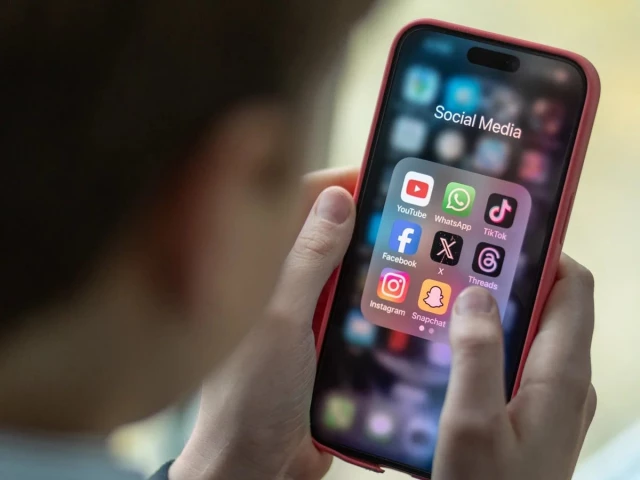
A petition filed before the Federal Constitutional Court (FCC) has urged the government to restrict social media access for children under 16 and introduce mandatory age-verification measures to protect minors from cyberbullying, sexualised content, addiction and other harmful online material.
The petitioners have also sought stronger safeguards for children on television, asking the Pakistan Electronic Media Regulatory Authority (PEMRA) to strictly enforce its Code of Conduct and prevent the broadcast of indecent scenes and depictions of alcohol during hours when children are likely to be watching.
The petition was filed by Supreme Court advocate Sheraz Zaka and High Court advocate Ch Moien Akhtar. The Federation of Pakistan, Ministry of Information Technology, National Cyber Crime Investigation Agency (NCCIA), PEMRA and the Social Media Protection Regulatory Authority have been named as respondents.
The petition calls on the federal government to introduce new legislation or amend the Prevention of Electronic Crimes Act (PECA), 2016, to prohibit social media access for children below 16 and establish an effective system for verifying users’ ages.
The petitioners argued that Pakistani law currently does not specifically impose an under-16 restriction or require social media platforms to conduct mandatory age verification.
US Accuses Chinese AI Firms of Malicious AI Technology Copying
They cited countries including Australia, Italy and Brazil as examples of jurisdictions that have introduced restrictions on social media use by children, arguing that similar measures could be implemented in Pakistan.
The petitioners said children are increasingly exposed to cyberbullying, social media addiction, sexualised content and the glorification of alcohol, which they warned could negatively affect their mental and moral development.
They also alleged that PEMRA has failed to effectively enforce its Code of Conduct in relation to television dramas and advertisements. According to the petition, some programmes have featured intimate scenes and depictions of alcohol at times when children could be watching.
The petitioners said they had separately approached PEMRA over the alleged depiction of alcoholic drinks and intimate scenes involving young actors and actresses in certain drama serials.
The plea argued that the alleged failure of authorities to take effective action violates Articles 9, 14, 25, 25-A and 35 of the Constitution. It described the matter as one of public importance involving fundamental rights and the protection of Pakistan’s younger generation.
The petition also invoked the Convention on the Rights of the Child, arguing that the state has a responsibility to protect children’s development and wellbeing.
The petitioners further highlighted Pakistan’s large out-of-school population, citing an estimated 25 million children who are not attending school. They asked the court to direct authorities to ensure education for children up to the age of 16 and take measures to address school dropouts and the country’s wider education crisis.
The petition also seeks directions for the NCCIA and Social Media Protection Regulatory Authority to work with social media companies to introduce effective parental-control mechanisms and other safeguards for minors.
The petitioners referred to a Lahore High Court judgment, PLD 2020 Lahore 137, arguing that courts have previously issued directions to the state concerning legislation related to human rights and social issues.
The FCC has been asked to issue any other orders it considers necessary to protect children from harmful social media and broadcast content.
The move follows a unanimous resolution passed by the Punjab Assembly last week calling for measures to restrict social media access for children under 16. The resolution, moved by Punjab Child Protection and Welfare Bureau Chairperson and MPA Sarah Ahmed, urged effective legislation to protect children and safeguard their digital future.
It also called for social media companies to comply with child-protection standards and for federal and provincial institutions to establish a coordinated system to protect children online.
Several countries are also tightening controls on children’s access to social media. Australia became the first country to ban social media access for children under 16 in December, covering platforms including TikTok, YouTube, Instagram and Facebook.
France’s top court recently blocked a proposed ban on social media access for children under 15, ruling that the legislation raised concerns over freedom of expression. The decision dealt a setback to President Emmanuel Macron’s efforts to introduce tighter restrictions.
The European Union has also indicated that it wants stronger safeguards against harmful social media features affecting children.
Social media companies have generally opposed blanket bans, arguing that platforms already have age restrictions and child-safety measures. Major platforms including TikTok, Facebook and Snapchat generally require users to be at least 13 to create accounts.
Child-protection advocates, however, say existing safeguards remain inadequate, pointing to evidence from several European countries showing that large numbers of children under 13 continue to maintain social media accounts.