US cybersecurity and law enforcement agencies have accused several Chinese AI companies of using a technique known as AI distillation to copy capabilities from advanced American AI models.
The allegations were outlined in a joint statement from the US National Security Agency, the Cybersecurity and Infrastructure Security Agency and the FBI. The agencies named DeepSeek, Moonshot AI, Alibaba, MiniMax and StepFun, saying the companies had used variants of US-developed AI models to train their own systems.
US officials described the activity as “aggressive, malicious and targeted” and said it was being carried out at an industrial scale. They also alleged that the companies were likely conducting the activity with awareness from the Chinese government.
AI distillation is a widely used technique in artificial intelligence development. It involves training a smaller or less expensive model using outputs generated by a larger and more capable model. The process can reduce training costs and help developers build efficient AI systems.
Haaland Double Gives Manchester City Victory Over Porto
The US agencies, however, alleged that the Chinese companies were using the technique to replicate sophisticated capabilities developed by American AI firms rather than relying solely on their own research and development.
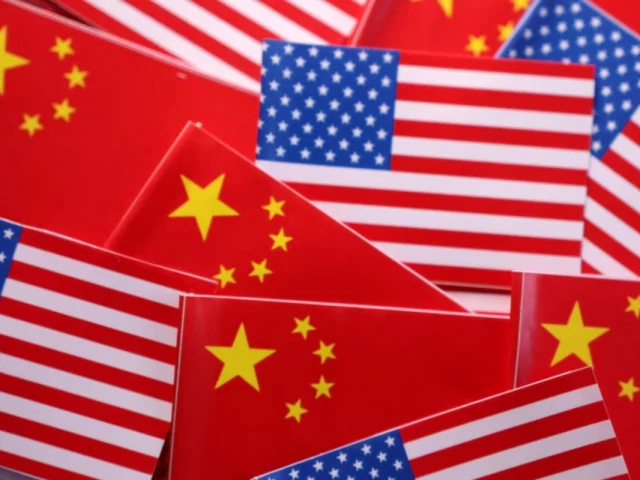
The accusations come at a sensitive moment in US-China relations, with artificial intelligence emerging as a major area of competition between the two countries.
The timing is also notable as the Trump administration prepares for Chinese President Xi Jinping’s expected visit to the United States later this month. Washington and Beijing are separately preparing for discussions on AI safety risks in a dialogue planned for mid-September.
The latest allegations add another layer to growing tensions surrounding AI technology, intellectual property and national security. Washington has increasingly focused on restricting China’s access to advanced computing technology and artificial intelligence capabilities, while Chinese companies have rapidly expanded their presence in the global AI market.
The US agencies did not publicly provide detailed evidence for each individual allegation in the statement, but their warning signals growing concern within Washington over the use of American AI systems as a source of technological development by Chinese competitors.
The dispute highlights the broader challenge facing the AI industry: how to balance the legitimate use of model outputs for research and development with concerns over unauthorized replication of advanced capabilities.
As competition between the world’s two largest economies intensifies, AI technology is increasingly becoming a strategic issue involving commercial interests, cybersecurity and national security.