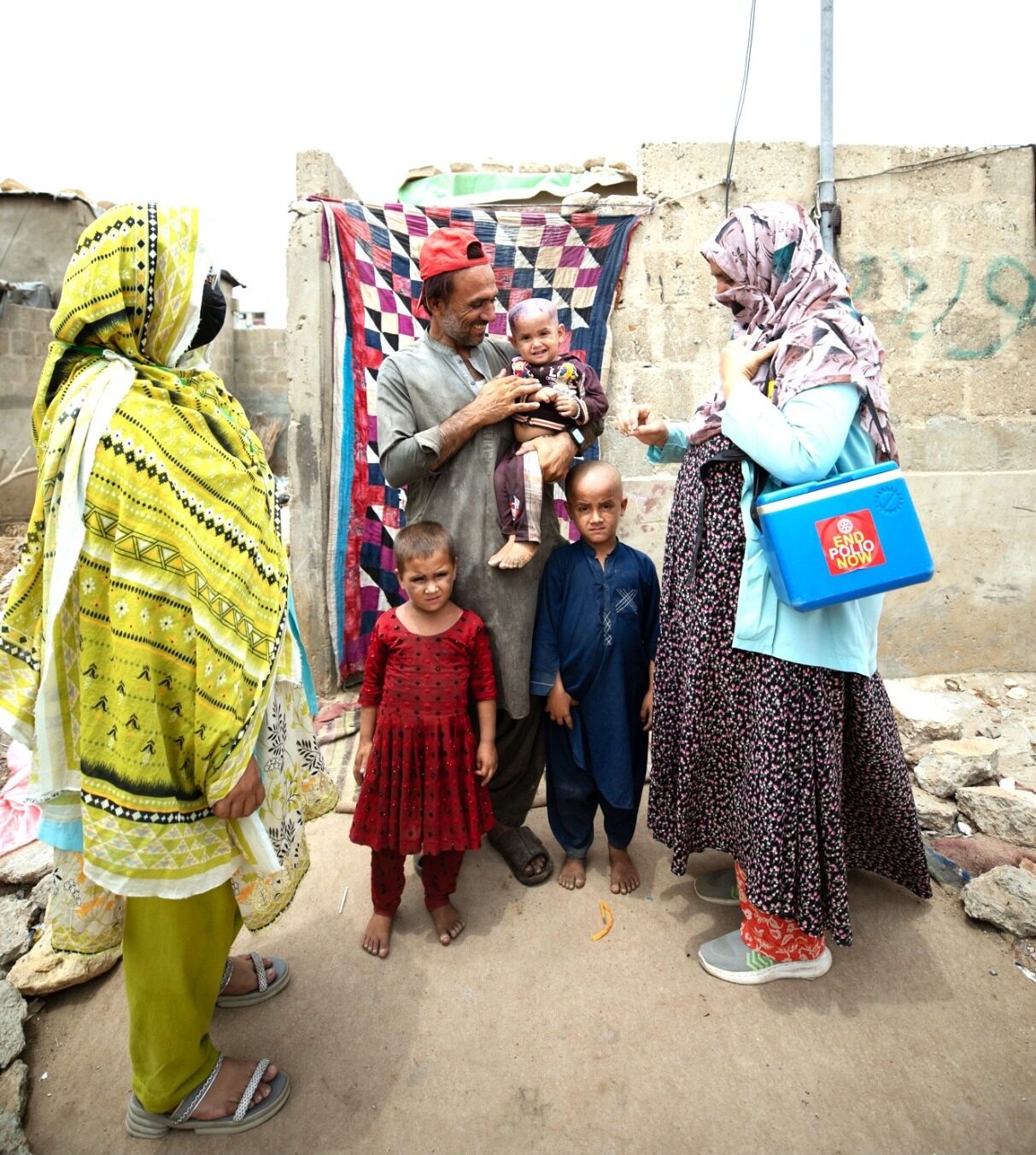
Rotary International has reaffirmed its long-standing commitment to eradicating polio in Pakistan, highlighting progress in the fight against the wild poliovirus while calling for continued government support, community engagement and vaccination efforts.
Pakistan and Afghanistan remain the only two countries where wild poliovirus is endemic, making sustained efforts to reach every child with polio vaccines essential to achieving global eradication.
World Polio Day, observed annually on October 24, was established by Rotary to honour Dr Jonas Salk, who developed the first safe and effective polio vaccine more than 70 years ago. The day provides an opportunity to recognise progress and renew the global commitment to eliminating the disease.
Rotary’s Role in Global Polio Eradication
Rotary was the first organisation to envision a polio-free world and helped establish the Global Polio Eradication Initiative (GPEI) in 1988. At the time, polio paralysed hundreds of thousands of children annually across 125 countries.
According to Rotary, global polio cases have since declined by more than 99.9 per cent, with eradication efforts helping spare more than 20 million people from paralysis.
Rotary has contributed more than US$3 billion to the global effort, including US$1.3 million from Rotary members in Pakistan, according to Rotary International President Olayinka Hakeem Babalola.
“We have contributed more than US$3 billion—including US$1.3 million from Rotary members in Pakistan—and invested more than half a billion of these funds and countless volunteer hours to protect over 45 million children in Pakistan from this paralyzing disease,” Babalola said.
Babalola previously helped lead polio eradication efforts in Nigeria, which formed part of Africa’s journey towards certification as free of wild poliovirus in 2020.
He said Africa’s achievement demonstrated that ending polio in Pakistan and eliminating the disease worldwide was possible with collaboration and sustained political and financial support.
Community Engagement Remains Essential
Rotary members continue to advocate for government backing, promote awareness about polio immunisation and encourage communities to participate in vaccination campaigns.
In Pakistan, vaccine refusals remain a challenge for health workers seeking to reach every child. Rotary says building community trust and addressing local needs are important parts of overcoming these barriers.
Aziz Memon, chair of Rotary’s Pakistan National PolioPlus Committee, said Pakistan had recorded only a handful of reported cases during 2026, highlighting progress while emphasising the importance of maintaining public confidence.
“Pakistan is demonstrating strong progress with only a handful of reported cases this year, and in order to safeguard our credibility and maintain trust, we are continuing to address other community needs,” Memon said.
He said the committee had supported the establishment of water filtration plants across Pakistan, community resource centres, team support centres for frontline workers and permanent transit posts designed to help reach children travelling between locations.
These initiatives aim to strengthen community relationships and support vaccination teams in reaching children who might otherwise be missed during immunisation campaigns.
Sustained Global Support Needed to Finish the Job
Rotary and its GPEI partners have the expertise and tools needed to eliminate polio, but continued commitment from governments, donors and international partners remains critical.
With wild poliovirus still circulating in Pakistan and Afghanistan, maintaining vaccination coverage, addressing community concerns and supporting frontline workers remain central to the eradication effort.
On World Polio Day, Rotary is urging stakeholders to sustain their efforts until every child is protected and polio is eradicated worldwide.