The business budget for 2026–27 has come under sharp criticism from Pakistan’s business community, with the Businessmen Panel (BMP) warning that current fiscal measures could threaten industrial stability and discourage investment.
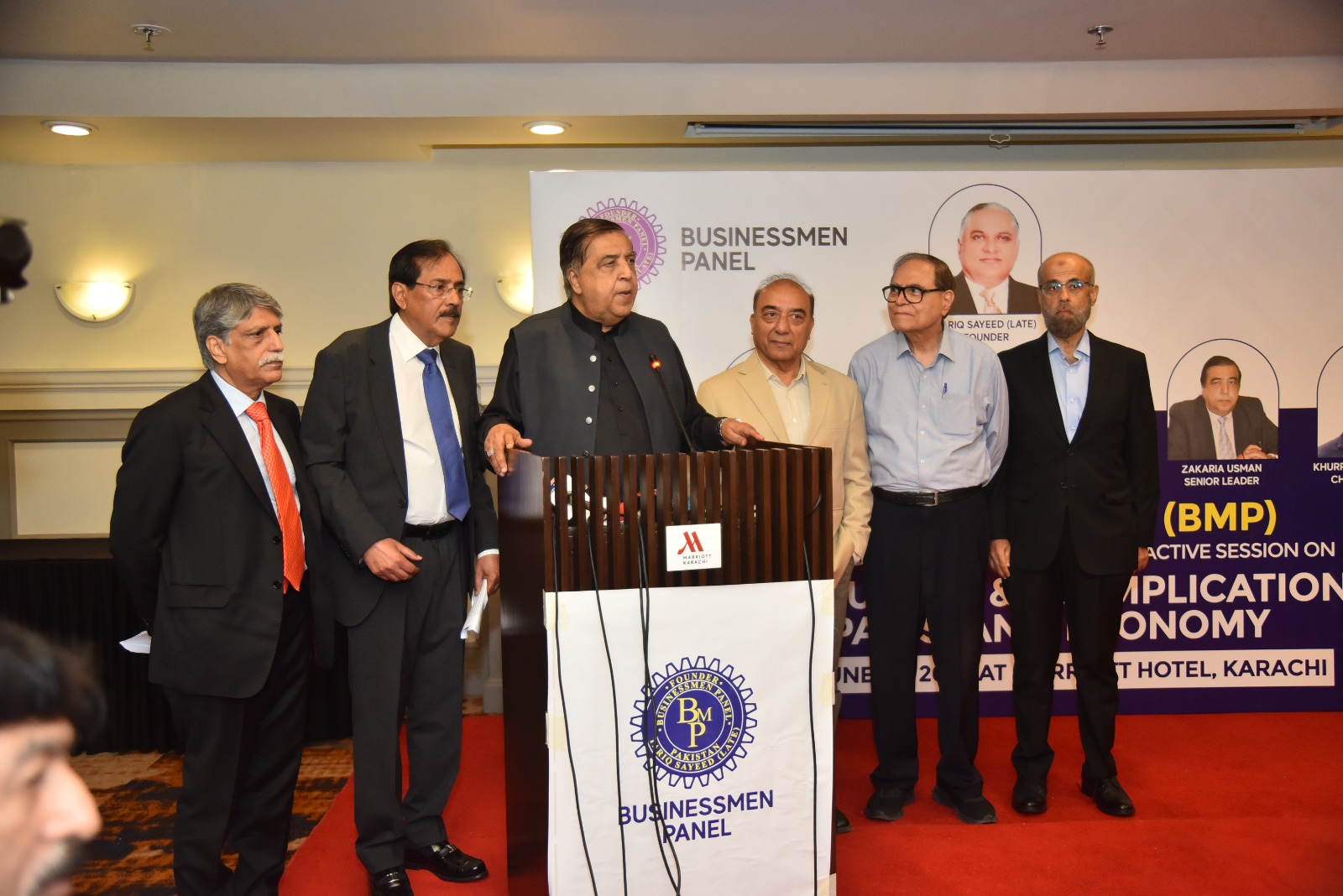
The concerns were raised at a seminar in Karachi titled “Federal Budget & Its Implications for Pakistan’s Economy,” where corporate leaders, industrialists and trade representatives discussed the government’s fiscal direction.
The forum concluded with the Karachi Declaration, which called for urgent reforms including rationalisation of energy tariffs, removal of discretionary tax powers and the introduction of a Taxpayers’ Bill of Rights.
Business leaders argued that rising production costs, high interest rates and energy prices are weakening Pakistan’s manufacturing competitiveness. They warned that continued pressure on compliant taxpayers could lead to industrial slowdown and capital flight.
Industry representative Engineer M.A. Jabbar said escalating electricity and gas tariffs had reduced Pakistan’s regional competitiveness. He called for a predictable cap on utility prices and relief on import duties for raw materials.
Other participants highlighted tax reforms announced in the budget, including adjustments in income tax slabs, reduced withholding taxes on property transactions and tariff rationalisation measures aimed at improving industrial efficiency.
However, concerns were raised over the Federal Board of Revenue’s enforcement approach. Federal Board of Revenue came under criticism for expanding audit powers and increasing pressure on existing taxpayers rather than widening the tax base.
Business leaders said the focus should shift toward bringing new sectors into the tax net instead of tightening scrutiny on compliant filers.
Speakers also pointed to broader structural issues in the economy, including high domestic borrowing, limited export diversification and underdeveloped trade infrastructure. They argued that these challenges were limiting long-term growth potential.
Proposals discussed during the event included establishing free trade zones, expanding regional trade with Central Asia and improving financial integration with neighbouring markets to boost exports.
Participants also urged the government to adopt digital governance systems, including artificial intelligence tools, to reduce corruption and improve transparency in administrative processes.
The Karachi Declaration also called for legal protections for taxpayers, including guaranteed refund timelines, due process in tax disputes and safeguards against coercive recovery measures during ongoing litigation.
Business leaders concluded that without urgent policy reforms, Pakistan risks weakening investor confidence and slowing industrial growth at a critical economic juncture.