China has reiterated its firm opposition to United States arms sales to Taiwan, ahead of US President Donald Trump’s scheduled visit to Beijing and his upcoming meeting with Chinese President Xi Jinping.
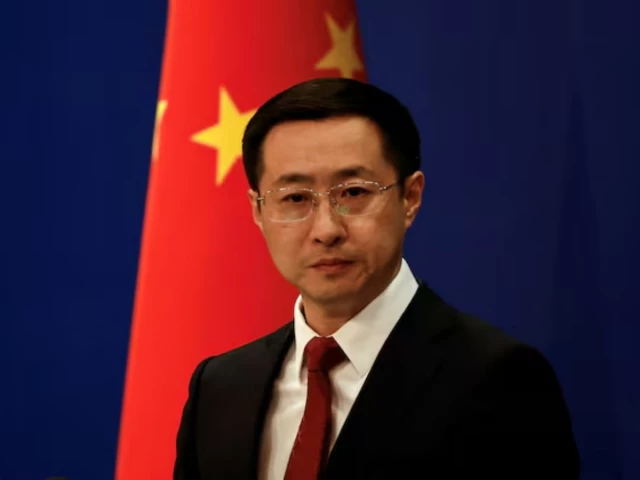
Chinese Foreign Ministry spokesperson Guo Jiakun said in Beijing that Beijing’s stance on US arms sales to what it calls “China’s Taiwan region” remains “consistent and clear,” stressing that China strongly opposes any military support provided by Washington to Taipei.
The remarks come as President Trump confirmed he plans to discuss US arms sales to Taiwan directly with President Xi during their high-level talks in Beijing this week. According to reports cited by The New York Times, a bipartisan group of US senators has urged the administration to proceed with a delayed $14 billion arms package for Taiwan, which has reportedly been stalled at the State Department for several months.
Guo Jiakun said the upcoming summit between Trump and Xi will include “in-depth exchanges” on China–US relations as well as broader global security and development issues.
Tensions surrounding Taiwan remain a major flashpoint in US–China relations, with Beijing viewing the island as part of its sovereign territory, while Washington maintains strategic ties and defense support for Taipei.
In addition to Taiwan, Trump is also expected to raise the case of jailed Hong Kong media tycoon Jimmy Lai during his discussions with Xi. Lai was sentenced earlier this year to 20 years in prison under national security-related charges.
Responding to questions on the matter, Guo said Hong Kong affairs are strictly China’s internal issue, adding that the central government fully supports Hong Kong’s judicial authorities in carrying out their duties according to the law.
On separate US sanctions targeting individuals and companies accused of helping Iran’s Islamic Revolutionary Guard Corps export oil to China, Beijing strongly rejected the measures. Guo said China opposes unilateral sanctions that are not authorized by the United Nations Security Council or grounded in international law.
He added that China will protect the legitimate rights and interests of its companies and citizens, and emphasized that the priority in the Middle East should be to prevent further escalation of conflict rather than politicizing or blaming China.
The latest diplomatic exchanges come at a sensitive moment as Washington and Beijing prepare for high-stakes talks covering trade, security, and geopolitical tensions across multiple regions.