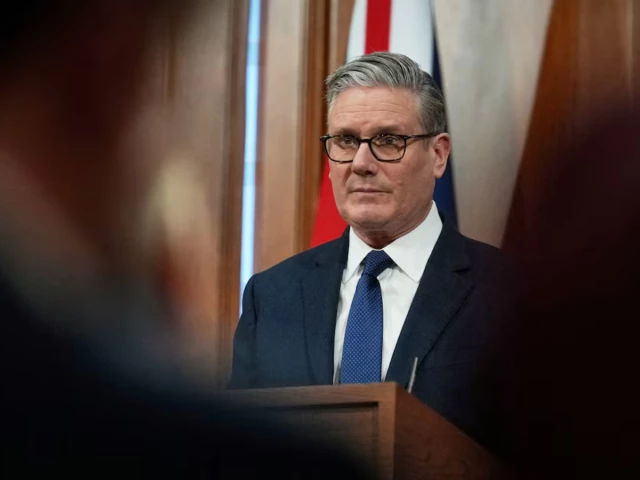
LONDON: British Prime Minister Keir Starmer on Monday accepted responsibility for Labour’s disappointing performance in last week’s elections, describing the results as “very tough” while insisting he would not step away from leadership during a period of global uncertainty.
Speaking at an event in London, Starmer acknowledged the scale of the setback, saying Labour had lost several “brilliant representatives,” adding that the outcome was painful for both the party and its supporters.
“The election results last week were tough, very tough. We lost some brilliant Labour representatives; that hurts, and it should hurt. I get it, I feel it, and I take responsibility,” Starmer said.
The British premier also addressed criticism emerging from within his own party, admitting there were “doubters” among Labour ranks. However, he vowed to prove critics wrong and continue leading the country through what he described as one of the most dangerous global periods in recent history.
“I take responsibility for not walking away and not plunging our country into chaos,” he said.
Starmer used the speech to renew his commitment to strengthening ties with Europe, saying Britain must return to the center of European cooperation. He argued that Brexit had weakened the country economically and politically while failing to reduce migration.
“Brexit made Britain poorer and weaker,” he said, noting that migration levels had increased despite promises made during the referendum campaign.
Labour suffered major setbacks in elections held across Scotland, Wales, and 136 English local authorities — the biggest electoral test since the 2024 general election. The party endured a historic defeat in the Welsh Senedd, while the Scottish National Party retained power in the Scottish Parliament for a fifth consecutive term.
Meanwhile, Reform UK continued its political rise by gaining more than 1,450 council seats, building on its strong performances in local government elections over the past year.
Political analysts say the results have intensified pressure on Starmer’s leadership and raised fresh questions about Labour’s electoral strategy ahead of future national contests.