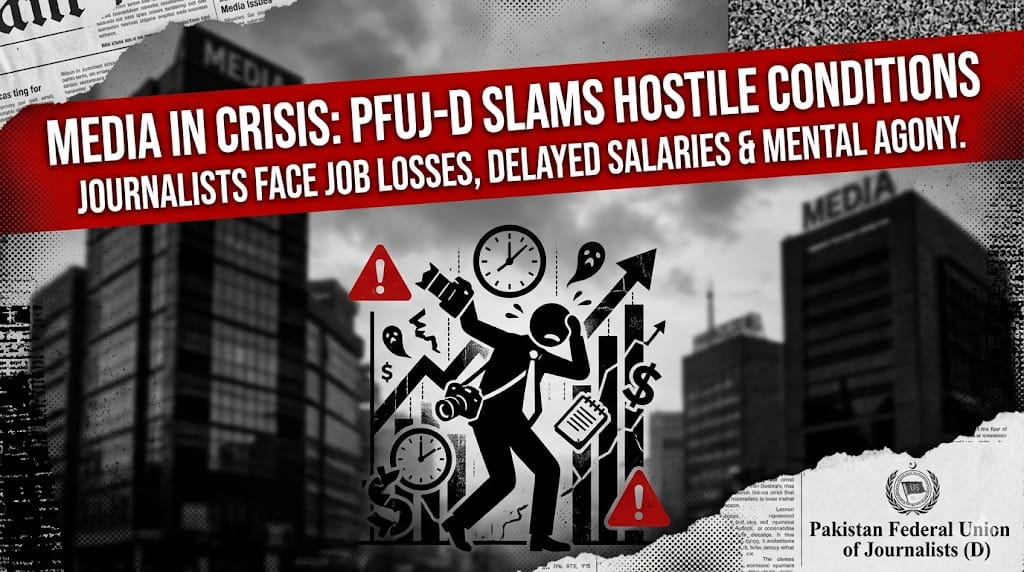
Karachi: The Pakistan Federal Union of Journalists (Dastoor) has expressed serious concern over what it describes as a deteriorating and “hostile environment” in several media organizations across Pakistan, warning that delayed salaries, job insecurity, and workplace pressure are putting journalists’ health and safety at risk.
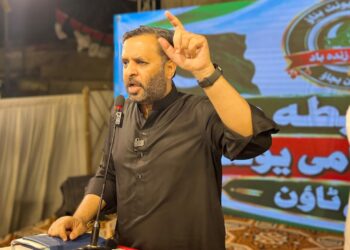
In a joint statement, PFUJ (D) President Haji Mohammad Nawaz Raza and Secretary General AH Khanzada strongly criticized the increasing use of “third-party interviews” at Samaa TV, alleging that such practices are being used to intimidate and harass employees.
The leadership also voiced concern over what they termed “anti-worker policies” at several media houses including Aaj TV, Bol TV, Dunya News, NTM News, GNN, and Suno TV.
Allegations of workplace stress and health crisis
PFUJ (D) claimed that mounting workplace pressure has created a severe mental health crisis among media workers. The union alleged that a journalist in Karachi, identified as Moeezuddin, died due to a brain hemorrhage caused by work-related stress. It further claimed that another employee recently passed away while on duty at Samaa TV, while several others are suffering from serious psychological distress.
The union stated that notices issued under the framework of “third-party interviews” at Samaa TV have triggered fear among staff, affecting their mental well-being and job security.
Salary delays and layoffs spark outrage
The journalists’ body also highlighted worsening financial instability in the media sector, alleging widespread salary delays and layoffs:
- At Aaj TV, salaries reportedly remain unpaid from February to April
- Bol TV is accused of not paying salaries for March
- NTM News staff allegedly have not received wages since February
- Dunya News is accused of issuing termination notices to employees, which PFUJ termed “economic murder”
The union said delayed salary payments have become routine in many media houses, effectively reducing annual salary cycles and violating labor rights.
Call for government action
PFUJ (D) urged the government and the Ministry of Information to take immediate notice of the situation and launch an inquiry into reported deaths and workplace conditions in media organizations. It also demanded timely payment of salaries and stronger enforcement of labor laws.
The leadership emphasized that if urgent corrective measures are not taken, the growing exploitation and financial instability could severely damage the country’s media industry, which they described as the “fourth pillar of the state.”