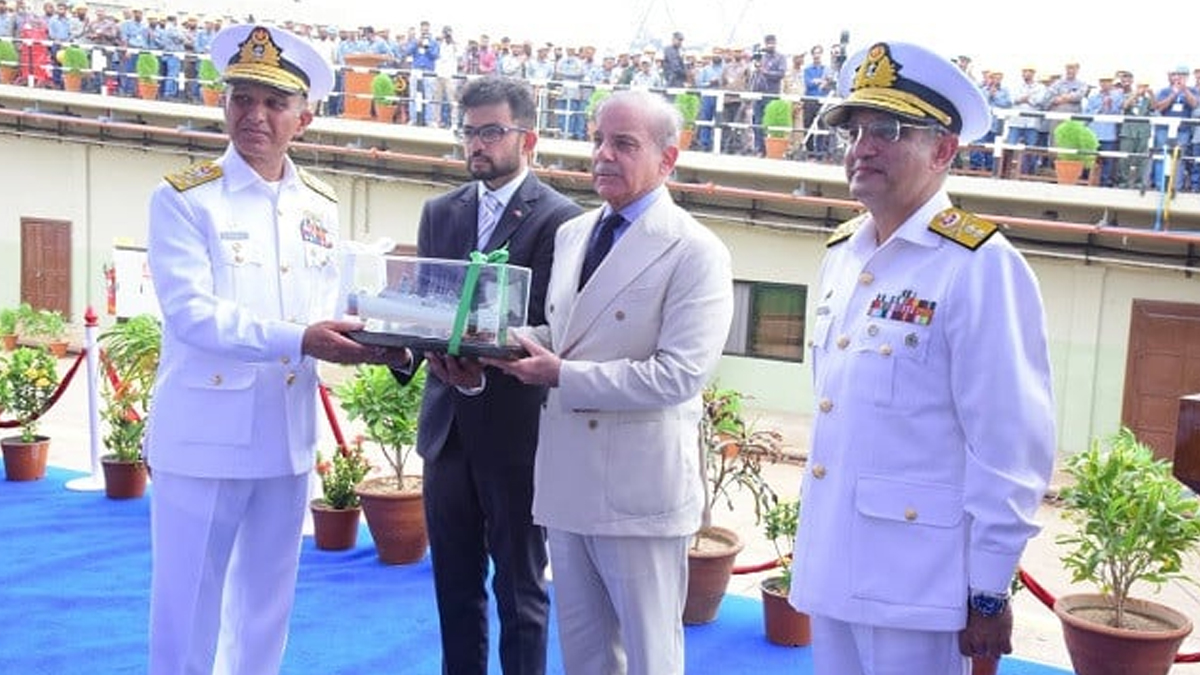
Islamabad: Pakistan’s civil and military leadership on Saturday reiterated their firm commitment to defending the country’s sovereignty, warning that any act of aggression aimed at undermining Pakistan would be met with an “immediate, befitting and full-spectrum response,” as the nation marked the first anniversary of “Marka-e-Haq.”
The term “Marka-e-Haq” refers to the 2025 Pakistan-India conflict that began following the April 22 Pahalgam incident and concluded with a ceasefire on May 10 after the launch of Operation Bunyanum Marsoos.
In an official statement issued by the Prime Minister’s Office, Prime Minister Shehbaz Sharif paid tribute to the martyrs and their families, stating that they stood like a “steel wall” in defence of the homeland.
He said the day represented gratitude to Allah Almighty for His blessings and a reminder of Pakistan’s resilience in the face of adversity, adding that the armed forces had delivered a coordinated and decisive response across land, air, sea, and cyber domains.
The prime minister praised the Pakistan Armed Forces for what he described as their “well-synchronised operational excellence,” saying it had demonstrated Pakistan’s capability to defend itself while maintaining its identity as a peace-loving nation that cannot be intimidated.
He further stated that Marka-e-Haq had become a historic example of Pakistan achieving dominance against an aggressor, adding that the enemy’s illusions of superiority were shattered during the conflict.
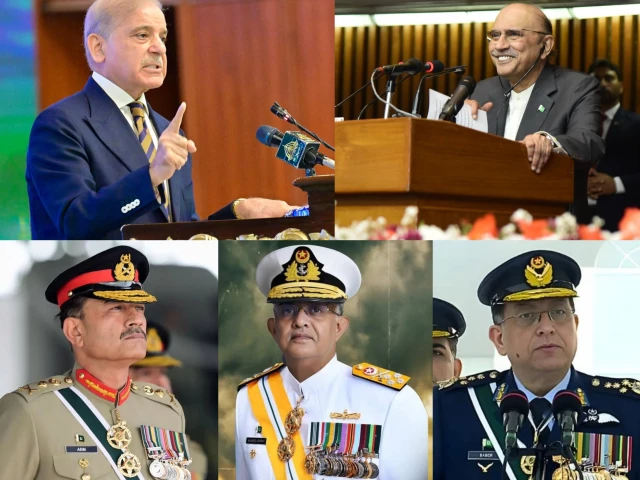
Paying tribute to Chief of Defence Forces and Chief of Army Staff Field Marshal Asim Munir, along with the Air Chief and Naval Chief, the prime minister said their leadership, alongside the sacrifices of officers and soldiers, had “written a new chapter” in Pakistan’s military history.
He reiterated Pakistan’s commitment to peace while warning that any future aggression would be met with a decisive response. He also reaffirmed the government’s resolve to eliminate terrorism and ensure internal stability.
On the Kashmir dispute, the prime minister said no resolution in South Asia could be complete without addressing the issue in line with United Nations resolutions and the aspirations of the Kashmiri people.
He further highlighted Pakistan’s diplomatic role in regional peace efforts, stating that the country had contributed constructively to mediation efforts in the US-Iran situation and was increasingly being recognized as a responsible global actor.
President Asif Ali Zardari also paid tribute to the armed forces and the nation, praising the leadership of Field Marshal Asim Munir and the professionalism of the Pakistan Air Force and Navy.
He said Pakistan had demonstrated both restraint and strength in response to aggression, while making it clear that its defensive capabilities remain robust.
The president reiterated Pakistan’s stance on Kashmir, describing it as an unresolved international dispute and reaffirming continued diplomatic, political, and moral support for the Kashmiri people.
He termed India’s suspension of the Indus Waters Treaty as “water aggression,” stressing that water is a lifeline for millions of Pakistanis.
He also warned against the use of Afghan territory for terrorism against Pakistan, calling for regional cooperation to eliminate militancy for lasting peace.
According to the Inter-Services Public Relations (ISPR), the military leadership—including Field Marshal Asim Munir, Naval Chief Admiral and Air Chief Marshal—congratulated the nation on the anniversary, calling Marka-e-Haq a symbol of courage, unity, and operational excellence.
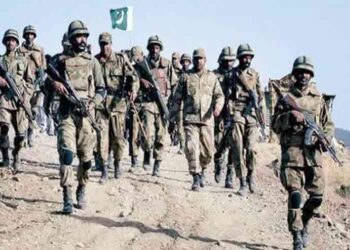
The ISPR said the armed forces demonstrated “superior capability across multiple domains,” including land, air, sea, cyber, and information warfare, while countering hybrid threats and disinformation campaigns.
It added that the success strengthened national confidence and reinforced Pakistan’s position as a “regional stabilizer with credible deterrence capability.”
Across the country, ceremonies were held to honour martyrs and veterans, with floral tributes and special prayers offered for their sacrifices.
The military leadership reaffirmed that Pakistan remains fully prepared to confront all internal and external threats, stressing that national unity and public support remain central to its defence doctrine.