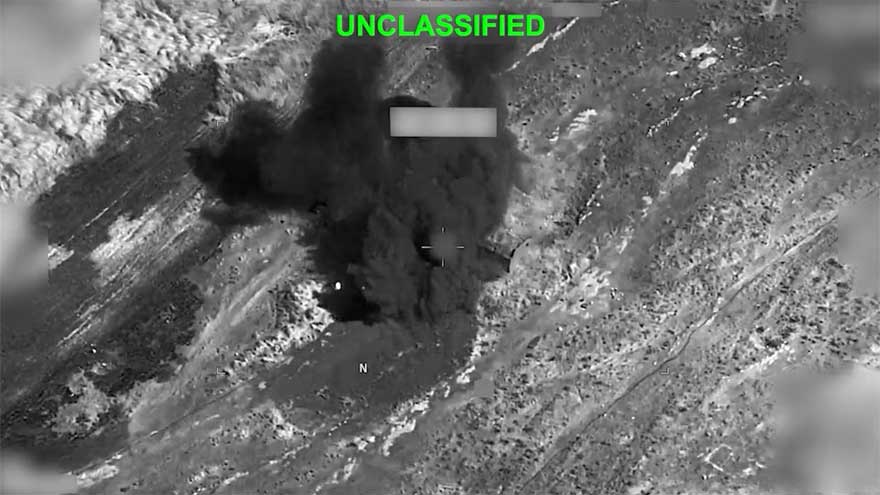
Hormuz Conflict: US forces carried out strikes against Iran for a ninth consecutive day on Monday as concerns grew over shipping in the Strait of Hormuz. Iran claimed two oil tankers exploded and became immobilised in the strategic waterway.
Andy Burnham Labour Leader to Become Britain’s Prime Minister
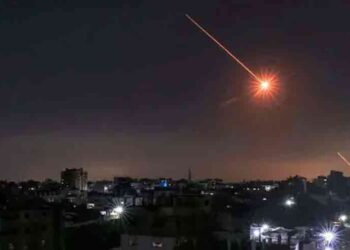
The Islamic Revolutionary Guard Corps (IRGC) said it launched ballistic missiles at US military targets in Jordan, Kuwait and Syria. It claimed the attacks targeted Aqaba Airport, Al-Adiri Camp, Ali Al Salem Air Base and other US military assets.
Meanwhile, Bahrain’s interior ministry reported that warning sirens sounded across the country. The Kuwaiti military also said it intercepted hostile drones during an Iranian attack.
The latest escalation follows the collapse of an interim ceasefire agreement reached a month ago. As a result, fighting between the United States and Iran has intensified, increasing pressure on one of the world’s busiest energy shipping routes.
US Central Command said it had begun a new wave of strikes to weaken Iran’s ability to threaten commercial vessels operating through the Strait of Hormuz. However, it did not disclose additional operational details.
At the same time, Iran’s semi-official Tasnim news agency reported explosions in several cities, including Tabriz, Chabahar, Konarak, Bandar Mahshahr and Bandar Imam Khomeini, following reported US missile strikes.
US Secretary of State Marco Rubio defended the military campaign, saying Washington would continue targeting Iranian capabilities while Tehran threatened international shipping.
He said the Strait of Hormuz remains an international waterway and stressed that the United States remains open to a diplomatic solution.
Meanwhile, Kuwait said an attack struck a desalination plant for a second consecutive day, causing a fire and damaging critical civilian infrastructure.
In addition, the United Kingdom Maritime Trade Operations received reports of a vessel on fire near the Omani coast, although officials could not immediately verify the cause.
Iran’s Revolutionary Guards claimed two oil tankers exploded after attempting to pass through what it described as an unsafe southern route in the Strait of Hormuz. The force alleged the US military encouraged the vessels to use the route but provided no evidence. Reuters could not independently verify the claim.
The Guards warned that the waterway would remain unsafe while US military operations continued in the region, threatening further disruption to oil and gas shipments.
According to LSEG data, only four vessels transited the Strait of Hormuz on Sunday, down from eight the previous day. The reduced traffic reflected growing security concerns among shipping operators.
Consequently, global oil prices climbed about 2%, rising above $90 per barrel on Monday.
Separately, the US military confirmed that one service member died in northern Iraq during the controlled detonation of unexploded ordnance recovered from a downed Iranian drone. Officials also said investigators continue examining unidentified remains recovered after Friday’s attack in Jordan.
The latest casualties increased the number of US military personnel killed since the conflict began to 17, while more than 420 others have sustained injuries.
The conflict began on February 28 when the United States and Israel launched attacks targeting Iran’s nuclear and missile programmes. Since then, the fighting has killed thousands of people, primarily in Iran and Lebanon.