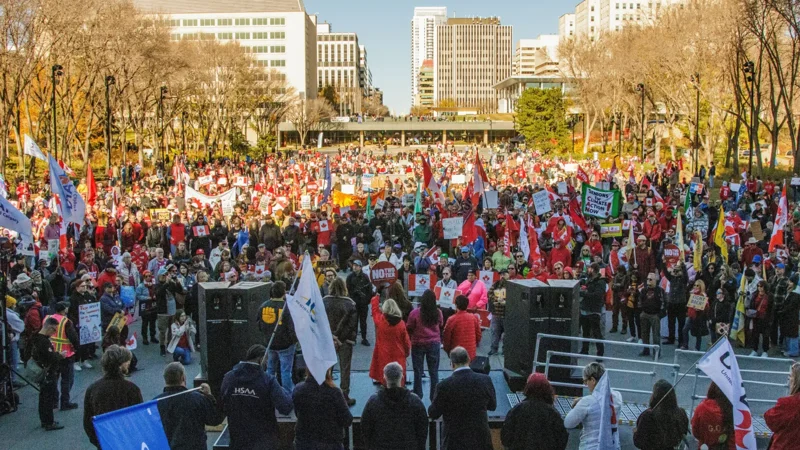
EDMONTON, October 20, 2026: Voters in Alberta have backed remaining part of Canada in the province’s first-ever referendum on separation, according to early results reported by Canadian media.
CBC News called the result late Monday after 33% of votes had been counted. At that stage, 76% of counted ballots supported remaining in Canada, while 23% backed moving towards a binding vote on separation.
The referendum was nonbinding, meaning the result does not itself change Alberta’s constitutional status.
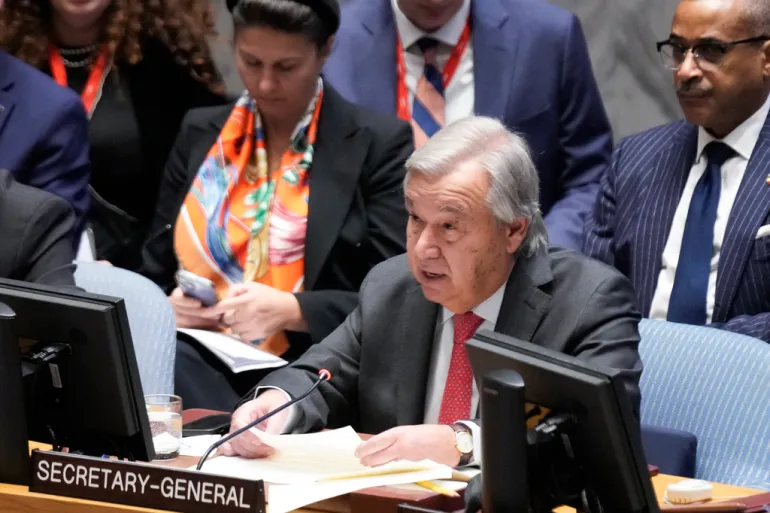
The outcome represents a political boost for Prime Minister Mark Carney, who has sought to strengthen national unity amid a trade dispute with the United States.
“Albertans made a clear choice,” Carney said in a statement. “They chose unity, to build together, and to take care of each other.”
“Canada is greater than the sum of its parts,” he added.
Alberta Premier Welcomes Early Results
Alberta Premier Danielle Smith announced the referendum in May, saying the vote would allow residents to express their views on separation and enable the province to move forward.
In a statement posted on social media late Monday, Smith said she was “very pleased” that early results showed widespread support for remaining in Canada.
She said she would address Albertans on Tuesday to discuss the outcome and the province’s future direction.
Before the vote, polling and political analysis had suggested that a separatist victory was unlikely. Support for holding a future referendum on independence had stood at around one-third of Alberta residents, according to the report.
Pakistan’s Power Purchase Cost May Reach Rs27.31 per Unit in 2027
Separatists Cite Alberta’s Energy Wealth
Alberta’s separatist movement has argued that the province’s energy wealth supports other parts of Canada while federal bureaucracy limits its economic potential.
Supporters of independence say Alberta could prosper more outside the Canadian federation.
Carney, who spent much of his childhood in Alberta, acknowledged that residents have often felt overlooked by the federal government.
During a rally in Calgary last week, he warned that leaving Canada would be “a dangerous bluff that will lead to years of deep division.” He urged voters to “vote like Canada depends on it.”
Carney has also highlighted his government’s approval of a proposed new pipeline and described Alberta as central to Canada’s efforts to reduce its dependence on the US market.
First Nations Communities Participate
The referendum also drew attention to the rights and concerns of First Nations communities, whose treaties with the Canadian government predate Alberta’s creation as a province.
Several First Nations groups have opposed the idea of an independent Alberta, arguing that their treaty relationships are with the Crown and cannot simply be set aside by provincial separation.
CBC News reported strong turnout among First Nations voters. A polling station in southern Alberta, in an area home to the Siksika Nation, temporarily ran out of ballots before remaining open beyond 10pm local time to allow people already in line to vote.
The participation highlighted the constitutional and treaty questions that would arise if Alberta ever pursued independence.
Separatist Movement May Continue
Despite the early result, the referendum may not end Alberta’s separatist movement.
Some separatist leaders had said before the vote that they would continue campaigning for another referendum even if most voters chose to remain in Canada.
A poll released on October 16 by Angus Reid found that 62% of Albertans believed the separatist movement would never disappear.
Alberta’s referendum also included nine other nonbinding questions covering immigration, access to provincial services such as education, social care and healthcare, and voter identification requirements. Results for those questions were still being reported.
The vote follows two previous Quebec referendums on separation. Voters in the predominantly French-speaking province chose to remain in Canada on both occasions.
While Alberta’s early results favour national unity, the longer-term debate over federal-provincial relations, energy policy and regional autonomy is likely to continue.