The US Supreme Court on Monday declined to allow the US Postal Service (USPS) to enforce new requirements targeting mail-in ballots, dealing a setback to President Donald Trump’s effort to tighten voting-by-mail rules ahead of November’s midterm elections.
The justices rejected the Justice Department’s request to lift an order issued by US District Judge Indira Talwani in Boston. Her ruling blocks the Postal Service from enforcing the measure while legal challenges brought by states and voting-rights groups continue.
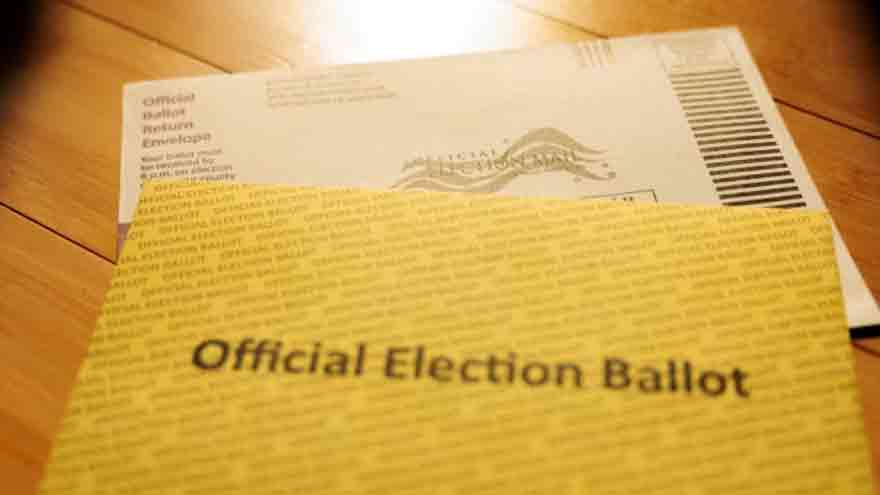
The USPS adopted the rule following an executive order signed by Trump in March that sought to impose tighter requirements on mail voting. Under the measure, states would have been required to provide the Postal Service with lists of mail-ballot recipients and use USPS-approved envelopes carrying unique barcodes for outgoing and returning ballots.
The Postal Service could then refuse to process ballots that failed to meet the new requirements or were linked to voters who did not appear on the relevant lists.
In a brief order, the Supreme Court said the government was unlikely to succeed on the merits of its challenge to Talwani’s preliminary injunction. Conservative Justices Samuel Alito and Clarence Thomas dissented, while no other justice publicly joined the dissent.
Dar, IAEA Chief Agree Islamabad MoU Is Key to Easing Middle East Tensions
The court currently has a 6-3 conservative majority.
Critics of the rule argued that it could disrupt the delivery of legitimate ballots and create confusion as states prepared to distribute mail ballots ahead of the November 3 election. The Trump administration has argued that the measure would help prevent voter fraud, although documented cases of widespread mail-voting fraud are rare.
Judge Talwani issued the injunction on September 4, concluding that the rule likely conflicted with the US Constitution, which gives states a central role in administering elections. She also found that states would face serious difficulties implementing the requirements with the midterm elections approaching.
Another federal judge, Carl Nichols in Washington, D.C., separately ruled against the measure on Sunday.
The American Civil Liberties Union welcomed the Supreme Court’s decision. Sophia Lin Lakin, director of the ACLU’s Voting Rights Project, said the administration was exceeding its authority and argued that states and Congress, rather than the president or Postal Service, have the constitutional authority to establish rules for federal elections.
California Governor Gavin Newsom, whose state led one of the lawsuits challenging the USPS rule, also welcomed the decision and described it as a positive development for democracy and the rule of law.
Trump has repeatedly questioned the security of mail-in voting and has made unsubstantiated claims of widespread election fraud, including regarding his 2020 election loss to Joe Biden. Trump has also voted by mail himself.
The administration had asked the Supreme Court on September 6 to allow the rule to take effect, arguing that the policy was necessary to protect the postal system from being used for voter fraud.
In a separate statement concurring with Monday’s decision, conservative Justice Brett Kavanaugh said there was a “fair prospect” that the Postal Service had authority to adopt the rule. However, he said state and local election officials did not have enough time to reasonably implement it before the 2026 elections.
Justice Alito, in his dissent, argued that the challengers’ claims were unlikely to succeed and maintained that the Postal Service has broad authority to regulate mail.
The legal battle is part of a broader effort by the Trump administration to increase federal involvement in election procedures ahead of the midterm elections. A coalition of states, including several Democratic-led states, Washington, D.C., and voting-rights organizations had challenged the USPS measure.
The 1st US Circuit Court of Appeals also declined last week to suspend Talwani’s order, warning that the rule could potentially disenfranchise millions of voters while offering limited benefits in combating voter fraud.
The Supreme Court’s latest decision means the USPS rule remains blocked as legal challenges continue, leaving election officials to prepare for the 2026 midterms under existing mail-voting procedures.