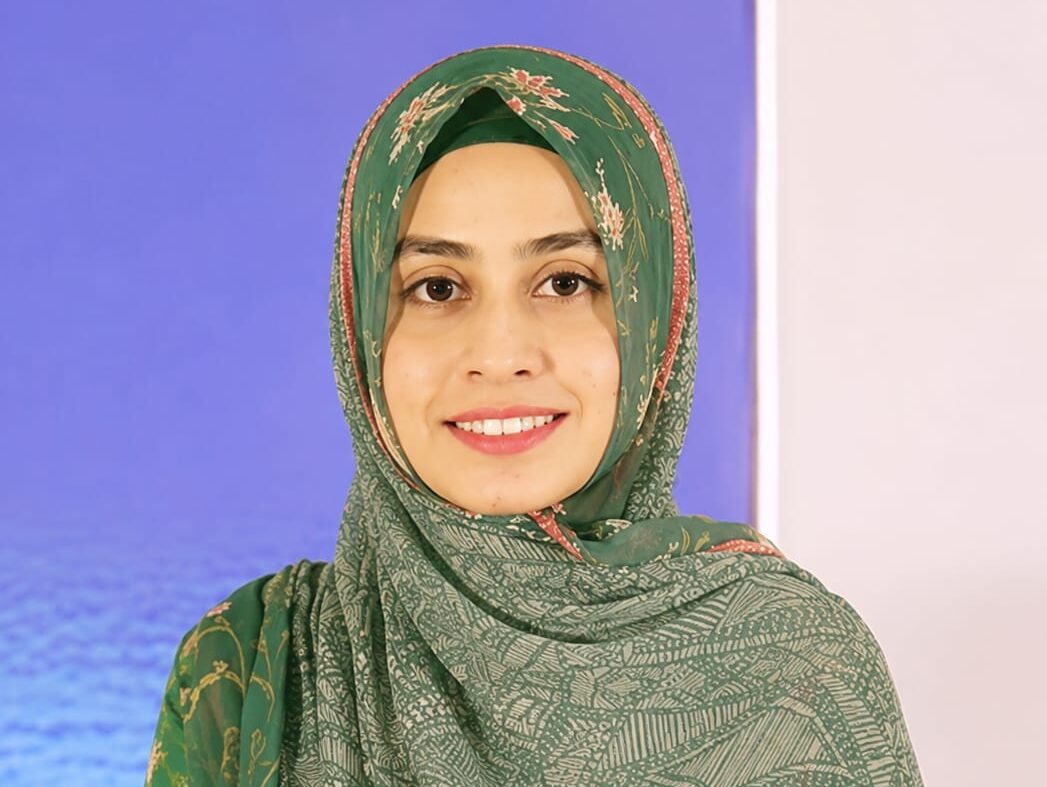
By Ms. Ayesha Ibad
Pakistan’s coastline stretching more than 1,001 Km along the Arabian Sea, represents a strategically significant yet underutilized marine asset base. The Exclusive Economic Zone (EEZ) hosts diverse biological resources, including seaweeds, shellfish, crustaceans, microorganisms and microalgae, with growing applications in pharmaceuticals, nutraceuticals, biomaterials and environmental sectors. These uses are not just hypothetical; marine-derived compounds already support well-known pharmaceutical and nutraceutical products on a global scale, especially omega-3-based formulations and other bioactive molecules derived from marine organisms.
Within Pakistan several researches have highlighted nutritional and commercial value of marine resources. A study published in Frontiers in Sustainable Food Systems reported high protein content, balanced essential amino acid profiles and strong antioxidant activity in native species such as black tiger shrimp (Penaeus monodon), spiny lobster (Panulirus ornatus) and cuttlefish (Sepia pharaonis) demonstrating their potential for functional food and nutraceutical development. However, these scientific explorations have not translated into a structured innovation ecosystem capable of producing sustained innovation or decoding knowledge into a tangible outcome.
Constraint lies less in resource availability and more in governance architecture. Marine policies are oriented toward conventional fisheries and maritime administration and ports activity rather than knowledge-driven bioeconomic development. As a result, scientific activity exists, but it is loosely connected to policy direction, institutional coordination and commercialization pathways. The outcome is a sector that reflects a semblance of activity without institutional depth required for long-term value creation.
The institutional framework is dispersed across multiple federal and provincial entities. Fisheries and Blue Economy activities are governed by Ministry of Maritime Affairs, while NIO, PCSIR, renowned universities and provincial ministries oversees research, environmental control and innovation. Although these organizations have technical capacity, their mandates do not fit strategically within a coherent marine biotechnology framework. This fragmentation has produced a coordination deficit. Research agendas are established independently of industrial demand and national priorities, while policy remains detached from scientific growth.
The divergence becomes even more apparent when industries are considered. Pakistan’s multinational pharmaceutical and nutraceutical companies already commercialized marine-derived inputs like Omega-3 fatty acids in established formulations, used for cardiovascular and metabolic health. However, these value chains rely heavily on imports and are not based on native marine biotechnology research.
Thus, in absence of a dedicated coordinating mechanism, marine biotechnology lacks an institutional node capable of integration. In this context a Marine Biotechnology and Blue Resources Council under Ministry of Maritime Affairs may provide a strategic interface to harmonize institutional roles and consolidate research priorities without restructuring existing bodies.
Pakistan does not have a dedicated legal framework for marine biotechnology. Relevant provisions are scattered across environmental, fisheries, biosafety and maritime laws, none of which were designed to deal with marine genetic invention. This fragmented regulatory situation builds ambiguity in access procedures, sampling permissions, benefit sharing and commercialization channels. Therefore, research outputs often remain restricted to academic dissemination rather than advancing towards applied innovation. Lack of an Access and Benefit-Sharing (ABS) framework further hampers regulatory coherence, especially as global norms underscore equitable management of genetic resources. Pakistan must integrate its institutional and legal frameworks with new international frameworks to comply with Biodiversity Beyond National Jurisdiction (BBNJ) Agreement, which is changing governance norms for marine genetic resources.
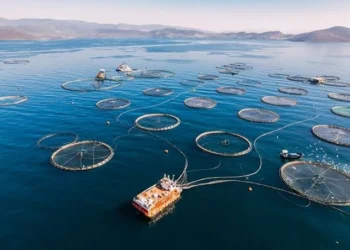
Blue Economy talks have yet to provide integrated systems that link research findings with industrial application. Innovations in marine biotechnology, such as production of seaweed, microbial applications and biodegradable materials are still at pilot stage and lack obvious scaling approaches. This indicates a break in value chain that connects market infrastructure, industry and research institutions. Without this kind of integration, marine biotechnology continues to be a highly researched but economically underutilized field. Strengthening technology transfer mechanisms, incubation platforms and public–private partnerships is central to bridging this gap.
A further constraint lies in specialized human capital. Pakistan’s capacity in marine genomics, biotechnology regulation and marine natural products remains limited. Developing a functional sector necessitates integration of knowledge systems that connect universities, applied research institutes and industry investors. Enhancing postgraduate programs, financing for research and international cooperation are crucial for building capacity.
Pakistan focuses on downstream consumption and formulation rather than upstream discovery and development of marine bioactive substances. Yet future of marine biotechnology in Pakistan will be influenced more by governance coherence than by resource abundance. An integrated governance model based on institutional coordination, regulatory clarity, implementation capability and human capital development might help reposition marine biotechnology in Pakistan’s burgeoning bio-economy. Without such alignment, this sector will continue to exist in a space of potential rather than performance, where opportunity is evident but outcomes remain only partially realized.
About the Author: Ms. Ayesha Ibad is a Research Officer and Associate Editor of Maritime Watch Magazine at National Institute of Maritime Affairs – Karachi. She is also a MS Scholar in Environmental Sciences at Bahria University Karachi Campus. The views expressed in this article are her own.