
Pakistan’s maritime sector is entering a phase in which ambition must increasingly be measured against implementation. The International Maritime Organization’s theme for World Maritime Day 2026–2027 “From Policy to Practice: Powering Maritime Excellence” is particularly relevant to Pakistan. The real challenge is no longer simply developing maritime policies, but ensuring that those policies translate into efficient ports, competitive shipping services, sustainable fisheries, safer maritime operations and tangible benefits for coastal communities.
Pakistan’s maritime significance is increasingly reflected in the scale of activity at its ports. Karachi Port handled more than 2.651 million TEUs during FY2025–26, setting a new record for container throughput. During the same period, the port recorded 2,003 vessel calls, the highest annual figure in almost eight years.
The growth is not limited to conventional cargo handling. In March 2026, Karachi Port handled a monthly record of 111,300 TEUs of transshipment cargo, while Port Qasim handled 3,485 TEUs across two transshipment vessels. The government has subsequently introduced incentives intended to attract additional transshipment traffic to Karachi Port and Port Qasim.
These numbers are important, but throughput alone should not be treated as the definition of maritime success. The real test is whether increasing cargo volumes are accompanied by lower dwell times, faster clearance, reliable hinterland connectivity, competitive costs and predictable logistics. Recent reforms including digitalisation of port processes, customs facilitation, the Port Community System and measures to address congestion are therefore particularly significant.
Thai Night in Karachi Celebrates 75 Years of Thailand-Pakistan Relations
At the same time, Pakistan is looking beyond Karachi and Port Qasim. Keti Bunder is emerging as a proposed additional maritime gateway on the Sindh coast. In August 2026, a conceptual master plan presented by China Harbour Engineering Company envisaged a deep-water maritime gateway with multiple terminals and logistics infrastructure. Phase-I includes a 500-metre multi-purpose quay, with a preliminary engineering cost estimate of approximately US$522.34 million.
The importance of Keti Bunder, however, extends beyond port infrastructure. Its development will require reliable road connectivity, utilities, industrial linkages and a strong environmental framework. This is particularly important because the area lies within the Indus Delta, a globally significant mangrove ecosystem. Pakistan’s mangroves provide coastal protection, support fisheries and marine biodiversity, and strengthen resilience against flooding, erosion and storm surges. Any expansion of maritime infrastructure at Keti Bunder should therefore integrate mangrove conservation, coastal protection and the livelihoods of fishing communities from the planning stage.
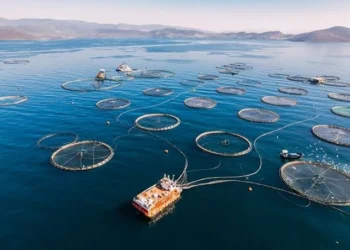
This environmental dimension is closely linked to fisheries. According to the Pakistan Economic Survey 2025–26, total fish production reached 642.18 thousand tonnes during July–March FY2026, including 427.18 thousand tonnes from marine fisheries. The sector grew by 1.66 percent and accounted for 1.29 percent of agriculture and 0.30 percent of GDP. These figures underline the need to pursue fisheries growth alongside stock conservation, responsible fishing, traceability, better landing facilities, cold-chain infrastructure and value addition.
This is where Pakistan’s maritime agenda must become more integrated. Ports, shipping, fisheries, coastal infrastructure, ship recycling, marine environmental protection and maritime human resources should not be treated as isolated sectors. They are components of one maritime economy.
The government’s maritime reform programme provides another important indicator of this transition. According to the official Port Community System, 85 of 99 identified maritime reform measures had been completed by July 2026, while 11 were in the final stages and three remained under longer-term implementation. The reform package covers areas including port master planning, shipping, shipbuilding, ship recycling and fisheries.The next challenge is therefore implementation at scale.
Every major maritime initiative should have clearly defined objectives, responsible institutions, timelines, financing arrangements and measurable indicators. Port performance should be assessed not only through TEUs, but also through vessel turnaround time, cargo dwell time, digital processing, logistics costs and service reliability. Fisheries performance should be assessed through stock sustainability, export value, post-harvest losses, compliance and improvements in coastal livelihoods.
Keti Bunder offers a useful example of why such an integrated approach matters. Its proposed development could expand Pakistan’s maritime gateway network, but its success will ultimately depend on whether connectivity, trade, environmental safeguards and coastal livelihoods are planned together rather than sequentially.The same principle applies to Pakistan’s wider blue-economy ambitions. World Maritime Day 2026 therefore provides a timely framework for Pakistan: from policy to practice, from practice to measurable performance, and from maritime potential to maritime excellence.