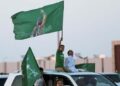
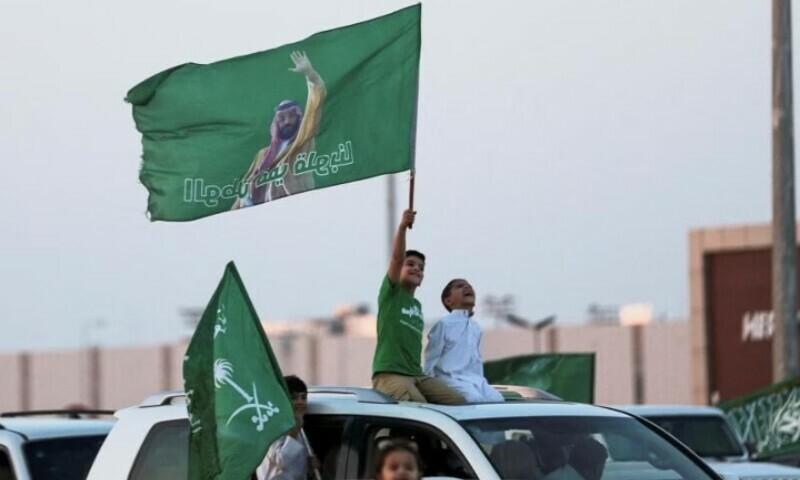
Every year, 23 September is celebrated as the National Day of the Kingdom of Saudi Arabia. The day commemorates the historic unification of the country and the establishment of the modern Kingdom under the leadership of its founder, King Abdulaziz bin Abdulrahman Al Saud, in 1932.
Saudi Arabia’s National Day is not merely a national celebration. It is an occasion to reflect upon a remarkable historical journey—from the unification of different regions of the Arabian Peninsula to the emergence of a modern state with a significant regional and international role. The Kingdom is also home to the two holiest places in Islam, Makkah and Madinah, giving it a unique spiritual significance for Muslims across the world.
Historical Background
The modern history of Saudi Arabia is closely associated with the efforts of King Abdulaziz. On 15 January 1902, he recaptured Riyadh, the historic capital of his family. This event marked the beginning of a long process of political consolidation and unification across large parts of the Arabian Peninsula.
Over the following three decades, King Abdulaziz brought various regions under a unified authority. He became King of Hejaz and Sultan of Najd and its regions in 1927. On 19 September 1932, a royal decree announced the unification of the country under the name Kingdom of Saudi Arabia, effective from 23 September 1932.
Thus, 23 September became the National Day of the Kingdom. The establishment of the modern Saudi state also marked the beginning of a new phase of institution-building, administration and international engagement.
The Kingdom subsequently developed government institutions, a consultative system and ministries to administer the rapidly expanding state. Saudi Arabia also became one of the early signatories of the United Nations Charter in 1945.
The Monarchical System
Saudi Arabia is a monarchy, with the King serving as Head of State. The country’s system of governance also includes the Shura Council, which has a consultative role in the legislative and administrative process.
The modern Kingdom has been led by successive kings from the Al Saud family. Today, King Salman bin Abdulaziz Al Saud, Custodian of the Two Holy Mosques, is the King of Saudi Arabia.
The title “Custodian of the Two Holy Mosques” reflects the special importance attached to the service and protection of the Holy Mosques in Makkah and Madinah.
The Saudi political system has evolved alongside the country’s social and economic transformation. The state places particular emphasis on Islamic heritage, national unity, public administration and the development of modern institutions.
The Two Holy Mosques: A Sacred Responsibility
Perhaps the most distinctive feature of Saudi Arabia is its responsibility for the two holiest sites in Islam: Masjid al-Haram in Makkah and Al-Masjid an-Nabawi in Madinah.
Millions of Muslims from around the world travel to Saudi Arabia every year to perform Hajj and Umrah. Managing such a vast movement of pilgrims requires extensive infrastructure, transportation, accommodation, healthcare, security, sanitation and crowd-management systems.
Over the decades, Saudi Arabia has undertaken major expansion and modernization projects at both Holy Mosques. These projects have increased capacity and introduced advanced facilities to improve the experience and safety of pilgrims.
The transformation of services for pilgrims has also entered the digital age. Technology, electronic guidance, multilingual services, crowd-management systems and other modern tools are increasingly being used to facilitate the movement and worship of millions of visitors.
For Muslims throughout the world, the opportunity to visit Makkah and Madinah carries an extraordinary spiritual significance. The continued development of facilities around the Holy Mosques therefore represents not only an infrastructure programme but also a major undertaking in religious service.
From Oil Economy to Economic Diversification
The discovery and development of petroleum resources transformed Saudi Arabia’s economy during the twentieth century. Oil revenues provided resources for the development of roads, airports, hospitals, schools, universities, housing, communications and other national infrastructure.
The Kingdom gradually emerged as one of the world’s major energy-producing economies and developed extensive international economic relationships.
However, Saudi Arabia’s current economic strategy is increasingly focused on diversification. Saudi Vision 2030, launched in 2016, seeks to broaden the economic base, increase the contribution of non-oil sectors, encourage investment, strengthen the private sector and create new opportunities for citizens.
According to the official Vision 2030 Annual Report 2025, the Saudi economy has surpassed the one-trillion-dollar level, while non-oil activities account for more than half of total economic output. The report also highlights growth in tourism, technology, private-sector participation and other emerging sectors.
This transformation is visible in the development of new cities, tourism destinations, cultural projects, digital infrastructure and major investment programmes.
Education, Health and Human Development
The development of Saudi Arabia has not been limited to physical infrastructure. Education and human development have become important components of the country’s transformation.
From the establishment of schools and universities to modern research centres and professional institutions, Saudi Arabia has invested heavily in education and human capital.
The health sector has similarly witnessed extensive expansion, with modern hospitals, specialist medical centres, emergency services and advanced healthcare facilities established across the Kingdom.
The development of human capabilities has become particularly important under Vision 2030, with increasing emphasis on skills, entrepreneurship, technology, innovation and participation in the modern economy.
Vision 2030 and the New Saudi Arabia
One of the most significant aspects of contemporary Saudi Arabia is the transformation taking place under Vision 2030. The vision seeks to create a vibrant society, a thriving economy and an ambitious nation. It places emphasis on economic diversification, tourism, culture, technology, investment, employment, quality of life and sustainable development.
Saudi Arabia’s geographical position, energy resources, investment capacity and religious significance provide a distinctive foundation for this transformation.
The 2025 Vision 2030 report describes a continuing shift towards a more diversified economic model and highlights developments in non-oil activities, investment, digital government, tourism and private-sector growth.
Modern Riyadh provides a visible example of this transformation. The capital has developed into a major regional centre for business, finance, technology, education and international events. At the same time, the Kingdom is seeking to preserve and promote its cultural and historical heritage while developing new tourism and entertainment opportunities.
Saudi Arabia and the Muslim World
Saudi Arabia occupies a special place in the hearts of Muslims because it is home to Makkah and Madinah. The annual Hajj brings Muslims together from almost every part of the world, making the Kingdom a unique meeting point of different nations, languages and cultures.
The religious significance of the Kingdom also contributes to its broader role in the Muslim world. The Saudi national identity therefore combines several dimensions: Islamic heritage, Arab culture, national unity, the legacy of the founding generation and an increasingly modern economic and technological outlook.
Pakistan–Saudi Arabia Relations:
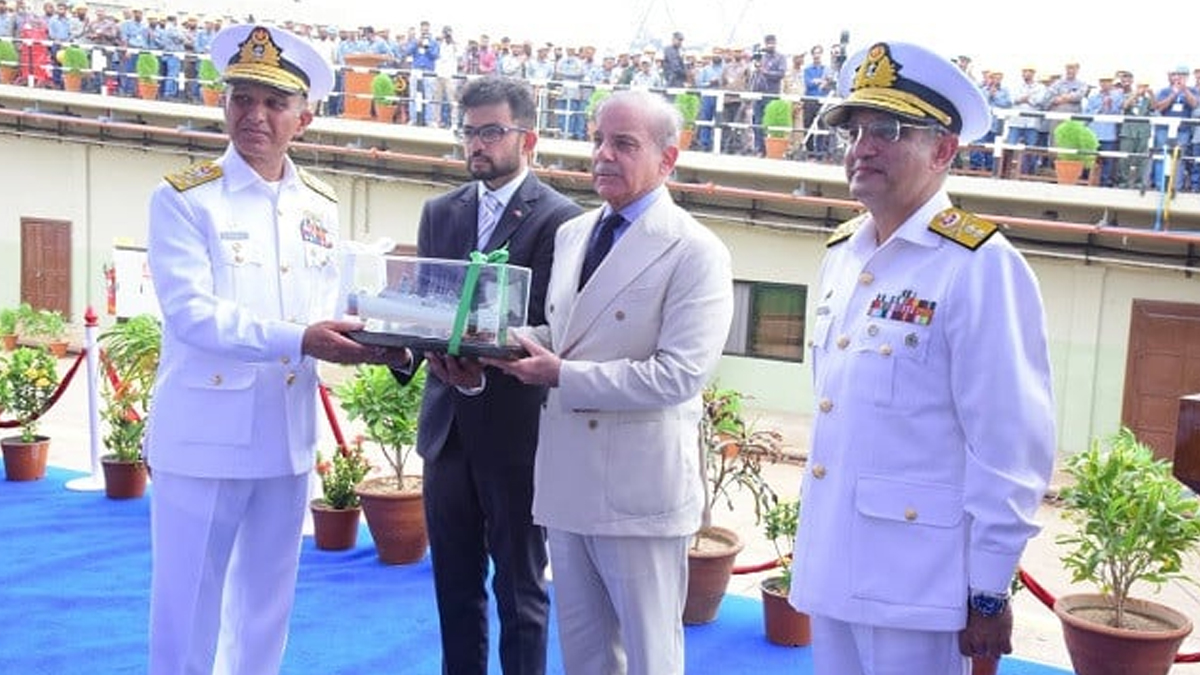
The relationship between Pakistan and Saudi Arabia has deep religious, historical, cultural and people-to-people dimensions. For Pakistanis, Saudi Arabia has a special place because of the sacred cities of Makkah and Madinah. Every year, large numbers of Pakistanis travel to the Kingdom for Hajj and Umrah.
The presence of a large Pakistani community in Saudi Arabia also creates strong human and economic links between the two countries.
Over the years, bilateral cooperation has extended to areas including trade, investment, education, health, defence, manpower and development.
The relationship between the two countries is therefore not confined to government-to-government contacts; it is also reflected in strong public sentiment and longstanding people-to-people connections.
A Nation Looking Towards the Future
The story of modern Saudi Arabia is a story of transformation. The journey that began with the recapture of Riyadh in 1902 culminated in the proclamation of the Kingdom of Saudi Arabia in 1932. Over the decades that followed, the country developed its institutions, infrastructure and economy and established itself as an important member of the international community. Today, Saudi Arabia stands at another important stage of its history.
The Kingdom is seeking to combine its religious and cultural heritage with economic diversification, technological development, tourism, education and innovation. The Holy Mosques remain at the heart of the nation’s identity, while Vision 2030 represents an ambitious framework for its future development.
The Message of National Day
Saudi National Day is therefore a moment to remember the country’s historical unity and to reflect upon its achievements and aspirations.
For Muslims around the world, Saudi Arabia carries a special spiritual significance because of Makkah and Madinah. For the international community, it is an important regional state and a major economic and energy partner.
As the Kingdom celebrates its National Day on 23 September 2026, the occasion provides an opportunity to acknowledge its historical journey, its service to the Two Holy Mosques and its continuing efforts towards economic and social transformation.
May Allah Almighty bless the Kingdom of Saudi Arabia with peace, stability and prosperity, protect the Two Holy Mosques, and grant those entrusted with their service continued strength and wisdom.
Happy Saudi National Day.
Long live Pakistan–Saudi Arabia friendship.