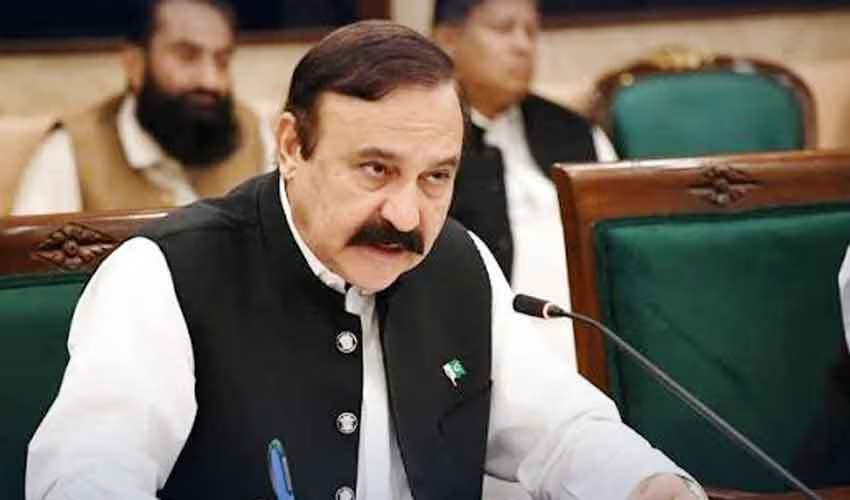
Federal Minister for Parliamentary Affairs Tariq Fazal Chaudhry has defended the government’s security measures in Khyber Pakhtunkhwa (KP), saying the province’s peace is essential for Pakistan’s stability. He also announced that Prime Minister Shehbaz Sharif had approved a Rs160 billion grant for the province.
Speaking in the National Assembly, Chaudhry said the government remained willing to negotiate with the opposition but stressed that counter-terrorism efforts required practical cooperation from provincial and district administrations.
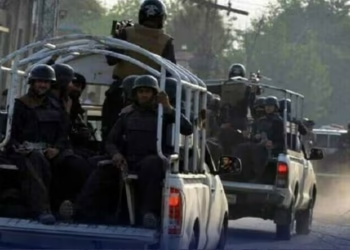
He said the government’s priority was to restore peace in KP and maintained that security operations targeted individuals challenging the state’s authority, not political parties.
“The peace of Pakistan is linked to the peace of KP,” he said, emphasising the need to dismantle terrorist networks and improve security in affected areas.
The minister said the government aimed to eliminate terrorists from affected areas within four to six months.
Rs160 billion grant announced for KP
Chaudhry said Prime Minister Shehbaz Sharif had approved a grant of Rs160 billion for Khyber Pakhtunkhwa.
Pakistan Conducts 5,143 Anti-Terror Operations, Kills 2,410 Militants in Nine Months
He also called for strengthening the KP Police and equipping officers with modern weapons to improve their ability to respond to security threats.
Referring to police casualties, the minister questioned how many officers had lost their lives because they lacked modern equipment. He said capacity-building measures were necessary to improve the province’s counter-terrorism response.
Chaudhry added that effective security operations required coordination between law-enforcement agencies and local administrations.
Minister defends emergency measures and Governor’s Rule
The federal minister defended emergency measures and Governor’s Rule, attributing them to what he described as a lack of cooperation from the provincial government.
He said an emergency was in effect across KP, with particular attention focused on 12 districts. He also referred to proposals concerning five districts, claiming that the provincial government had refused to agree to emergency measures in those areas.
Chaudhry maintained that the federal government’s actions were intended to restore peace rather than target political opponents. He accused the provincial administration of failing to cooperate adequately with security agencies and argued that verbal condemnation of terrorism must be accompanied by practical steps.
He also criticised the provincial government over its political confrontations with the federal government, referring to rhetoric about turning Islamabad into “Somnath”.
The minister argued that political tensions had complicated efforts to maintain stability and resolve differences through dialogue.
Government says it remains open to negotiations
Chaudhry said the government had held negotiations with the opposition before October 2, seeking to resolve political disputes peacefully.
According to the minister, the talks covered seven points. However, he claimed that the opposition delegation lacked sufficient authority to make decisions on behalf of its leadership.
He said the government had participated in the negotiations in good faith and remained ready to engage with opposition parties.
“We invite the opposition to engage in negotiations,” he said, reiterating that dialogue remained the preferred route for resolving political differences.
Chaudhry also stated that no political party had been included in the KP Advisory Council.
Deputy PM tasked with contacting Maulana Fazlur Rehman
The minister said a Cabinet meeting was paused on October 11 so that the deputy prime minister could contact Maulana Fazlur Rehman, chief of Jamiat Ulema-e-Islam-Fazl (JUI-F).
He added that Prime Minister Shehbaz Sharif had directed officials to establish contact with Fazlur Rehman before the Cabinet meeting began as part of efforts to maintain political engagement.
Chaudhry also referred to attacks targeting Fazlur Rehman, stressing the need to prevent further violence and block pathways used by terrorists.
He described a meeting involving a defence alliance linked to Iran and a coalition based in Makkah as significant, although he provided no further details in the remarks cited.
Cooperation key to lasting peace
Chaudhry’s address emphasised the need to combine security operations with political dialogue and institutional cooperation.
He said lasting peace in Khyber Pakhtunkhwa depended on coordinated efforts by the federal government, provincial and district administrations, law-enforcement agencies and political parties.
The minister maintained that strengthening police capabilities, improving cooperation and pursuing negotiations could support efforts to address terrorism and restore stability in the province.