
Vision is one of the most important senses in human life, yet eye health is often overlooked until significant visual problems develop. Eye diseases can affect people of all ages and may have serious consequences for education, employment, independence and overall quality of life.
According to the World Health Organization (WHO), at least 2.2 billion people worldwide live with near or distance vision impairment. Of these, at least 1 billion cases could have been prevented or have not yet received appropriate care. Uncorrected refractive errors and cataracts remain the leading causes of vision impairment, while glaucoma, diabetic retinopathy and age-related macular degeneration are also major contributors to visual loss.
Our eyes allow us to see, learn, work and interact with the world around us. Despite their importance, many people seek professional eye care only after their vision has noticeably deteriorated. This delay can be particularly dangerous in conditions such as glaucoma and diabetic retinopathy, which may progress silently during their early stages.
Eye health should therefore be treated as an essential part of overall health. Regular eye examinations, awareness of warning signs and timely consultation with qualified eye-care professionals can help prevent avoidable vision loss and protect sight throughout life.
Among the most common eye conditions are refractive errors, including myopia, hyperopia, astigmatism and presbyopia. Uncorrected refractive errors are a leading cause of vision impairment worldwide. Properly prescribed spectacles or other corrective options can often restore clear and functional vision.
Cataracts develop when the normally transparent lens of the eye becomes cloudy. The condition is strongly associated with ageing and remains one of the leading causes of blindness globally. When cataracts significantly affect vision, surgery can provide an effective treatment.
Glaucoma is another serious eye disease that causes progressive damage to the optic nerve. In many cases, it develops without noticeable symptoms during its early stages. Once substantial optic-nerve damage occurs, lost vision generally cannot be restored. Regular examinations are therefore especially important for people who face a higher risk of developing the disease.
Diabetic retinopathy occurs when diabetes damages the blood vessels of the retina. The disease may initially cause few or no symptoms, but untreated diabetic retinopathy can lead to severe and potentially irreversible vision loss. Maintaining good diabetes control and undergoing recommended retinal screening are important parts of prevention.
Age-related macular degeneration affects the macula, the central part of the retina responsible for detailed vision. It can cause distortion or loss of central vision and is particularly associated with older adults.
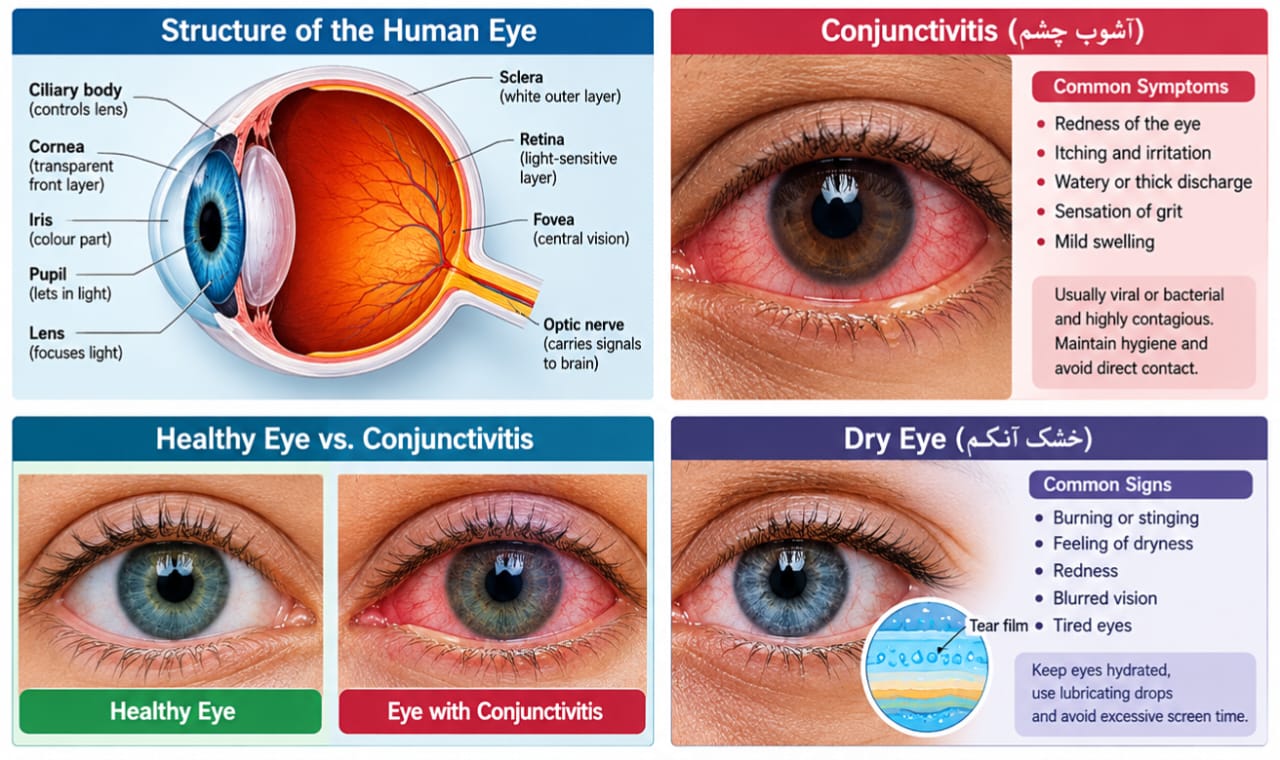
Dry eye, conjunctivitis and other conditions affecting the surface of the eye are also common reasons for seeking eye-care services. Although these problems do not usually cause permanent blindness, they can cause significant discomfort and interfere with everyday activities.
Certain warning signs should never be ignored. These include sudden or progressive loss of vision, persistent blurred vision, severe eye pain or redness, flashes of light, a sudden increase in floaters, distortion of straight lines, changes in central vision, difficulty seeing at night and persistent headaches associated with visual problems. Eye injuries and chemical exposure also require prompt professional attention.
Sudden vision loss or severe eye pain should be treated as an urgent medical problem.
Protecting vision begins with awareness and healthy habits. People experiencing visual difficulties should have their eyes assessed and follow examination schedules recommended according to their age, risk factors and existing health conditions.
People living with diabetes or hypertension should maintain appropriate control of these conditions and remain connected with their healthcare providers. Diabetes is particularly important because diabetic eye disease can develop before noticeable changes in vision occur.
For children, early identification of visual problems is essential because untreated vision impairment can interfere with learning and development. Adequate outdoor activity and healthy visual habits may also help reduce the risk of myopia progression.
Protective eyewear should be used during activities involving chemicals, dust, flying particles or other occupational hazards. People should also avoid using eye drops or other medicines without appropriate professional advice.
Public awareness is equally important. Eye health is not solely the responsibility of hospitals and eye-care professionals. Families, schools, educational institutions, community organisations and public-health authorities all have important roles to play.
Regular school vision screening, community eye camps, diabetes-related eye screening, public education campaigns and affordable access to spectacles and treatment can help identify eye problems at an earlier stage.
The WHO has emphasised integrated, people-centred eye care and established global targets aimed at improving effective coverage of refractive-error care and cataract surgery.
Good vision is fundamental to education, employment, independence and quality of life. Many causes of visual impairment can be prevented, treated or effectively managed when detected at the right time.
The message is simple: do not wait for your vision to deteriorate before taking care of your eyes. Early examination, early diagnosis and timely treatment can help protect sight throughout life.