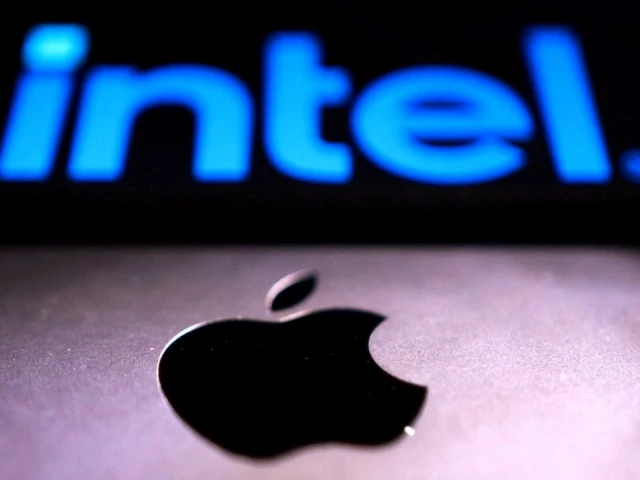
Intel has reportedly reached a preliminary agreement with Apple to manufacture some of the chips used in iPhone maker’s devices, according to a Wall Street Journal report, signaling a major strategic shift for both technology giants and a potential revival for Intel’s struggling manufacturing business.
The two companies are said to have engaged in intensive negotiations for over a year, with a formal agreement reportedly finalized in recent months. Sources familiar with the matter indicated that the partnership represents a significant step in Apple’s broader strategy to diversify its chip supply chain.
Following the news, Intel shares surged by 15%, while Apple stock rose approximately 1.7% during afternoon trading, reflecting strong investor optimism over the potential collaboration.
If finalized, the deal would provide Intel with a steady stream of high-volume demand from one of the world’s largest consumer electronics companies, strengthening its position in the global semiconductor industry. It would also mark a critical boost to Intel’s manufacturing division, which has struggled in recent years to compete with Taiwan Semiconductor Manufacturing Company (TSMC), the global leader in advanced chip production.
The report noted that the US government played an active role in facilitating discussions between Intel and Apple, as part of broader efforts to strengthen domestic semiconductor manufacturing capabilities. Intel has recently become a focal point of US industrial policy, with government backing and strategic investments aimed at revitalizing the company.
It remains unclear which specific Apple products will utilize Intel-manufactured chips. Neither Apple nor Intel has publicly commented on the reported agreement, while the White House also declined to respond.
For Apple, the potential partnership could reduce its heavy reliance on TSMC, which currently serves as its primary chip supplier. The company has previously acknowledged that supply constraints at its contract manufacturers have impacted iPhone production and sales.
TSMC continues to dominate global advanced chip manufacturing, supplying major technology companies including Nvidia and AMD. However, rising demand for AI and mobile chips has created supply bottlenecks, making capacity diversification increasingly important for industry leaders.
Intel CEO Lip-Bu Tan has been actively pursuing new partnerships and government-backed initiatives over the past year as part of a broader turnaround strategy. The company has also secured investments and collaborations with major players in the tech ecosystem, including Nvidia and SoftBank.
The Wall Street Journal report also highlighted involvement from senior US officials, including Commerce Secretary Howard Lutnick, who reportedly engaged with executives from Apple, Tesla, SpaceX, and Nvidia to encourage collaboration with Intel.
Earlier reports suggested Apple had also explored discussions with Samsung regarding potential chip production partnerships, reflecting its wider efforts to strengthen supply chain resilience.
If confirmed, the Intel-Apple deal would mark one of the most significant shifts in the global semiconductor landscape in recent years, potentially reshaping competition in the high-stakes chip manufacturing industry.