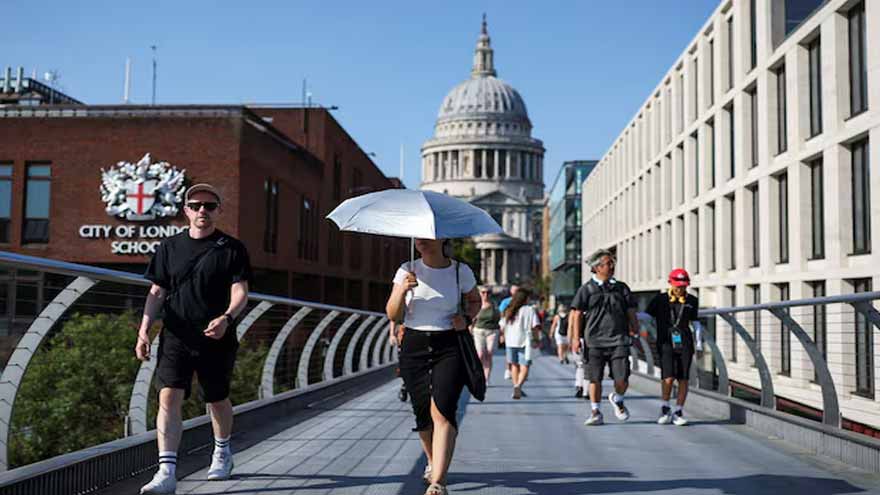
Heatwaves are increasingly disrupting businesses across Europe, cutting sales, reducing productivity and exposing a major gap in insurance coverage.
In the Italian city of Padua, the impact is already changing a long-standing tradition. Cafes have served aperitivo drinks outdoors during the early evening for more than a century.
However, Europe’s latest heatwave has pushed customers indoors. Many people now wait until later in the evening before going out, leaving terraces and outdoor seating areas largely empty.
Federica Luni, president of hospitality association APPE Padova, said the change has hit local businesses hard. She said a survey of about 600 hospitality businesses found that more than 80% reported turnover declines of around 20% during the recent heatwave.
“A 20% decline wipes out your margin,” Luni said.
Heatwaves create an insurance gap
Extreme heat is also creating challenges for insurers. Traditional business interruption policies often focus on physical damage, while heatwaves can cause major financial losses without destroying property.
Moody’s estimates that European heatwaves last summer caused about €43 billion ($50 billion) in lost economic output. Insurers paid only around €500 million in related claims.
Indonesia Earthquake 7.7-Magnitude Quake Kills at Least 51
Swenja Surminski, managing director for climate and sustainability at Marsh, said extreme heat does not usually cause the catastrophic physical damage associated with floods or storms.
However, she said the resulting disruption to business operations can prove equally severe.
A 2023 survey of 9,000 small and medium-sized European businesses found that only 28% had business interruption cover through their property insurance. Just 17% had non-damage business interruption protection.
Businesses face rising costs
Heatwaves can affect companies in several ways. Trains can face delays, agricultural production can decline and factories can spend more on cooling.
Workers can also struggle to maintain productivity during prolonged periods of extreme heat.
Several companies recently highlighted the impact of hot weather in their second-quarter financial updates. They included Swedish shop-fitting company ITAB Group, Italian cement producer Buzzi and French payments company Worldline.
The risks can also combine with other climate threats.
Heat adds to wider climate risks
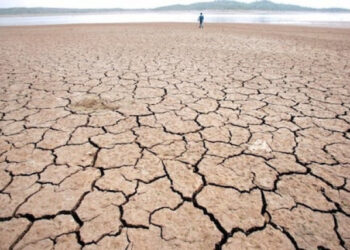
Extreme heat often occurs alongside drought, wildfires and water shortages. This makes its financial impact more difficult to identify and insure.
Europe faces particular risks because it remains the world’s fastest-warming continent. Reuters Climate Monitor found that Western Europe’s average temperature on August 11 was nearly 10°C (18°F) above the 1961-1990 average.
Data from environmental disclosure platform CDP shows that 35% of the companies it tracks identify heatwaves as a risk factor. Manufacturing, services, infrastructure and food-related businesses face some of the greatest exposure.
Companies can receive insurance for certain physical losses caused by power outages and other events. However, such compensation often fails to cover lost sales and reduced customer activity.
“The real loss is the revenue you don’t make,” Luni said.
Insurers explore new solutions
Insurers are increasingly exploring parametric insurance to address the gap. These policies automatically pay when temperatures cross agreed thresholds.
Unlike traditional insurance, parametric cover does not require a lengthy assessment of individual losses before making a payment.
KBV Research estimates that the European parametric insurance market could reach $7.93 billion by 2031. The market could grow at an annual rate of 9.5% between 2025 and 2032.
Agriculture already uses such policies to protect against heat-related losses in crops and livestock. Industry experts also see potential applications in transport and workforce protection.
Aidan Kerr, head of UK and Ireland public sector solutions at Swiss Re, said parametric insurance could play an important role.
However, experts say insurance alone cannot solve the problem. Businesses will also need to adapt their operations to withstand more frequent periods of extreme heat.
Measures could include improved cooling systems, redesigned workplaces and stronger supply-chain planning.
Marsh’s Surminski said businesses should focus on preventing losses rather than dealing with them after extreme heat has already caused disruption.