Agricultural experts have cautioned against using agriculture’s share of GDP as a direct measure of its tax potential.
They said agricultural output should not automatically be treated as taxable income.
Farm profitability depends on several factors. These include crop prices, yields, input costs, weather conditions and market conditions.
Experts said the distinction was particularly important for Pakistan’s millions of small farmers. Many face volatile prices and may sell crops below official or expected rates.
GDP Output Does Not Equal Farm Income
Mahmood Nawaz Shah, president of the Sindh Abadgar Board, said the taxation debate should distinguish between economic output and actual farm income.
He cited wheat as an example.
Pakistani Actors Join Humanitarian Mission for Palestinian Families in Jordan
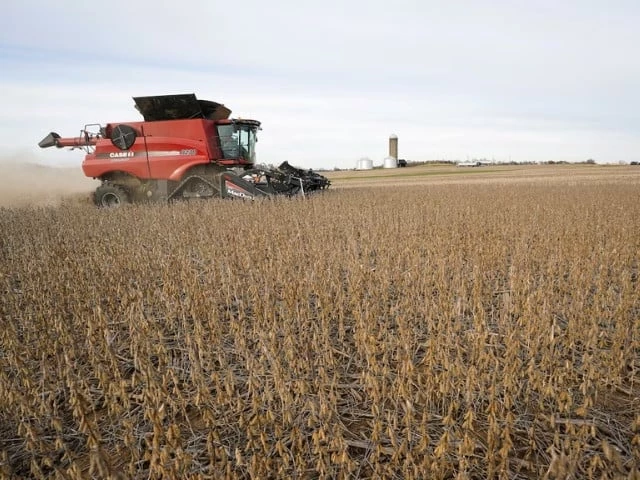
During the 2024-25 wheat season, the government announced prices of around Rs4,000 per 40 kilograms and later Rs3,900.
However, farmers in major producing areas sold wheat at substantially lower rates, Shah said.
“If the farmer sells below his cost or expected price, how can that production be treated as taxable income?” he asked.
Shah said GDP measures the value of production. Taxation, however, should ultimately reflect profitability.
He said the same issue applied to cotton, maize, rice and sugarcane.
Production, yields and market prices can change significantly from one year to another.
Shah rejected the argument that agriculture’s GDP share should determine its tax contribution.
Instead, he suggested using average farm profitability over five to seven years to estimate the sector’s realistic tax potential.
Small Farms Complicate Tax Collection
Shah also questioned whether agriculture’s large workforce should automatically translate into high tax potential.
Agriculture supports a significant share of Pakistan’s employment. However, its income is distributed among millions of workers and farmers.
Muhammad Ali Iqbal, president of Concave Agri Services, said the challenge was particularly significant because more than eight million farmers are engaged in agriculture.
Most farmers operate relatively small holdings, he said.
As farm sizes decline, applying a uniform taxation model becomes increasingly difficult.
Farmers also face uncertain revenues because crop prices can change sharply between planting and harvest.
Iqbal said taxation should consider three key factors: input costs, yield and output prices.
Input costs have risen because of taxes and other market pressures. Yields also remain constrained by seed quality, technology gaps and other production challenges.
Farmers, meanwhile, have limited control over market prices.
Technology Could Improve Tax Assessment
Iqbal said the situation differs for commodities with government-supported prices or more predictable markets.
He identified price uncertainty, transparency and price discovery as major issues.
The government cannot accurately determine taxable farm income without reliable production and price data, he said.
Iqbal suggested using technology to improve the process.
Satellite imagery, remote sensing and improved yield-estimation systems could help authorities estimate cultivated areas and crop production.
Such systems could provide data at district and tehsil levels. Authorities could then compare the estimates with farmers’ declarations.
Iqbal said this approach could create a more credible link between actual production and taxable income.
Experts Call for Digital Farm-to-Market Records
Aamer Hayat Bhandara of Agriculture Republic also called for digitising the agricultural value chain.
He proposed creating transaction records that track agricultural produce from farms to markets, processors and consumers.
Bhandara suggested that commodities entering mandis should be weighed through electronic systems.
The quantity and quality of each transaction could then be recorded digitally.
He said a farm-to-fork digital trail could help determine the actual volume and value of agricultural trade.
It could also reduce the scope for under-reporting.
Agriculture’s Tax Role Extends Beyond Farmers
Iqbal said the tax debate should also consider the wider agricultural supply chain.
Much of the economic value generated by agriculture is captured after crops leave the farm.
Food companies, processors, exporters and manufacturers buy agricultural commodities as raw materials.
They then add value before selling finished products.
For example, food processors may purchase tomatoes, chillies and other crops. The resulting economic activity may eventually be recorded under manufacturing or other sectors.
Iqbal said agriculture should therefore not be examined in isolation when assessing its contribution to tax revenue.
Informal Transactions Remain a Challenge
Iqbal also highlighted the fragmented nature of agricultural transactions.
Many farmers and agricultural small and medium-sized enterprises operate outside formal documentation systems.
Farmers may also receive payments late and lack the financial or digital skills needed to maintain detailed records.
This makes it harder for taxpayers and authorities to establish actual annual income.
Iqbal said the government should also review whether existing regulations discourage formalisation in agriculture and the food sector.
He pointed to compliance requirements involving the Federal Board of Revenue as one potential challenge.
Businesses sourcing raw materials from farmers who may not be tax filers can face additional compliance burdens, he said.
The experts argued that a more accurate agricultural taxation system would require better production data, transparent pricing, digital transaction records and greater formalisation across the supply chain.