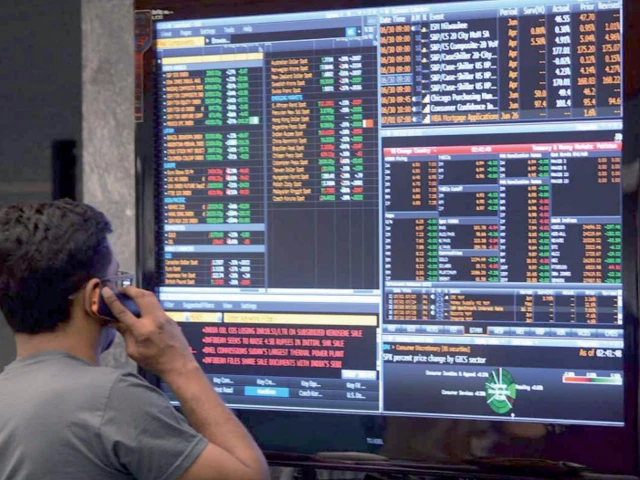
The Pakistan Stock Exchange (PSX) gave up its early gains on Thursday as selling pressure pushed the KSE-100 index lower in afternoon trading.
The benchmark fell 682.11 points, or 0.4%, to 167,898.29 around midday.
The index had opened higher and climbed to an intraday high of 169,486.60. Selling pressure later dragged it to a session low of 167,851.37.
The KSE-100 had closed at 168,580.40 on Wednesday. It gained 120.30 points after a volatile trading session.
Trading Activity
Turnover stood at 104.43 million shares by early afternoon. Traded value reached Rs8.21 billion.
K-Electric, Cnergyico, Pakistan International Bulk Terminal, Fauji Cement and Maple Leaf Cement led trading activity.
Pakistan State Oil was among the stronger large-cap stocks. Bank of Punjab traded lower.
Selling pressure spread across several sectors.
Experts Question Using Agriculture’s GDP Share to Set Tax Targets
Commercial banks, fertiliser, automobile assemblers, technology and power stocks remained under pressure.
Oil marketing companies and some cement stocks performed better. The overall market remained mixed despite the KSE-100’s decline.
Profit-Taking Weighs on Market
The index’s early move above 169,400 failed to attract sustained buying.
Market participants attributed the reversal partly to profit-taking after Wednesday’s recovery.
Investors also remained cautious about elevated crude oil prices.
Brent crude was trading above $100 a barrel, while supply concerns around the Strait of Hormuz continued to affect sentiment.
The concerns have contributed to a range-bound market during the week.
Domestic political developments also remained a factor in investor sentiment.
Intraday Loss Deepens
The market remained open at the time of the reported decline.
Official PSX data later showed the KSE-100 continuing to weaken during the afternoon. The index stood at 167,516.45, down 1,063.95 points, or 0.63%, at about 3:03pm.
The session’s final direction therefore remained uncertain at the time of the initial market report.
Investors continued to monitor oil prices, regional developments and domestic political conditions for further direction.