Drone strikes by Sudan’s warring sides have killed 21 people in the western Darfur region and disrupted electricity supplies across large parts of the country, medics and witnesses said on Tuesday.
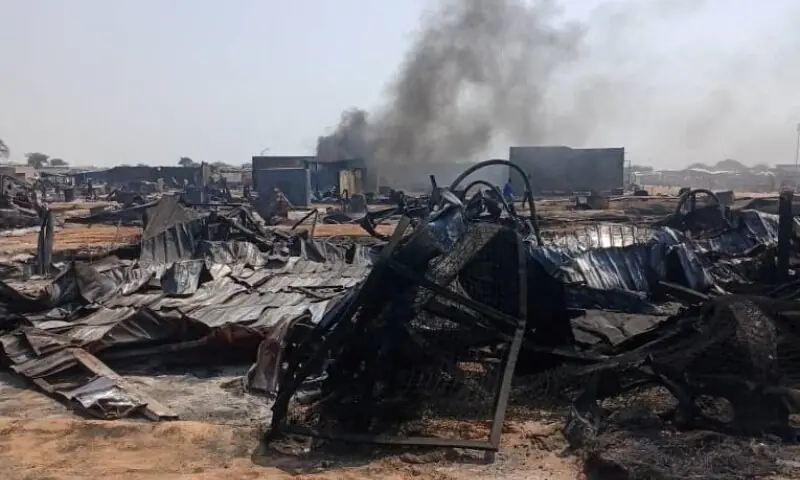
A drone strike hit a market in Nyala, the de facto capital of the paramilitary Rapid Support Forces (RSF) in Darfur, killing 21 people and injuring at least 40 others, according to a medical source and witnesses cited by AFP.
A resident said the attack struck a market in northern Nyala at around 8pm on Monday. Another resident said the market was frequented by young men, including RSF fighters.
“Twenty-one people were killed in last night’s bombing, and more than 40 others injured,” a medic at Nyala Hospital told AFP, adding that the number of RSF fighters among the casualties was unclear.
Sudan’s military regularly targets Nyala, where the RSF has established a rival administration challenging the army-backed, internationally recognised government in Khartoum.
Drone Attacks Disrupt Electricity Supplies
The RSF has also carried out repeated drone strikes targeting Khartoum’s airport, dams and power stations across eastern Sudan.
Kashmir Black Day Observed Worldwide as Pakistan Reaffirms Support for Kashmiri Self-Determination
On Tuesday, a source at the national electricity company told AFP that RSF drones had targeted the Al-Markhiyat transformer station, disrupting power supplies across large parts of Khartoum and Al-Jazira states.
The attack followed a coordinated drone assault on six power stations a day earlier, which left millions of people without electricity across Al-Jazira, White Nile, Sennar and Gedaref states.
The conflict, which erupted in April 2023 between Sudan’s military and the RSF, has increasingly relied on drone warfare, with both sides launching attacks across the country.
According to a United Nations tally, drone strikes killed more than 300 people and injured hundreds more during the first three weeks of October alone.
War Deepens Humanitarian Crisis
The conflict has caused mass casualties and triggered what aid organisations describe as the world’s largest hunger and displacement crises. Aid workers estimate that more than 200,000 people have died since the war began.
The United Nations has repeatedly warned that attacks on electricity infrastructure threaten essential services, including healthcare and water supplies, for millions of people.
Nearly three million people have returned to Khartoum state since the army recaptured it last year. However, many returnees face severe difficulties rebuilding their lives in a city damaged by prolonged fighting.
Electricity and water supplies remain unreliable, unexploded ordnance continues to pose risks in parts of the capital, and widespread economic collapse has left many households struggling to afford food.
International Warning Over Famine Risk
On Monday, 30 countries, including the United States, France and the United Kingdom, warned that urgent action was needed to prevent famine from spreading further across Sudan.
The countries cited a worsening food-security situation driven by the conflict, a rapidly weakening currency, higher fuel prices linked to the Middle East war and drought associated with the El Niño climate phenomenon.
Sudan’s foreign ministry, however, described the country’s food-security situation as “reassuring” and rejected claims of famine, accusing some countries and organisations of politically exploiting the humanitarian crisis.
The Sudanese military has repeatedly denied claims of documented famine and has faced accusations of obstructing humanitarian aid deliveries.
As drone attacks continue to hit populated areas and critical infrastructure, concerns are growing over civilian safety, access to essential services and the risk of further deterioration in food security.