
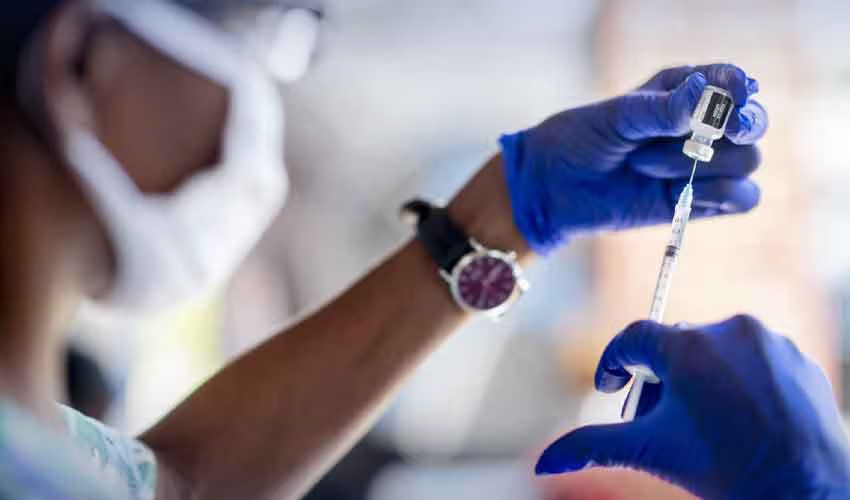
NEW YORK: A personalized Cancer Vaccine developed by Merck and Moderna has shown promising results in preventing melanoma from returning or spreading, opening a potential new path for cancer treatment beyond traditional chemotherapy and immunotherapy.
The companies said on Wednesday that their vaccine helped prevent disease recurrence in a large clinical trial involving more than 1,000 melanoma patients. The participants had undergone surgery to remove localized tumors but faced a high risk of the disease returning.
Unlike chemotherapy, which can damage healthy cells alongside cancer cells, personalized cancer vaccines train the immune system to recognize and attack mutations specific to an individual patient’s tumor.
Experts described the findings as an important development for cancer treatment. Dr. Ryan Sullivan, director of the Center for Melanoma at Mass General Brigham Cancer Institute, said the positive results could encourage further investment and research into personalized cancer vaccines.
Dr. Julie Gralow, chief medical officer of the American Society of Clinical Oncology, described the results as a major advance that further supports the potential of mRNA technology as a cancer treatment.
Researchers target other cancers
Merck and Moderna are now testing personalized cancer vaccines against several other tumor types.
The companies have multiple late-stage trials underway involving non-small cell lung cancer patients whose tumors have been surgically removed. They are also conducting mid-stage studies involving bladder and kidney cancers, while early-stage trials are examining pancreatic and stomach cancers.
Moderna President Stephen Hoge said researchers expect several trial results over the next one or two years.
Roche and BioNTech are also developing a similar personalized mRNA treatment called autogene cevumeran. Their trials are examining the therapy in patients with colon and pancreatic cancers following surgery.
Researchers expect results from the colon cancer trial in 2027, while pancreatic cancer results are expected later.
Experts say the growing number of clinical trials could determine whether personalized cancer vaccines can become a broader treatment option across multiple tumor types.
Child Safety: PTA and Google Sign MoU to Promote Safer Internet Use
How the personalized vaccine works
Merck and Moderna’s treatment, known as intismeran autogene, combines Merck’s immunotherapy drug Keytruda with a customized mRNA vaccine.
Patients receive up to nine doses of Keytruda at six-week intervals, alongside up to nine doses of a personalized vaccine designed to instruct the immune system to recognize and attack cancer cells carrying specific mutations.
Doctors already use Keytruda after surgery to lower the risk of melanoma recurrence. Treatment typically continues for up to one year.
The companies reported no new safety concerns from adding the personalized vaccine to Keytruda. However, the latest trial remains ongoing, and the companies have not yet released the complete results.
Researchers will continue monitoring participants to determine whether the combination also improves overall survival.
Earlier results showed significant reduction in recurrence
Five-year data from an earlier mid-stage trial, presented in June, showed that the vaccine reduced the risk of melanoma returning by about half compared with Keytruda alone.
The combination also reduced the risk of the cancer spreading to other parts of the body by 59%, according to the earlier results.
That trial found no additional increase in serious side effects from adding the mRNA vaccine to Keytruda.
Moderna’s Hoge said most vaccine-related reactions resembled those commonly associated with flu, COVID-19 or other vaccinations.
Melanoma offers a strong testing ground
Dr. Elizabeth Buchbinder, a melanoma specialist at Mass General Brigham Cancer Institute, said doctors often weigh the potential benefits of Keytruda against its side effects when treating patients after surgery.
For patients who face a relatively low risk of recurrence, the additional benefit of treatment can be difficult to balance against potential complications.
Buchbinder said the personalized vaccine could change that calculation by providing an additional benefit against recurrence.
She also explained that researchers selected melanoma for early testing because these tumors often contain many mutations, giving the immune system more targets to recognize.
Other cancers also carry multiple mutations, suggesting that the technology could potentially work across a wide range of tumor types.
Researchers caution that further trials and long-term follow-up will determine whether the promising melanoma results translate into effective treatments for other cancers.