By Dr. Nazia Sher
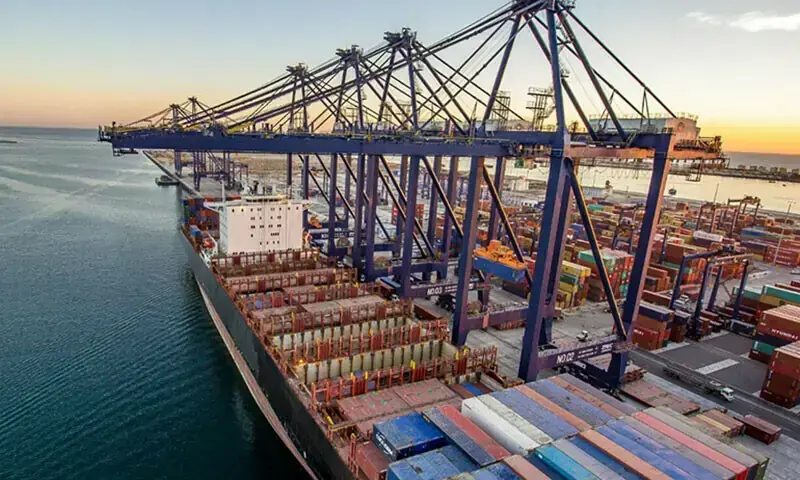
Regional tensions have disrupted established shipping routes and created an unexpected opportunity for Pakistan. Cargo that normally moves through major Gulf transshipment hubs has increasingly been routed towards Pakistani ports. In March 2026, Karachi Port recorded a sharp increase in activity. According to KPT data reported by Arab News, daily cargo handling reached 168,850 tonnes on March 31, compared with 57,198 tonnes on the same day a year earlier. Cargo was being diverted from major Gulf hubs including Jebel Ali, Fujairah and Khor Fakkan.
Pakistan also gained a new maritime connection during this period. A dedicated feeder service began linking Karachi Gateway Terminal with Fujairah and Khor Fakkan, providing a regular connection between Karachi and two established regional transshipment hubs. This is significant, but it does not yet establish a permanent shift in regional shipping patterns. The distinction matters. Crisis-driven cargo can move quickly. Long-term shipping decisions depend on cost, reliability, connectivity, port performance and the availability of supporting maritime services.
Pakistan has already taken steps to make its ports more competitive. In August 2026, the government introduced a unified transshipment incentive framework for Karachi Port and Port Qasim. Depending on the share of transshipment cargo, vessels can receive up to 80 percent concessions on port wet charges. KPT and Port Qasim have also introduced wharfage and storage concessions, while major terminals have announced reductions in terminal handling charges of up to 25 percent. These measures reduce the immediate cost of using Pakistani ports. The harder task is retaining shipping lines after regional conditions normalise. Pakistan’s competitors are not standing still.
Singapore handled a record 44.66 million TEUs in 2025, recorded 3.22 billion gross tonnes of vessel arrivals and supplied 56.77 million tonnes of marine fuel. It is connected to more than 600 ports and hosts more than 200 international shipping groups. Colombo handled 4.44 million TEUs in the first half of 2026, an 11.9 percent increase over the same period in 2025. Transshipment remains the majority of its container business. The UAE is also expanding its maritime capacity. DP World has announced two new Fujairah terminals, including a container terminal designed to handle up to 2.5 million TEUs annually. This competitive environment makes one point clear: port capacity alone does not create a maritime hub. Pakistan needs a complete logistics system around its ports.
The weakness of the wider system became visible again in October. Containers accumulated at Karachi Port after transport disruptions affected northbound cargo movements. Dawn, citing transporters, reported that more than 2,000 vehicles had been requisitioned during September and that demurrage on affected containers could reach Rs30,000–40,000 per day. This is precisely the type of problem that can undermine the advantage created by lower port charges.
A shipping line does not evaluate a port in isolation. It evaluates the entire movement of cargo. Pakistan has made progress on maritime reforms. The Maritime Task Force reported that 85 of 99 reform measures had been implemented by July 2026, with 11 more at the final stage. The next challenge is implementation that can be measured through actual shipping performance: cargo dwell time, vessel turnaround, customs clearance, inland transport costs and reliability. Maritime security is another part of this equation.
In March 2026, Pakistan Navy launched Operation Muhafiz-ul-Bahr to protect national shipping, maritime trade and critical sea lanes. The Navy conducted escort operations in coordination with Pakistan National Shipping Corporation and stated that around 90 percent of Pakistan’s trade is conducted by sea. Pakistan’s maritime-security environment also improved during the year when the country was removed from the Lloyd’s Market Association Joint War Committee’s listed areas, according to the Ministry of Maritime Affairs. The government said the change could reduce war-risk insurance costs and improve confidence among international shipping companies. Security therefore has a direct commercial dimension.
Environmental performance must also remain part of port competitiveness. Karachi Port already has harbour surveillance, oil-spill response arrangements and a marine-debris management programme. KPT reports that approximately four to five tonnes of floating debris are removed from harbour waters every day. Higher vessel traffic will increase the importance of waste reception, oil-spill preparedness, ballast-water management, emissions monitoring and protection of coastal ecosystems. Pakistan’s objective should therefore be larger than attracting diverted vessels.
The real opportunity is to convert additional port traffic into a broader maritime economy including logistics, warehousing, feeder services, bunkering, ship repair, marine insurance, ship management and other maritime services. Pakistan has already begun formalising marine-bunkering procedures through the Pakistan Single Window and Customs framework. The current disruption has demonstrated that Pakistani ports can absorb additional regional cargo. It has also exposed the limitations of the system beyond the port gates.
Pakistan does not need to compete with Singapore or Colombo by copying them. It needs to build a reliable maritime ecosystem around its own geographic advantage.The opportunity is real. But diverted cargo is not the same as permanent cargo. Pakistan will retain this business only when shipping lines find that Pakistani ports offer a reliable combination of cost, connectivity, security, speed and predictability. Cargo can be diverted overnight. A maritime hub takes years to build.
About the Author
Dr. Nazia Sher, Research Associate, National Institute of Maritime Affairs (NIMA), Bahria University Karachi. She can be reached at rassociate2.nima.k@bahria.edu.pk.