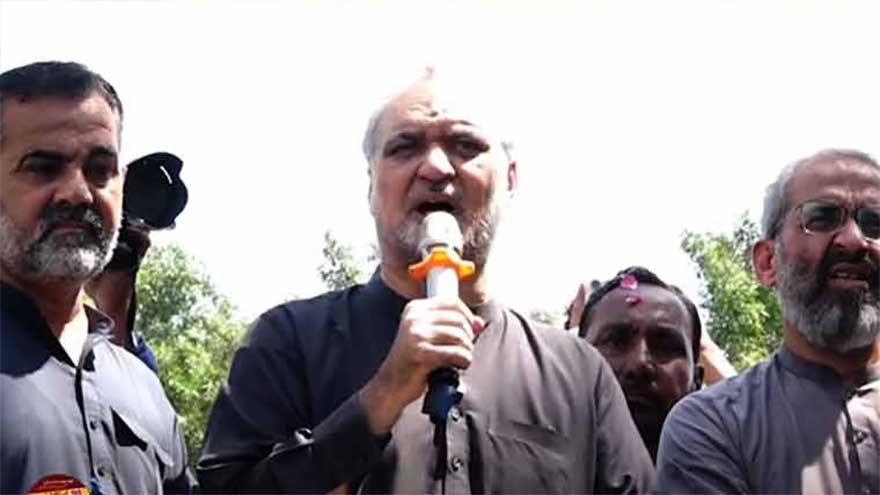
Jamaat-i-Islami (JI) Emir Hafiz Naeemur Rehman has said the party will continue its campaign on public issues as the JI train march reached Hyderabad Railway Station on Sunday.
Local JI workers and supporters welcomed Hafiz Naeem on his arrival in Hyderabad. Participants presented flowers and expressed support for the campaign.
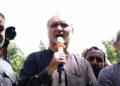
Addressing supporters at the railway station, Hafiz Naeem said the party had launched a movement to highlight public concerns. He also expressed hope that caravans from different parts of Pakistan would move towards Islamabad.
He said the campaign was not focused on a personal or party agenda. According to him, the JI was seeking to represent the concerns and economic difficulties faced by citizens.
Discussing petroleum prices, Hafiz Naeem said around Rs135 per litre was being charged as petroleum levy. He claimed petrol prices could fall below Rs200 per litre if international oil prices declined, arguing that the levy was separate from fluctuations in global crude prices.
The JI emir also criticised government spending and official privileges. He attributed part of the country’s economic difficulties to what he described as excessive privileges enjoyed by the ruling elite.
Polio Vaccination Drive Targets 31 Million Children Across Pakistan
Hafiz Naeem said ordinary citizens and wealthier sections of society should not face an unfairly distributed tax burden.
He added that government representatives had held negotiations with the JI. However, he claimed that the talks had so far failed to produce measures addressing the party’s demands.
Hafiz Naeem said the JI sit-in in Hyderabad had continued for 29 days and would remain in place.
He also said people from different parts of Pakistan had started travelling towards Islamabad as part of the campaign. He announced that the JI caravan would travel to Rohri on Sunday as the train march continued.
The JI emir thanked women and other participants involved in the demonstrations. He reiterated that the party would continue raising what it describes as public rights and economic concerns.