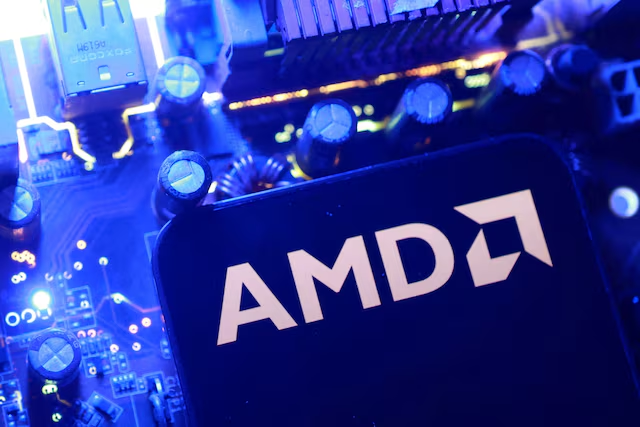
Advanced Micro Devices (AMD) has recorded a $1.07 billion non-cash charge linked to warrants issued to major artificial intelligence customers OpenAI and Meta Platforms, highlighting the financial implications of its strategy to secure large-scale AI chip orders.
The charge, equivalent to 66 cents per share, was recorded in the third quarter ended September 26 as shipments under the agreements began to increase, AMD said on Tuesday.
The chipmaker’s strategy involves offering major customers the opportunity to acquire shares in the company in exchange for substantial long-term purchasing commitments.
The approach is beginning to influence AMD’s financial results as demand for AI computing infrastructure continues to grow.
AMD Secures Major AI Chip Commitments
In February, AMD agreed to supply Meta with up to $60 billion worth of AI chips over five years. Under the agreement, Meta received warrants that could allow it to acquire as much as 10% of AMD if certain commercial milestones are achieved.
The deal followed a similar agreement with OpenAI last year, which also gave the artificial intelligence company the option to acquire roughly 10% of the chipmaker.
Tesla Accused of Misleading South Korean Customers Over Full Self-Driving Software
These arrangements are designed to secure major customers and strengthen AMD’s position in the rapidly expanding AI semiconductor market.
However, the agreements also carry potential risks for existing shareholders because the exercise of the warrants could significantly increase AMD’s total share count.
OpenAI and Meta could acquire substantial stakes at a price as low as one cent per share if all the relevant warrants vest and are exercised. Their eventual value will depend on AMD’s share price and the conditions attached to each agreement.
OpenAI’s warrants include specific AMD share-price thresholds, while Meta’s arrangement does not.
AI Demand Drives Stronger Growth Outlook
AMD forecast faster-than-expected growth in 2027, supported by rising demand for its data-centre products.
The outlook boosted investor confidence, sending AMD shares up 8% in extended trading on Tuesday. Shares of other major semiconductor companies, including Intel, Nvidia and Broadcom, also moved higher.
Analysts described the agreements as a significant endorsement of AMD’s AI chips and software, although they said the deals were unlikely to immediately challenge Nvidia’s dominant position in the market.
Nvidia continues to sell all the AI chips it can manufacture, reflecting strong demand from companies building and expanding AI infrastructure.
Bob O’Donnell, chief analyst at TECHnalysis Research, said customer incentives had played a role in some sales but pointed to growing demand for alternatives to Nvidia.
He said AMD’s products were increasingly competing on price and performance, giving customers another option in the AI chip market.
Shareholder Dilution Remains a Concern
AMD finance chief Jean Hu said during Tuesday’s analyst call that the warrants would begin diluting existing shareholders once OpenAI and Meta meet the vesting and exercise requirements.
Those conditions include shipment targets and other commercial milestones.
Hu said AMD expected to provide further guidance in 2027 on when the requirements could be fulfilled.
The arrangements reflect a broader trend across the AI semiconductor and cloud infrastructure industries, where companies are using equity incentives to secure large, long-term purchasing commitments.
Other AI Companies Adopt Similar Deals
Several other technology companies have entered into comparable equity-linked arrangements with major AI customers.
Chip startup Cerebras granted OpenAI warrants linked to a $20 billion purchasing commitment.
Marvell has also issued warrants to Google, potentially allowing the search giant to acquire a stake worth up to $12.2 billion.
Meanwhile, Qualcomm provided Amazon with warrants as part of a $60 billion agreement involving AI data-centre chips.
AMD has separately reached a chip-purchasing arrangement with OpenAI rival Anthropic. That agreement also includes a commitment from AMD to invest in the AI company.
These deals highlight the increasingly interconnected nature of the AI industry, where companies can simultaneously act as customers, suppliers and investors.
While the arrangements help semiconductor companies secure major orders, they also raise questions about shareholder dilution and the long-term financial implications of equity-based incentives.