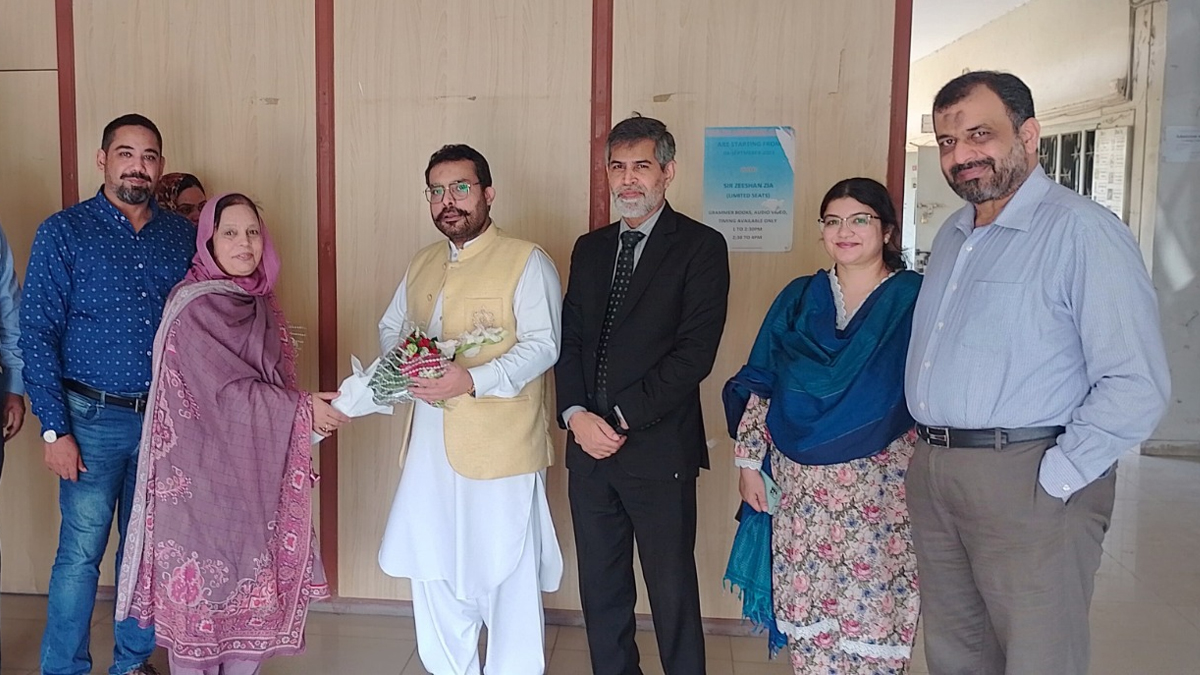

Pakistan Debt Market reforms took centre stage at an investor briefing hosted by the Pakistan Stock Exchange (PSX) in collaboration with the Ministry of Finance, where senior officials outlined the government’s strategy to strengthen debt management, expand Sukuk issuance and improve capital market participation.
The session, held at the Dr. Shamshad Akhtar Auditorium in Karachi, brought together officials from the Ministry of Finance, Pakistan Stock Exchange, banks, asset management companies, brokers and other market participants to discuss debt management, fiscal reforms, secondary market development and sovereign Sukuk.
Speaking at the event, Pakistan Stock Exchange Managing Director and Chief Executive Officer Farrukh H. Sabzwari said the PSX has strengthened its role in government debt issuance through the successful launch of the country’s inaugural hybrid Government of Pakistan Sukuk.
He said government Sukuk issuance reached PKR 3.5 trillion during FY2026, compared with PKR 2.2 trillion in FY2025, while total capital market-based debt issuance increased to PKR 6.4 trillion. He added that the Average Daily Traded Volume (ADTV) rose to PKR 3.9 billion, up from PKR 2 billion a year earlier.
Sabzwari also noted that secondary market participation has expanded significantly, with 11 banks and three asset management companies receiving direct market access, while 51 Bills and Bonds (BNB)-enabled brokers now facilitate trading in government Sukuk.
Advisor to the Finance Minister Khurram Shehzad said the government’s fiscal strategy is based on three priorities: relief, growth and fiscal responsibility. He said exporters continue to receive refinance facilities at 4.5%, while small and medium-sized enterprises have benefited from reductions in the super tax.
Shehzad said Pakistan’s debt-to-GDP ratio improved from 75.2% in 2023 to 68.5%, while the government retired PKR 4.7 trillion in expensive debt over the past two years, including PKR 2.2 trillion during FY2026. He added that debt growth has slowed to 5%, the lowest level in 15 years, while the share of government revenue spent on debt servicing has declined from 61% to 40%.
He also said the government plans to privatise three electricity distribution companies by the end of the year and is preparing additional privatisation initiatives in the energy, airport and banking sectors.
Advisor on Debt to the Finance Minister Omer Khan said debt sustainability remains the government’s central objective. He said the Average Time to Maturity (ATM) of public debt has increased from 2.6 years three years ago to 3.9 years, while Roshan Digital Account inflows have reached approximately $300 million per month.
Khan added that Pakistan has returned to international capital markets through Eurobond and Panda bond issuances and is preparing to introduce the tokenisation of sovereign debt, making it one of the first countries to pursue such an initiative.
Director of Domestic Debt Khaliq Uz Zaman said transparent engagement with investors has played a key role in improving debt management and lowering borrowing costs. He noted that the government achieved PKR 3 trillion in gross Sukuk issuance during FY2026 through a hybrid structure supported by digital platforms including JazzCash, InvestPak, the Central Directorate of National Savings (CDNS) and Roshan Digital Accounts.
He said Pakistan plans to launch its first short-term sovereign Sukuk programme, targeting PKR 400–500 billion through three-month and six-month instruments. The programme aims to complete the sovereign Sukuk yield curve, broaden the investor base and strengthen domestic savings.
Officials said the latest reforms reflect the government’s commitment to building a deeper, more liquid and sustainable domestic debt market while improving investor confidence through fiscal discipline and capital market development.