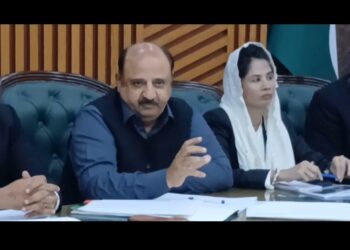
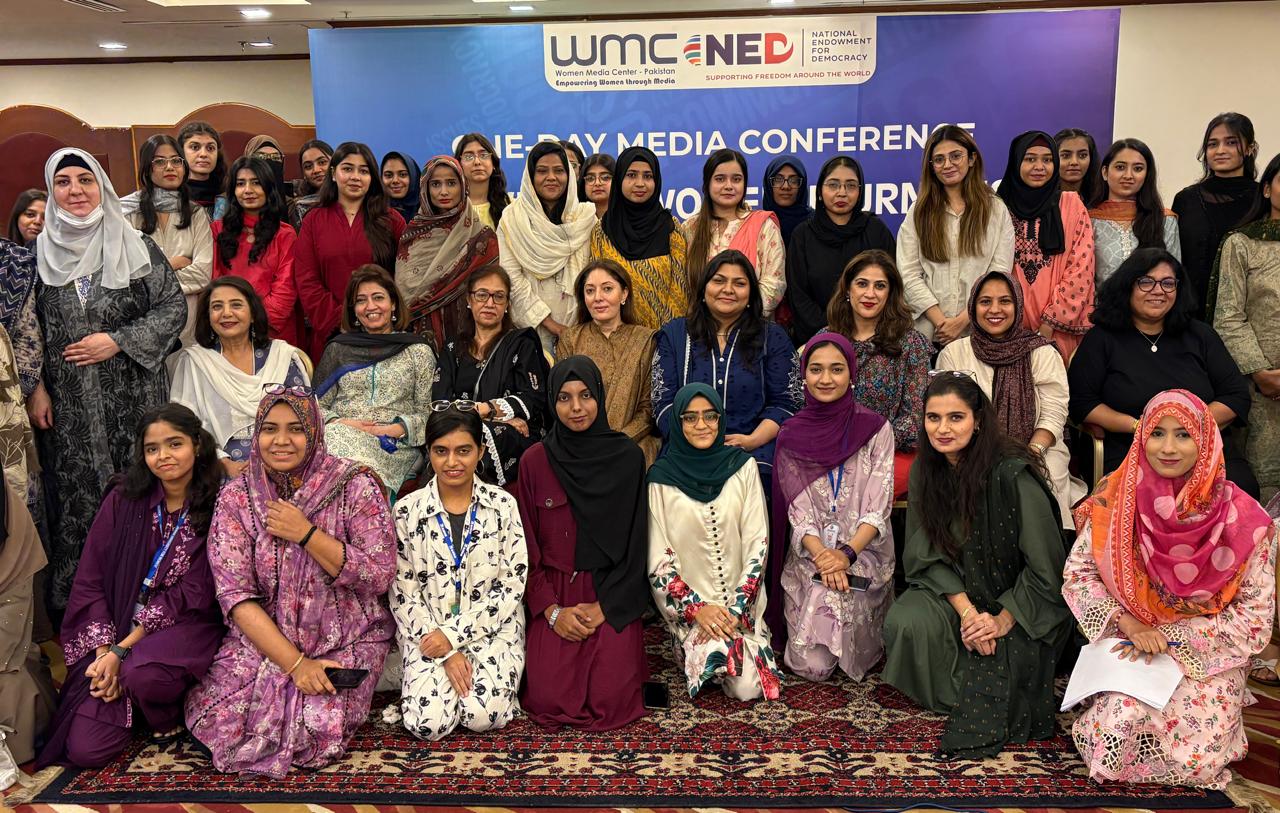
Women Journalists need a safer, more inclusive and empowering media environment, Member of the National Assembly Sharmila Farooqui said while calling for greater female participation and leadership in Pakistan’s journalism profession.
Speaking at the one-day conference, “Empowering Women Journalists: Leadership, Safety and Innovation,” in Karachi, Farooqui said the number of women entering journalism is declining and requires urgent attention. She said women journalists play a vital role in highlighting issues affecting women, children and other social sectors.
Reflecting on changes in journalism, she said, “In the past, a successful journalist was the one who broke the news first. Today, a successful journalist is the one whose story proves to be accurate the next day.”
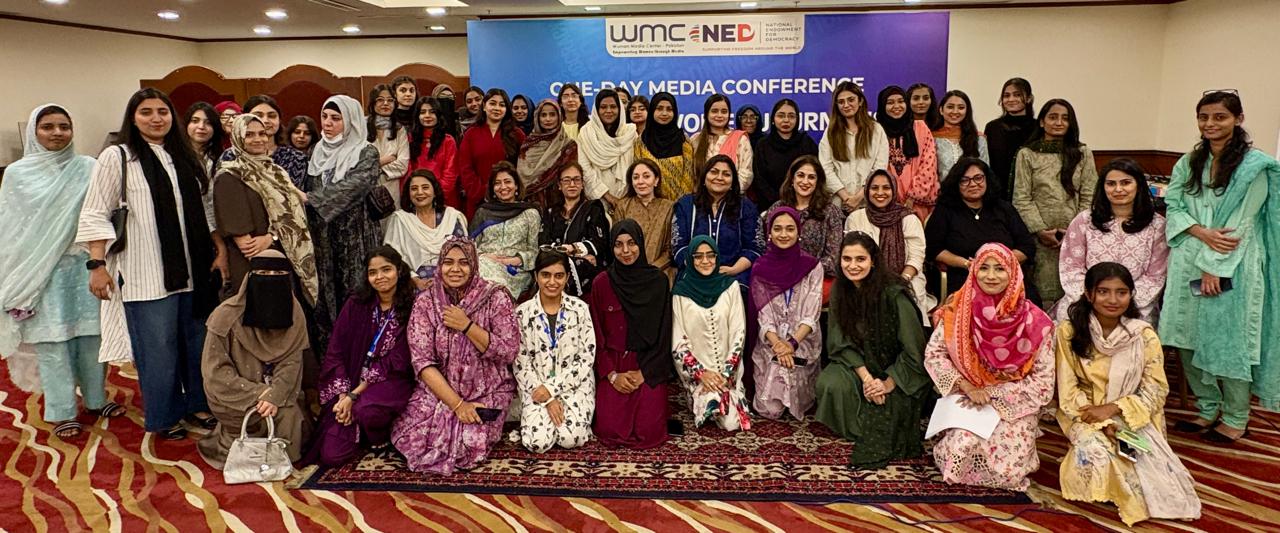
The conference, organised by the Women Media Center Pakistan (WMC) with the support of the National Endowment for Democracy (NED), brought together journalists, media professionals, academics, civil society representatives and students from across the country. Participants discussed women’s leadership, digital safety, online harassment, misinformation, ethical journalism, artificial intelligence and emerging opportunities in digital media.
WMC Founder and Chief Executive Officer Fauzia Shaheen highlighted the gap between the number of women studying media and their representation in news organisations, particularly in leadership positions. She encouraged women to actively pursue leadership roles rather than waiting for opportunities.
Amber Shamsi, Editor at Nukta Pakistan, shared her professional journey and said passion for journalism motivated her to continue despite financial challenges early in her career. She also reflected on reporting from conflict zones and stressed the importance of resilience in the profession.
Digital rights activist and Bolo Bhi co-founder Farieha Aziz discussed online safety and legal protections for journalists. She said women journalists continue to face widespread online abuse, including AI-generated deepfakes, despite the existence of cybercrime legislation. She called for stronger enforcement of laws and greater protection for journalists.
BBC Urdu and Arab News Pakistan reporter Buraq Shabbir emphasised the importance of verifying information through multiple credible sources to combat misinformation and disinformation in the digital age.
Rabia Mushtaq, Senior Sub-Editor at Geo Digital, said artificial intelligence can assist journalists but cannot replace editorial judgment or rigorous fact-checking. She stressed that verification remains the cornerstone of responsible journalism.
Shazia Hasan, Senior Staff Reporter at Dawn, encouraged women journalists to pursue reporting assignments based on their interests instead of limiting themselves to traditionally assigned beats. She shared her experience of covering sports in a predominantly male environment.
Academic Dr. Huma Baqai said women have made significant progress across many sectors but remain underrepresented in leadership and decision-making positions. She also highlighted the need for greater female representation in artificial intelligence management and technology-related fields.
The conference included interactive question-and-answer sessions on newsroom equality, leadership opportunities, digital security, ethical reporting, artificial intelligence and the evolving role of social media.
Speakers unanimously called for collective action by media organisations, policymakers and civil society to create safer workplaces, ensure equal opportunities and strengthen women’s participation in leadership and decision-making across Pakistan’s media industry.
The conference concluded with a renewed commitment to supporting women journalists, promoting professional development and building a more inclusive and secure media landscape.