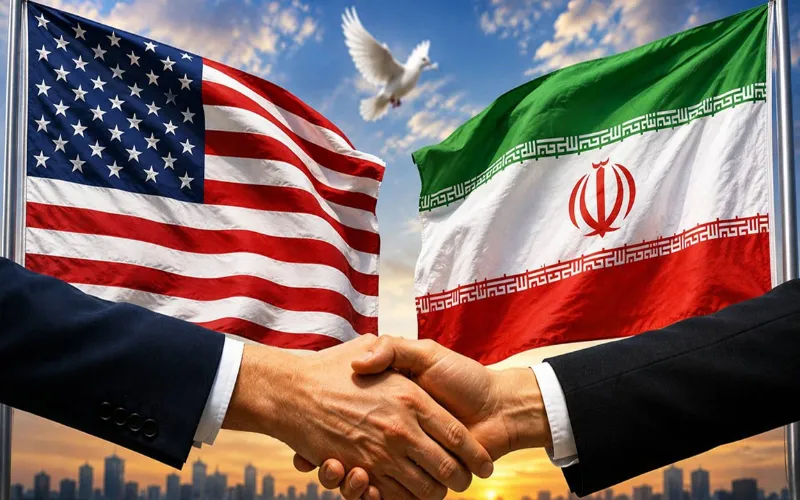
US-Iran Ceasefire: The United States and Iran have signalled a willingness to reduce tensions after days of military exchanges, agreeing to halt hostilities temporarily and resume diplomatic talks aimed at preserving a fragile ceasefire and safeguarding maritime security in the Strait of Hormuz.
The development follows a week of missile strikes, drone attacks and competing allegations of ceasefire violations that disrupted one of the world’s busiest shipping routes and unsettled global energy markets.
According to a US official, Washington and Tehran have agreed to “stand down for now” under a 14-point Memorandum of Understanding signed on 17 June. The framework is intended to ensure the safe passage of commercial vessels through the Strait of Hormuz while broader negotiations continue.
The official said technical discussions would continue on all aspects of the agreement, allowing commercial shipping to move freely as diplomatic efforts proceed.
US media reports indicate that the next round of negotiations is expected to take place in Doha, Qatar, on Tuesday, where officials will seek to prevent the conflict from escalating further.
The diplomatic breakthrough comes after renewed violence in the Gulf. US forces reportedly carried out strikes on Iranian military targets, citing continued threats to commercial shipping. In response, Iran’s Islamic Revolutionary Guard Corps (IRGC) claimed it launched missile and drone attacks against US military facilities in Kuwait and Bahrain.
The IRGC described the strikes as retaliation and warned that any further military escalation would have serious consequences for US interests in the region.
The recent exchanges prompted heightened security alerts across Gulf states. Kuwait and Bahrain reported activating air defence systems following missile and drone threats, while authorities said they intercepted incoming projectiles in several areas.
Bahrain also reported damage to a residential building following an attack, although officials said no casualties had been confirmed. Qatar, meanwhile, reported that one of its nationals died after sustaining injuries from shrapnel linked to the regional military activity.
The unrest has placed additional pressure on security in the Strait of Hormuz, a vital maritime corridor through which a significant share of global oil supplies passes.
Iran has warned against any attempt to bypass its preferred shipping routes in the Strait of Hormuz and cautioned regional countries, including Bahrain, against supporting US military operations.
Meanwhile, Israel has continued separate military operations against Iran-backed groups in southern Lebanon, targeting Hezbollah positions and adding to regional instability.
US President Donald Trump has maintained a firm stance, warning that Iran would face severe consequences if it failed to comply with the ceasefire. He said any renewed escalation could push the conflict beyond control.
Although both sides have expressed a willingness to return to diplomacy, the situation remains fragile. The upcoming talks in Doha are expected to play a key role in determining whether the ceasefire can hold or whether regional tensions will escalate once again.