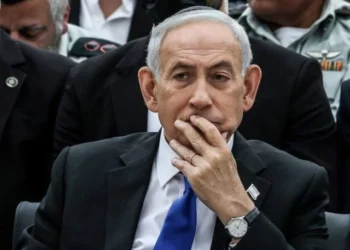
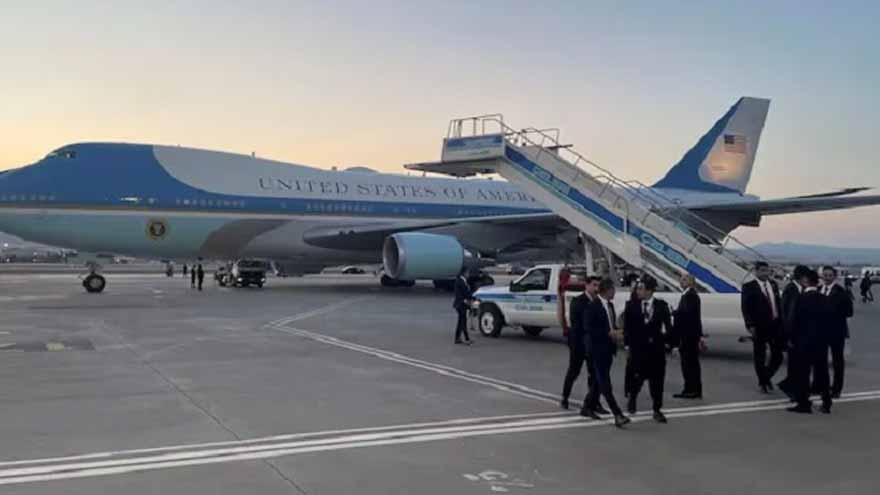
Trump was secretly moved from Air Force One to a smaller government jet during his visit to Türkiye last month after the US Secret Service received what officials considered a credible and imminent threat involving a possible shoulder-fired missile.
A person briefed on the matter said the threat emerged on the final day of Trump’s visit to Ankara for the NATO summit. Rising tensions with Iran heightened security concerns around the US president.
The Secret Service had little time to prepare. Officials therefore developed a last-minute plan to conceal Trump’s movements.
Trump Leaves on Smaller Jet
According to the source, Trump and a small group of aides used a catering truck to discreetly transfer from the presidential aircraft to a smaller C-32A jet.
The switch took place before Trump departed Türkiye on July 8.
Air Force One then left separately with senior administration officials, White House staff and members of the travelling press corps.
Trump later confirmed that the Secret Service directed the aircraft change.
Putin Russian President Visits Japan-Claimed Kuril Island Amid Tensions
“I think actually the plane that I flew on was at greater risk,” Trump told reporters on Tuesday, although he provided no evidence for the assessment.
He flew from Ankara to a refuelling stop in Britain without incident.
Threat May Have Involved Heat-Seeking Missile
The precise source of the intelligence remains undisclosed.
A second source briefed on the matter said hostile actors did not appear to have a clear operational plan to carry out an attack. Instead, officials had detected an apparent intent, which influenced the decision to allow the aircraft to continue flying.
Douglas Birkey, executive director of the Mitchell Institute for Aerospace Studies, said the threat may have involved a newer type of heat-seeking missile.
Such weapons can target the heat produced by aircraft engines. Unlike traditional radar-guided systems, they do not necessarily emit detectable radio waves, making them harder to identify.
Birkey said an Iranian SA-67 variant reportedly uses heat-seeking and laser guidance. He also identified Russia’s 9K333 Verba as another shoulder-mounted heat-seeking system.
Secret Operation Raises Questions
US presidents have previously travelled under secrecy when visiting war zones or other high-risk locations.
However, such operations normally provide advance notice to journalists travelling with the president.
The source said the Secret Service did not have that luxury in Ankara.
“They were scrambling to head off what they thought was a credible, imminent threat,” the source said.
The Washington Post first reported details of the operation more than a month after it took place.
The New York Times also reported that US officials had become concerned after learning that Iranian officials knew where Trump was staying in Ankara, including the exact floor of his hotel.
Air Force One Used as a Decoy
The aircraft that normally serves as Air Force One effectively became a decoy during the operation.
US Secretary of State Marco Rubio, Treasury Secretary Scott Bessent, White House communications director Steven Cheung and other officials remained aboard the aircraft.
The plane also carried the regular 13-member press pool, including a Reuters correspondent and photographer.
Meanwhile, White House deputy chief of staff Dan Scavino, executive assistant Natalie Harp and Oval Office operations director Walt Nauta accompanied Trump during the transfer to the smaller jet.
Some lawmakers and media commentators have questioned whether the operation exposed the officials and journalists who remained aboard Air Force One to additional risk.
The source said officials concluded that concealing Trump’s movements was the safest option as tensions with Iran increased.
Turkish officials had not immediately commented on the reported threat.