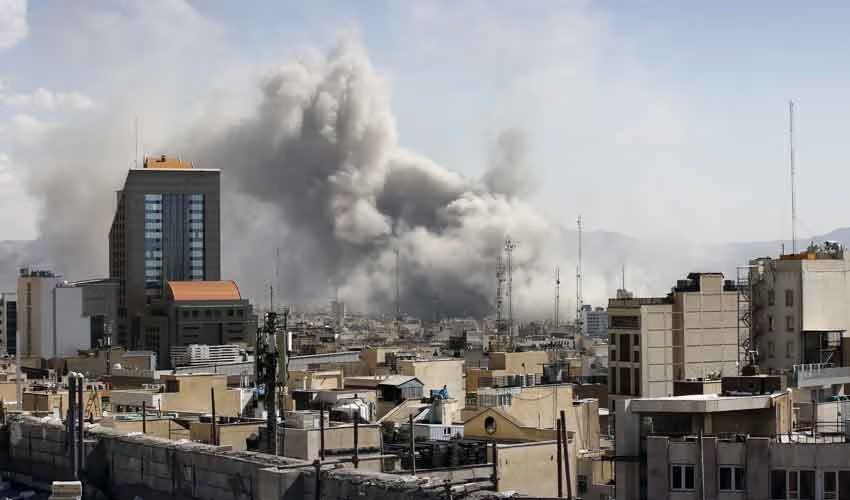
Israel Iran Conflict Enters New Stage
The Israel Iran conflict intensified on Monday as both countries exchanged fresh attacks. As a result, concerns about a wider regional war increased once again.
Meanwhile, reports suggested that US President Donald Trump urged Israeli Prime Minister Benjamin Netanyahu to avoid further escalation. However, military activity continued on both sides.
Iran Targets Israeli Air Bases
Iran said it launched missiles toward key Israeli military facilities. According to the Islamic Revolutionary Guard Corps, the attacks targeted Nevatim and Tel Nof air bases.
Furthermore, Iranian officials described the operation as a response to recent Israeli strikes. They also warned that any new aggression could trigger a stronger reaction.
Meanwhile, Iranian media reported additional missile launches toward Israel. Consequently, warning sirens sounded in Tel Aviv and other areas.
Israel Strikes Mahshahr Energy Site
The Israel Iran conflict widened when Israel confirmed strikes on targets inside Iran. Israeli forces said they targeted military sites and facilities linked to the Mahshahr petrochemical complex.
According to Iranian media, parts of the facility suffered damage. In addition, authorities reportedly evacuated sections of the special petrochemical economic zone after the attack.
Notably, this marked the first reported Israeli strike on an energy-related site since the ceasefire announced in April.
Israel Reports Missile Interceptions
Israeli military officials said defense systems responded after detecting missiles launched from Iran.
At the same time, Israel’s ambassador to the United States, Yechiel Leiter, stated that Iran fired multiple ballistic missiles toward Israeli territory.
Moreover, Israeli authorities said they targeted missile launch sites and military infrastructure inside Iran. Therefore, military tensions remained high throughout the day.
Lebanon Strikes Complicate Diplomacy
The Israel Iran conflict also affected regional diplomacy. While Washington has pushed for de-escalation, Israeli strikes in Beirut added new pressure on negotiations.
Netanyahu said the attacks targeted areas linked to Hezbollah after rockets were reportedly fired toward Israel.
Meanwhile, Iranian officials continued to argue that regional stability depends on maintaining ceasefire arrangements in Lebanon. Consequently, diplomatic efforts faced new challenges.
US Criticism Adds Political Pressure
US Senator Chris Murphy criticized Israel’s latest actions.
He claimed that Netanyahu ignored Trump’s request for restraint. Furthermore, Murphy argued that the ongoing conflict had weakened US diplomatic efforts in the region.
However, Israeli officials maintained that military operations remain necessary for national security.
Strait Of Hormuz Remains Key Issue
The Israel Iran conflict continues to affect global trade routes. In particular, the Strait of Hormuz remains central to ongoing negotiations.
The waterway handles a significant share of global oil and liquefied natural gas shipments. Therefore, any disruption could affect international energy markets.
At the same time, US and Iranian officials have discussed measures that could help restore shipping activity through the route.
Iran Seeks Sanctions Relief
Iran continues to push for broader concessions in any future agreement. These demands reportedly include sanctions relief and access to frozen financial assets.
Meanwhile, Iranian officials also seek recognition of Tehran’s role in managing shipping arrangements around the Strait of Hormuz.
Although both sides have discussed possible agreements, military exchanges continue. As a result, uncertainty remains over the future of regional stability.
Regional Tensions Remain High
The Israel Iran conflict remains one of the most significant security challenges in the Middle East.
For now, both countries continue to exchange warnings and military actions. Meanwhile, international powers are trying to prevent a wider confrontation.
Consequently, developments in the coming days could shape both regional security and global energy markets.