BEIRUT: Lebanon announced on Monday a partial ceasefire between Hezbollah and Israel. The agreement marks a limited step toward de-escalation in a conflict that has continued for months across the region.
According to Lebanon’s embassy in Washington, the deal does not end the war. Instead, it sets narrow conditions for reducing attacks in specific areas.
Under the agreement, Israel would avoid strikes on Beirut and nearby suburbs controlled by Hezbollah. In return, Hezbollah would reduce or halt attacks on Israeli territory.
Fighting Continues Despite Announcement
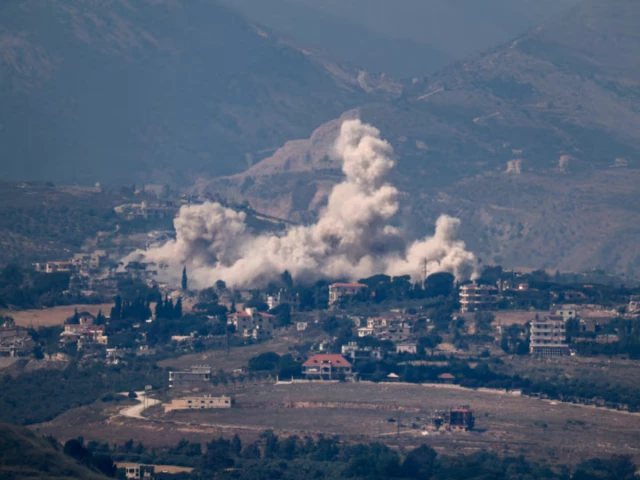
However, clashes continued in southern Lebanon even after the announcement. Israeli forces reported ongoing military activity in the region on Monday evening.
Early on Tuesday, the Israeli military said it intercepted two projectiles fired from Lebanon. No injuries were reported in the incident.
Despite the ceasefire announcement, the situation on the ground remained tense and unstable.
Trump Claims Breakthrough in Talks
US President Donald Trump announced the agreement and described it as part of broader diplomatic efforts involving intermediaries.
He said Hezbollah had agreed not to attack Israel. He also stated that Israeli Prime Minister Benjamin Netanyahu agreed to pause plans for a strike on Beirut.
However, no direct talks have ever taken place between the United States and Hezbollah, which Washington classifies as a terrorist organization.
Trump also said Israel would pull back forces preparing for operations near Beirut.
Conflicting Statements From Israel
After Trump’s announcement, Netanyahu’s office said Israel would continue military operations in southern Lebanon.
Israeli forces are currently advancing toward the Zaharani River. This marks one of the deepest ground incursions in Lebanon in more than two decades.
Meanwhile, Hezbollah lawmaker Hassan Fadlallah said the group supports a full ceasefire across Lebanon. However, he did not confirm whether Hezbollah would fully stop attacks on Israel.
Lebanon Seeks Expanded Agreement
Lebanon said it will push to expand the ceasefire during talks scheduled in Washington.
Officials hope broader negotiations could help restart stalled peace efforts. These talks have faced repeated delays due to disagreements over conditions and enforcement.
Wider Regional Tensions Continue
The Lebanon conflict remains linked to broader tensions involving Iran, Israel, and the United States.
Iran has insisted that Israeli military activity in Lebanon must stop before any wider agreement is reached. In contrast, the US maintains that the conflicts should be handled separately.
Iranian Foreign Minister Abbas Araghchi said the ceasefire between Iran and the US should apply across all fronts, including Lebanon.
Continued Strikes and Escalation Risks
Despite diplomatic efforts, Israeli forces continued strikes across southern Lebanon. Reports indicated artillery fire near Nabatieh and airstrikes on multiple villages.
Separately, Iran’s state media reported a pause in indirect negotiations with the United States. However, US officials said they had not received confirmation of any formal suspension.
US President Trump later said he was unconcerned about whether talks continued. He added that negotiations had become “very boring.”
Energy and Security Concerns Rise
Iran has also warned of expanding pressure on key maritime routes, including the Strait of Hormuz and the Bab el-Mandeb Strait.
Rising tensions have already affected global oil markets. Prices increased by around four percent on Monday amid growing uncertainty in the region.
Despite the partial ceasefire announcement, fighting and political disagreements continue to fuel instability across Lebanon and the wider Middle East.