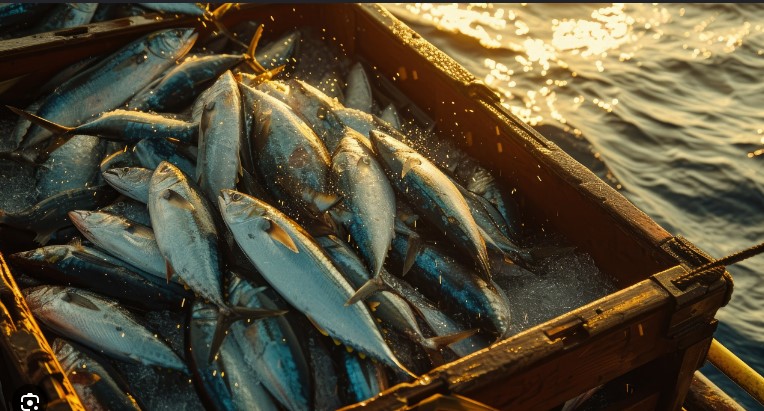

Pakistan has taken several important policy initiatives to strengthen its fisheries and aquaculture sector demonstrating a growing commitment to sustainable resource management and the Blue Economy. These include the implementation of provincial five-year fisheries development plans promotion of cluster shrimp farming in Sindh and Balochistan establishment of shrimp hatcheries, attraction of foreign investment in seafood processing, prohibition of the use of trash fish for fishmeal production, restrictions on destructive fishing practices such as trawling and seining and efforts to streamline fisheries governance at the federal level. These initiatives provide an important policy foundation for transforming Pakistan’s fisheries sector into a more productive, sustainable and internationally competitive industry.
These achievements deserve recognition because they reflect a shift from fragmented sectoral interventions towards a more coordinated national approach to fisheries development. The emphasis on aquaculture expansion, value addition, foreign investment, and sustainable harvesting practices is consistent with international priorities under the FAO Blue Transformation Strategy, SDG 14 (Life Below Water), and Pakistan’s broader Blue Economy objectives. The effectiveness of these reforms will ultimately depend on the quality of implementation, institutional coordination and continuous monitoring. While several directives have been formally completed, challenges remain in translating policy commitments into measurable improvements in fisheries sustainability, resource conservation and community livelihoods.
Tarab Nafees Applauds Pakistan Idol for Empowering Emerging Music Talent
One of the most pressing challenges is the need to strengthen Monitoring, Control and Surveillance (MCS) systems to combat Illegal, Unreported and Unregulated (IUU) fishing. Similarly, Pakistan continues to face limitations in fisheries stock assessments, digital catch reporting systems, fisheries statistics, ecosystem monitoring and climate-risk assessments all of which are essential for science-based decision-making. Without reliable scientific data, fisheries management risks becoming reactive rather than preventive.
Another critical issue is institutional coordination. Fisheries governance in Pakistan involves multiple federal and provincial institutions responsible for fisheries, maritime affairs, ports, environment, climate change, trade and coastal development. Despite recent efforts to improve coordination, overlapping mandates and fragmented decision-making continue to constrain policy implementation. A more integrated governance model is therefore required to align national priorities with provincial implementation and international commitments.
Looking ahead, Pakistan should build upon the progress already achieved by transitioning from project-based interventions towards integrated ocean governance. This requires mainstreaming Ecosystem-Based Fisheries Management (EBFM), Marine Spatial Planning (MSP), climate adaptation, digital fisheries management, electronic catch documentation, Vessel Monitoring Systems (VMS) and regular scientific stock assessments into national fisheries policies.
An equally important priority is the establishment of a National Fisheries Coordination and Advisory Task Force operating within Pakistan’s broader maritime governance framework. Such a mechanism could bring together the Ministry of Maritime Affairs, Marine Fisheries Department, provincial fisheries departments, environmental agencies, research institutions, academia, industry representatives, coastal communities and development partners to improve policy coordination, monitor implementation, promote evidence-based decision-making and strengthen. Pakistan’s compliance with UNCLOS, SDG 14 and regional fisheries conservation measures.
Pakistan has already laid the policy foundations for sustainable fisheries development. The next phase should focus on implementation, institutional integration, scientific innovation and stakeholder participation. Strengthening fisheries governance is no longer only an environmental or sectoral priority, it is a strategic imperative for maritime security, food security, economic resilience, biodiversity conservation and the long-term success of Pakistan’s Blue Economy.
About the Author
Dr. Nazia Sher is a Research Associate at National Institute of Maritime Affairs (NIMA) with expertise in fisheries governance, Blue Economy and maritime policy.