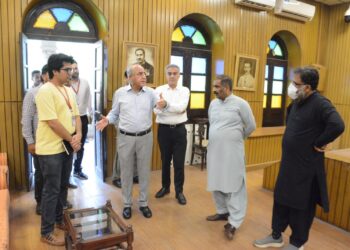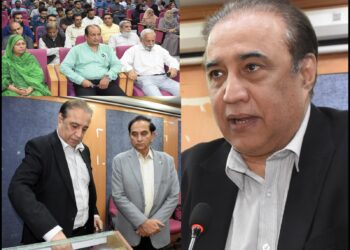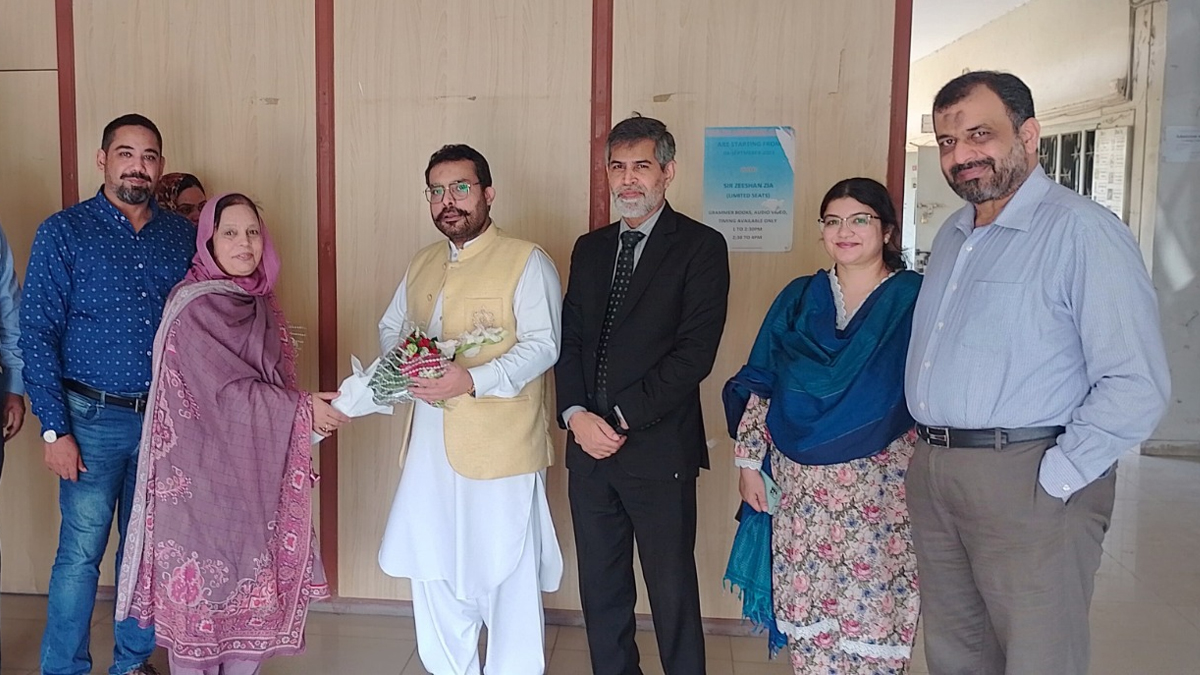
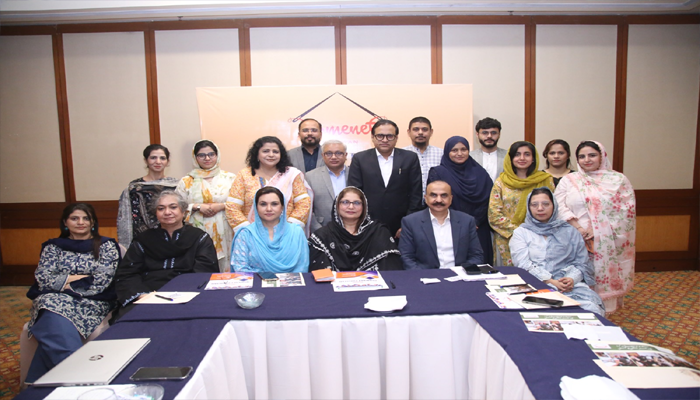
Karachi: SCSW Chairperson showed her reservations on the delayed implementation of Sindh HBWs Act. “Sindh HBWS Act was enacted in 2018 stills lacks true implementation and reach out across province” Advocate Rubina , Chairperson SCSW highlighted during the One-Day Provincial Policy Dialogue with Parliamentarians and the Government of Sindh on the implementation of the Home-Based Workers (HBWs) Act 2018 was organized by HomeNet Pakistan. The dialogue brought together key stakeholders including parliamentarians, government officials, labour rights organizations, union representatives, and women home-based workers. Rubina Barohi, Chairperson Sindh Commission on the Status of Women (SCSW), in her keynote address highlighted the importance of institutional accountability and the role of government in ensuring that women home-based workers are not left behind in policy implementation processes.
Ume Laila Azhar, Executive Director HomeNet Pakistan, highlighted the importance implementation of HBWs Act in light of CSDDD and BHR. Despite the enactment of the Sindh Home-Based Workers (HBWs) Act, 2018, its implementation remains significantly delayed and uneven. Addressing these gaps requires a coordinated, well-resourced, and accountable approach. She emphasized that while legislative progress has been made, the real challenge lies in ensuring effective implementation of the law so that home-based workers are recognized, protected, and able to access their rights. The policy dialogue brought together stakeholders to collectively review the enactment delays in past 8 years. The need of time is to notify directorate of informal economy, Ume Laila stressed. Sustained advocacy and strategic engagement with relevant government authorities are essential to ensure effective implementation of the Act.
Mr. Sajid Jamal Abro, Secretary of the Labour & Human Resources Department (LHRD), appreciated HomeNet Pakistan interventions for bringing the issues on table and for initiating an important discussion on the challenges related to the implementation of the Home-Based Workers Act. He emphasized the significance of this process and assured that all key points raised during the dialogue would be taken forward and followed up by the Labour Department under the leadership of LHRD representative Reejumal.
Mr. Reejumal Sajnani shared progress on the implementation of the Sindh Home-Based Workers Act, noting that although a Governing Body has been formed, its functioning was affected due to the return of last year’s budget. He highlighted operational challenges but reaffirmed the government’s openness to recommendations and support for the process. He also emphasized the need for collaboration with like-minded organizations to speed up worker registration and called for contributions from workers, the government, and SESSI to ensure effective implementation.
Waseem Jamal from Sindh Employees’ Social Security Institution emphasized that improving social protection in Sindh requires stronger coordination among key departments such as Labour, Women Development, Local Government, and Social Welfare through regular, institutionalized meetings. He also highlighted the importance of integrating initiatives like the Benazir Income Support Programme to enhance financial support. Additionally, he recommended adopting an inclusive contribution model where the government provides the majority share while workers contribute minimally. He noted that SESSI currently has around 800,000 registered workers, of whom 600,000 are actively contributing, indicating progress but also the need to further expand coverage.
Sadaf Parveen, Union Secretary, shared the journey of home-based workers from invisibility to recognition under the Sindh HBWs Act 2018, highlighting both progress and ongoing challenges.
She emphasized issues in accessing registration, social protection, and fair working conditions.
She recommended establishing HBW Help Desks at district level to support registration, grievance redressal, and access to services.
Further, Abbas Haider (PILER) along with Ume Laila Azhar discussed the importance of home-based workers within the Human Rights Due Diligence (HRDD) framework and the relevance of the UN Guiding Principles on Business and Human Rights (UNGPs), particularly in the context of informal and supply chain workers.
Ms Fauzia MPA, including members of the NCSW Sindh , Women Parliamentary Caucus, actively engaged in the discussion and responded to key questions regarding policy implementation, budget allocations, and oversight mechanisms. The session provided an opportunity for direct dialogue between duty bearers and workers’ representatives. The current registration process requires simplification and standardization. Clear protocols should be developed for verification through Union Councils and relevant bodies, ensuring that home-based workers receive facilitation at the local level. Delays caused by verification bottlenecks must be urgently addressed
The dialogue concluded with a collective discussion on the way forward, emphasizing the need for stronger coordination among departments, improved data systems, allocation of adequate resources, and enhanced legislative oversight to ensure effective implementation of the HBWs Act 2018.
Core Recommendations
- Strengthen Governance & Accountability
Ensure strong political commitment, regular monitoring, and bureaucratic accountability to prioritize HBWs’ rights. - Improve Institutional Coordination
Establish effective coordination among departments and stakeholders for smooth implementation. - Allocate Transparent Budgets
Provide dedicated funding for registration, data systems, and HBW Fund with clear and accountable spending plans. - Simplify Registration Processes
Make registration and verification easier, faster, and more accessible for workers. - Increase Awareness & Capacity Building
Run large-scale campaigns and training to help workers understand their rights and registration procedures.