Bahrain has accused Iran of striking a civilian industrial facility on Saturday, triggering a fire and causing damage but no reported casualties, as two tankers also came under attack in the Strait of Hormuz.
The Gulf kingdom has faced several attacks this week, ending a weeks-long lull in hostilities that began with US-Israeli strikes on Iran in late February.
Bahrain’s Interior Ministry said the attack targeted a civilian industrial facility and sparked a fire. Civil Defence teams were working to bring the blaze under control, according to a statement posted on X.
The ministry did not identify the facility. However, residents told AFP they had seen smoke rising over Sitra Island on Bahrain’s eastern coast, which hosts several industrial facilities, including a refinery operated by state-owned oil company Bapco.
Iran’s Islamic Revolutionary Guard Corps (IRGC), meanwhile, said it had targeted US military positions at the Al-Riffa and Awali bases in Bahrain with missiles and drones.
Myanmar Calls ASEAN Decision ‘Unfair and Imbalanced’ Over Summit Representation
The Guards also claimed that two radars belonging to US Army Patriot air defence systems had been struck. They warned that any violation of Iranian airspace would trigger a “harsh and decisive response”.
Tankers hit in Strait of Hormuz
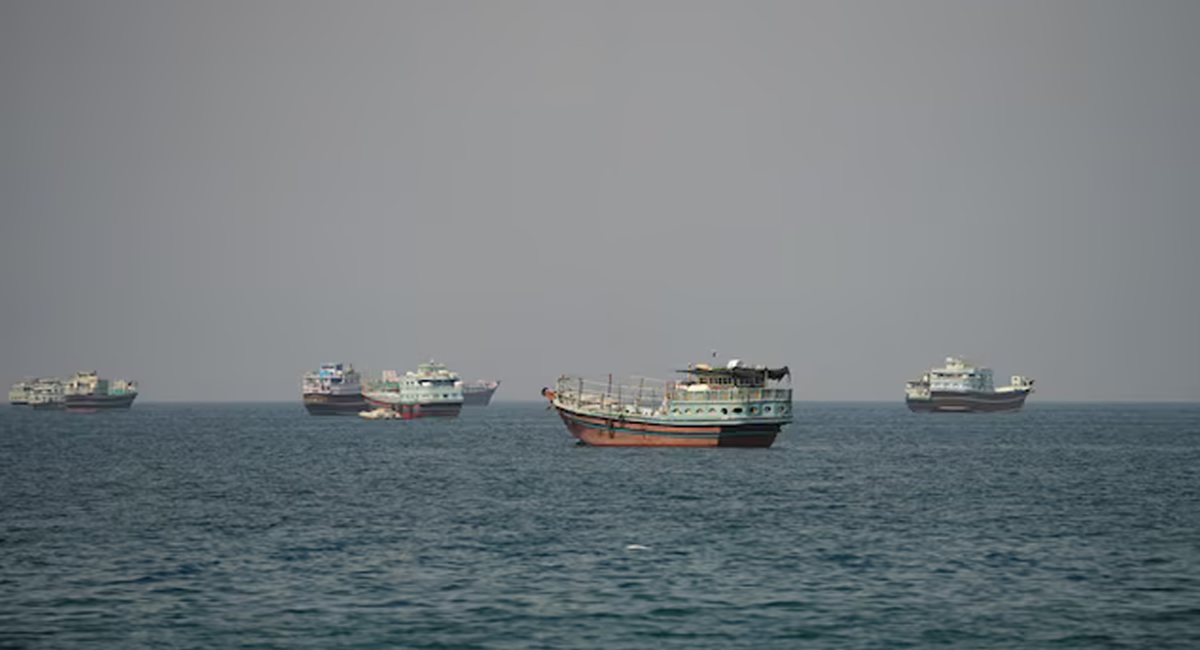
The attacks came as two tankers were reportedly struck in the Strait of Hormuz, a strategic shipping route that has become a major flashpoint in the conflict.
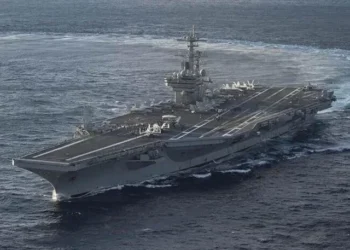
Iran has continued efforts to restrict shipping through the waterway, while the United States has been escorting vessels through the strait and maintaining a counter-blockade of Iranian ports.
Before the conflict, the Strait of Hormuz carried around one-fifth of the world’s oil supplies.
The British maritime security agency UK Maritime Trade Operations (UKMTO) said one tanker was hit by an unidentified projectile while transiting the strait. It reported no casualties at the time of its statement and said another tanker had sustained damage to its engine room.
Iran’s army later reported that a vessel had caught fire after entering what it described as a restricted area and striking a mine.
According to a statement carried by Iranian state television, the tanker had switched off its identification and navigation systems in violation of warnings and maritime transit regulations.
Tehran has repeatedly reported vessels catching fire in the strait in recent weeks, often claiming they struck mines. The US military, however, recently said it had cleared mines from the main shipping routes through the waterway.
US Central Command (CENTCOM), which oversees American military operations in the region, said last month that it had helped Gulf countries export 1.5 billion barrels of oil through Hormuz since the summer.
Iran reports shooting down US drone
Iranian state television reported on Saturday that the country’s forces had shot down a US drone over Qeshm Island in the Strait of Hormuz.
A US military official had previously said American fighter jets struck an Iranian missile site on the island last Tuesday.
The developments came amid continued diplomatic contacts aimed at addressing the conflict and easing tensions over maritime security.
Iranian Deputy Foreign Minister Kazem Gharibabadi said a Qatari delegation had visited Tehran the previous evening and held two hours of talks. He did not disclose further details.
Iranian Foreign Minister Abbas Araghchi said ongoing regional negotiations should be given an opportunity to succeed and called for the lifting of the blockade.
However, he maintained that discussions about reopening the Strait of Hormuz would remain pointless unless Iran’s demands were met.
Tehran’s demands include an end to the war on all fronts, the unfreezing of Iranian assets, the lifting of oil sanctions and the removal of the US counter-blockade on Iranian ports.
Tehran calls economic blockade an act of war
Washington announced an economic pressure campaign against Iran in August, describing it as an effort to restrict the country’s trade and financial flows.
Gharibabadi said Iran considered the economic blockade an act of war and would take all necessary measures to end it.
He said Tehran had communicated its position to other parties, including mediators, and maintained that the United States was aware of its concerns.
Iran refuses to move enriched uranium stockpiles
In an interview published on Saturday by the state-run Iran Daily newspaper, Araghchi reiterated that Tehran would not allow its stockpiles of enriched uranium to be transferred outside the country.
Iran’s nuclear programme remains one of the major points of disagreement between Tehran and Washington. Western countries have accused Iran of pursuing nuclear weapons capabilities, while Tehran maintains that its programme is entirely peaceful.
“I believe a solution can be found, but we have clear red lines: the material will not be taken out of the country,” Araghchi said.
Iran prepares for power cuts
Iranian President Masoud Pezeshkian said US and Israeli attacks on the country’s energy infrastructure had worsened its energy problems, warning that the country could face difficulties during the coming winter.
Mohammad Allahdad, head of Iran’s national electricity company, told state television that authorities would introduce rolling power cuts from Sunday.
“Given the country’s fuel supply conditions, the electricity sector will be forced to impose distribution restrictions,” he said.