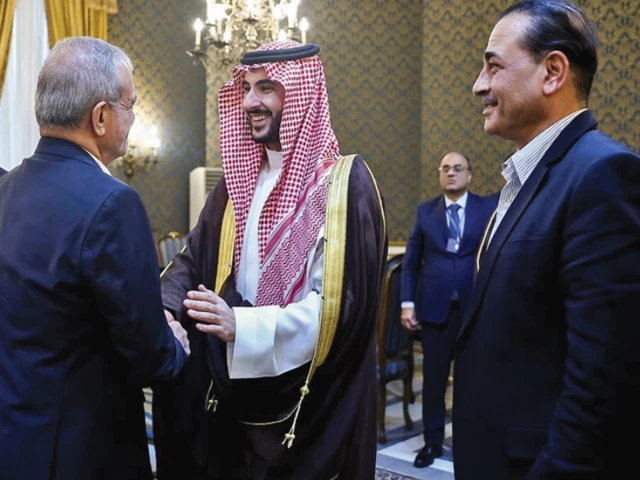
Pakistan, Saudi Arabia, Türkiye and Iran have agreed to continue a four-way dialogue on regional peace and security following a meeting in Tehran involving senior military, defence and intelligence officials.
A joint statement issued by the Iranian side said the four countries would maintain discussions aimed at strengthening regional cooperation. However, the statement announced no new security agreement, ceasefire or specific understanding on Yemen or the wider confrontation involving Iran and the United States.
The decision to continue the dialogue brings Iran into direct consultations with Pakistan, Saudi Arabia and Türkiye, which signed the Makkah Joint Defence Agreement in August.
Senior Officials Meet in Tehran
Pakistan’s Chief of Defence Forces Field Marshal Syed Asim Munir, Saudi Defence Minister Prince Khalid bin Salman and Türkiye’s intelligence chief Ibrahim Kalin travelled to Tehran for the meeting with senior Iranian officials.
Iran’s Supreme National Security Council Secretary, Major General Mohsen Rezaei, hosted the talks. The visiting officials also met Iranian President Masoud Pezeshkian.
Instagram Introduces 90-Minute Videos for Select Creators
The meeting took place amid continuing tensions involving Iran, the United States and Israel, alongside security concerns linked to Houthi attacks from Yemen. It also followed renewed diplomatic efforts by Pakistan and Qatar to prevent further military escalation involving Iran.
Saudi Arabia Calls for De-escalation
In a separate statement, Saudi Arabia’s Foreign Ministry said the visit formed part of efforts by the countries involved in the Makkah agreement to reduce tensions, encourage diplomatic solutions and support mediation efforts led by Pakistan and Qatar.
Riyadh urged the parties concerned to respond positively and practically to the Tehran meeting and ongoing mediation initiatives.
The Saudi statement also stressed the importance of opening negotiations to prevent a return to military escalation and establish a path towards an agreement that could resolve the crisis.
The position reflects Saudi Arabia’s efforts to address regional security concerns while maintaining diplomatic engagement with Tehran.
Iran Advocates Regional Security Cooperation
Iran presented the meeting as part of a longer-term effort to develop a regional security framework independent of outside powers.
Iranian Foreign Ministry spokesperson Esmaeil Baghaei said the discussions provided an opportunity to review regional developments and explore ways to strengthen cooperation among the four countries.
President Pezeshkian also called for greater unity among Muslim countries and stronger regional coordination in response to security threats. He stressed that countries should resolve differences through dialogue and ensure regional agreements deliver practical results.
Iranian officials raised the situations in Palestine and Lebanon, as well as what Tehran describes as destabilising Israeli policies. Public statements did not disclose any specific agreement on these issues.
Pakistan’s Diplomatic Role
The meeting adds another dimension to Pakistan’s efforts to maintain strategic ties with Saudi Arabia and Türkiye while preserving relations with neighbouring Iran.
Islamabad has also worked alongside Qatar to facilitate dialogue over the confrontation involving Iran and the United States.
The participation of Saudi and Turkish officials alongside Pakistan’s top military official was notable because it brought the three countries into direct consultations with Iran rather than relying solely on separate bilateral channels.
The Makkah Joint Defence Agreement provides for closer defence cooperation among Pakistan, Saudi Arabia and Türkiye, including collective action in the event of an attack on a participating country.
The four-way dialogue shows that the countries are pursuing security coordination through the Makkah framework while also maintaining a channel for discussions with Iran.
Field Marshal Munir’s latest visit followed an earlier trip to Iran, highlighting the Pakistani military leadership’s role in managing relations between the two neighbouring countries.
Concrete Outcomes Remain to Be Seen
The immediate outcome of the Tehran meeting was an agreement to continue dialogue on regional peace and security. The joint statement did not specifically address the Houthis, Yemen or the military provisions of the Makkah agreement.
Future meetings will determine whether the four countries can translate their broad commitment to dialogue into practical understandings on the conflicts and security concerns affecting the region.