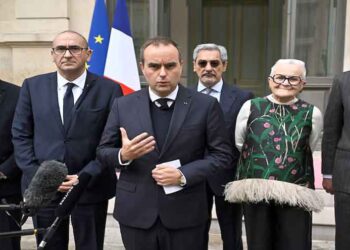
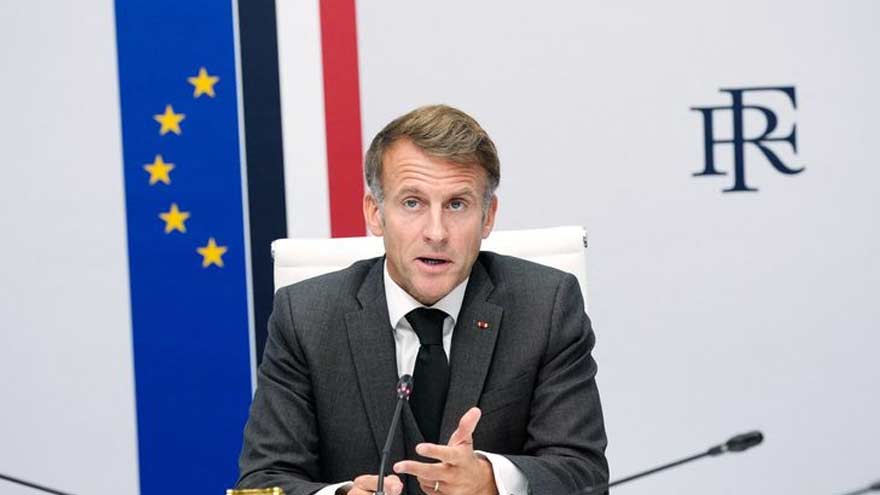
French President Emmanuel Macron said on Thursday that “illegitimate” protests would be prohibited in the coming days, while demonstrations organised by recognised groups, including trade unions, would be allowed to proceed under possible route restrictions to protect businesses.
Speaking after a meeting with intelligence chiefs and senior ministers, Macron accused what he described as “seditious” ultra-left groups of attempting to undermine the French Republic during last weekend’s unrest.
“Last Saturday we had political and seditious acts by ultra-left groups whose aim is to bring down the Republic,” he said.
His remarks came as authorities across France prepared for fresh demonstrations following some of the country’s most serious urban unrest in years.
Government Considers Tougher Measures
Justice Minister Gerald Darmanin said he wanted voting rights suspended for people who defy demonstration bans. He also proposed restricting social media access for individuals involved in violence, looting or attacks on police.
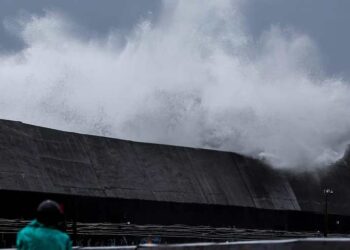
Taiwan Shuts Down as Typhoon Champi Threatens Island With Powerful Winds and Heavy Rain
Authorities in Marseille and Lyon, France’s second- and third-largest cities, have banned all protests planned for Saturday. However, further demonstrations are already being organised ahead of a weekend that officials fear could bring renewed violence.
France’s main student union, UNEF, has called for rallies on Saturday, while the Yellow Vest movement, which emerged as an anti-establishment force in 2018, has submitted plans for a march through central Paris.
Businesses in central Paris have begun boarding up shop windows as a precaution. Luxury goods group Hermes said it had strengthened security at its French stores.
Organisers of Art Basel Paris, an international art collectors’ fair taking place in a central Paris exhibition hall, announced that the event would remain closed throughout the weekend.
In the northern city of Orleans, authorities were preparing for possible unrest as the far-right National Rally prepared to hold its annual meeting, while trade unions and left-wing groups planned demonstrations.
A student protest scheduled for Thursday in Paris was initially banned but later permitted. Nevertheless, transport authorities closed metro stations in central Paris in anticipation of unauthorised gatherings.
Public Anger Fuels Unrest
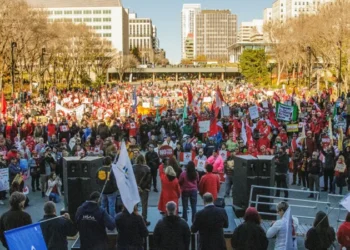
France was rocked by violence on October 17 on the fringes of nationwide protests, highlighting the depth of public frustration and raising questions about the ability of security services to maintain order.
Two people have been arrested over an arson attack on Limoges city hall, according to French officials and media reports.
A third consecutive night of local curfews passed without major incidents in areas affected by the violence, providing the government with some relief ahead of the weekend.
The unrest has also exposed broader economic and social pressures in France. Rising energy costs, household budget constraints and concerns over declining public services have contributed to growing frustration among workers and younger people.
France’s political parties have traded accusations over the violence, with the government blaming far-left political groups for allegedly fuelling the unrest.
French Bond Market Signals Investor Concern
The political tensions have also unsettled financial markets.
The risk premium on French government debt compared with safer German bonds widened to its highest level in 15 years on Thursday. Meanwhile, France’s benchmark 10-year government bond yield reached 5.14%, its highest level since July 2002.
The developments add financial pressure to the challenges facing the French government as it seeks to restore public order and address mounting social discontent.