KARACHI: Karachi needs community cooling centres, wider use of solar energy, urban forests and improved public awareness to protect residents from the growing threat of extreme heat, environmentalist Yasir Hussain has said.
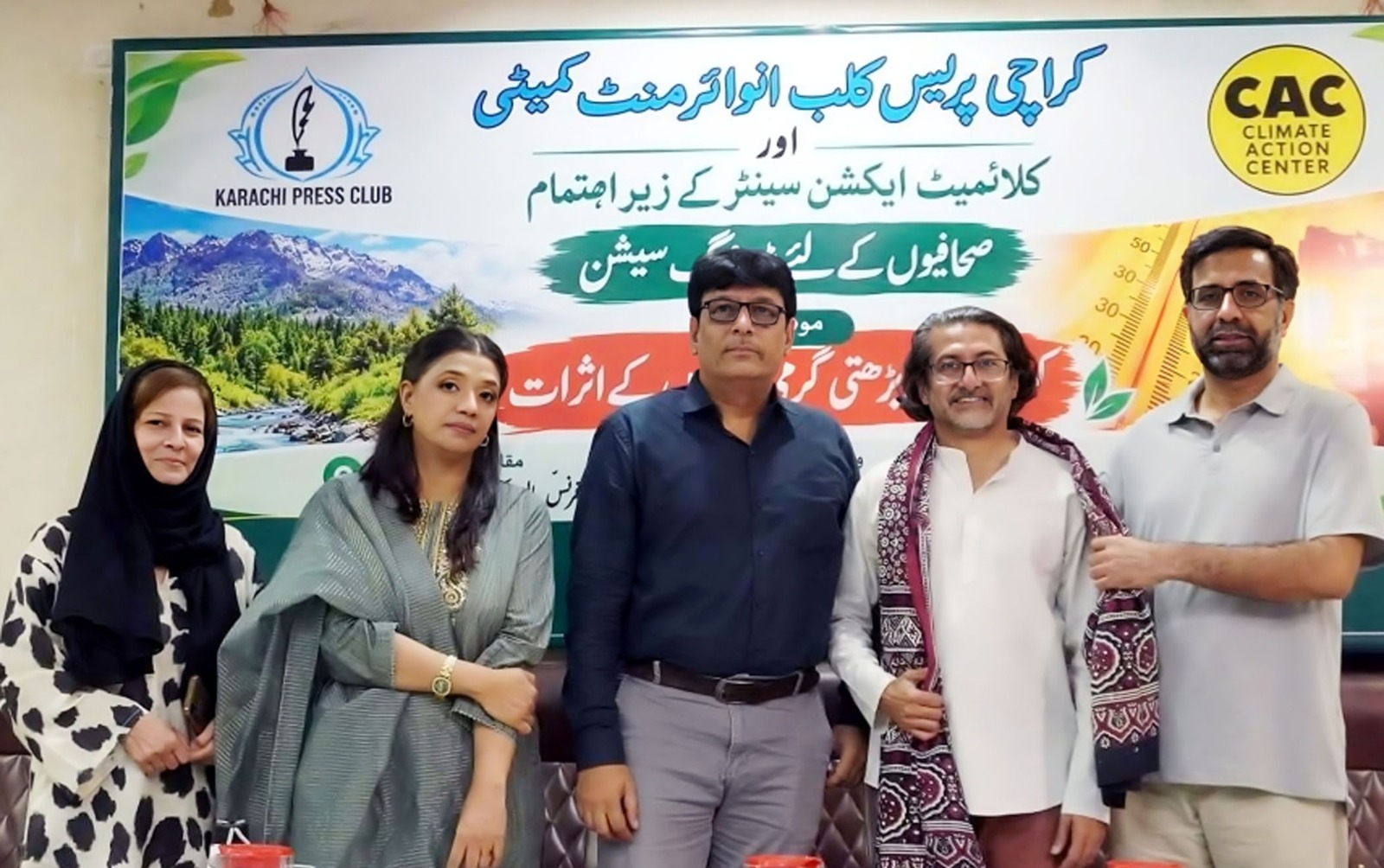
Hussain, founder of the Climate Action Center, shared these recommendations while addressing a seminar titled “Extreme Heat, Climate Change, and Karachi”, organised jointly by the Climate Action Center and the Environment Committee of the Karachi Press Club.
The seminar brought together journalists to discuss the causes of rising temperatures, the effects of climate change and practical measures to reduce heat-related risks across the city.
Humidity Intensifies Heat Risks
Hussain explained that extreme heat poses risks beyond high temperatures alone. High humidity makes it harder for sweat to evaporate, reducing the body’s ability to cool itself naturally.
JPSD Hosts Dinner Honouring Atiq-ur-Rehman Allahwala in Karachi
Direct sunlight, strenuous physical activity and low wind speeds can further increase the risk of heat-related illness.
Participants also discussed how Karachi’s buildings, rooftops and other urban surfaces absorb and retain heat, intensifying temperatures in densely developed neighbourhoods.
Prolonged power outages create additional difficulties for residents by limiting access to fans and other cooling appliances when temperatures rise.
Cooling Centres and Solar Energy
Hussain emphasised the need to establish community cooling centres where residents can seek relief during heatwaves.
He said solar-powered cooling systems could help provide more reliable access to cooling, particularly in areas affected by frequent load-shedding. Shaded public spaces and public information campaigns on heat safety could also help protect vulnerable communities.
The discussion highlighted the importance of making heat protection accessible at the neighbourhood level, particularly during periods of prolonged extreme temperatures.
Urban Forests and Heat-Resistant Buildings
Participants identified tree plantation and the development of urban forests as important measures for reducing heat intensity across Karachi.
Other proposed measures included applying heat-reflective coatings to rooftops, improving ventilation and increasing shade in public spaces.
The seminar also called for stronger heat early-warning systems, better emergency preparedness at healthcare facilities and closer coordination among relevant government institutions.
Speakers stressed that effective heat management requires both immediate protection for residents and longer-term improvements to urban planning.
Heat, Water Scarcity and the Indus Delta
The seminar also examined the links between extreme heat, water shortages and environmental degradation.
High temperatures increase water loss, while shortages can affect agriculture, local communities and natural ecosystems. Reduced freshwater flows into the Indus River Delta can also contribute to rising salinity and environmental stress.
Participants highlighted the need to consider water management and ecosystem protection alongside efforts to make Karachi more resilient to rising temperatures.
Karachi Press Club Pledges Continued Awareness Efforts
Speaking at the event, Karachi Press Club Secretary Aslam Khan said such seminars were timely because they strengthened journalists’ understanding of important social and environmental issues.
He congratulated Fahmida Yousufi, head of the club’s Environment Committee, on organising the seminar and expressed a commitment to holding similar awareness-raising events in the future.
Khan said these initiatives would help journalists better understand complex national, social and environmental challenges and communicate them effectively to the public.
At the conclusion of the seminar, organisers presented Yasir Hussain with a shield and an ajrak. They also distributed certificates among participants.
The seminar underscored the need for public awareness, sustainable energy use, greener urban spaces and coordinated institutional action to help Karachi prepare for increasingly severe heat.