
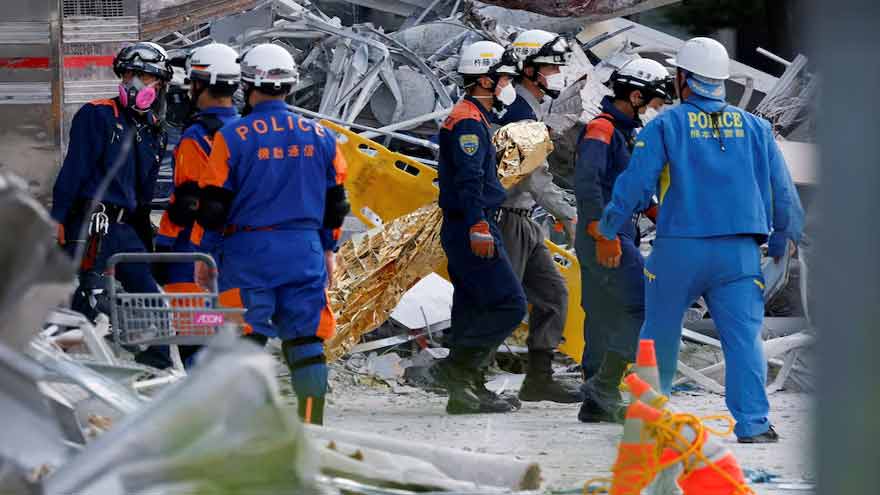
Japan Earthquake disruption has affected the country’s manufacturing sector after a powerful 7.1-magnitude earthquake struck southern Japan, killing at least 34 people and damaging key industrial infrastructure.
ISPR Briefing DG ISPR to Address Press Conference on Security Situation
The earthquake ruptured roads, disrupted utilities and forced several factories to suspend operations in Kumamoto, a region that serves as a major hub for Japan’s automotive and semiconductor industries.
Although economists do not expect disruption on the scale of the 2016 earthquake, manufacturers continue to face supply chain challenges.
Automakers Suspend Production
Toyota temporarily suspended production at three plants in Fukuoka until August 5.
The company also announced that one of its plants in Aichi, located more than 600 kilometres from the epicentre, will halt production next week.
Toyota said it made the decision to protect employees and respond to disruptions affecting suppliers and logistics companies.
Meanwhile, automotive parts manufacturer Aisin, which supplies Toyota, Daihatsu and Nissan, also suspended production at its factory near the epicentre.
The company said it plans to restart operations gradually after confirming safety and product quality.
However, it has not announced a date for a full return to production.
Suppliers Assess Damage
Industry officials said several second- and third-tier suppliers may also have suffered damage.
Auto parts manufacturer Denso confirmed that one supplier reported earthquake-related disruptions, while 13 other suppliers continue assessing their facilities.
In addition, Nissan suspended production at two vehicle plants in Kyushu because of delays in parts deliveries.
Mitsubishi Motors also halted some production at its plant in Okayama.
Chip Industry Faces Challenges
Kumamoto has become one of Japan’s leading semiconductor manufacturing centres in recent years.
Following the earthquake, Taiwan Semiconductor Manufacturing Company (TSMC) evacuated employees from its Kumamoto facility before resuming operations later the same day.
However, Renesas Electronics said damage, including fallen ceiling panels, cracked walls and water leaks, will delay the phased restart of one of its plants until August 5.
Meanwhile, Tokyo Electron plans to restart production next week.
Sony also confirmed that efforts to resume semiconductor production are underway.
Factories Suffer Heavy Damage
The earthquake also caused severe damage to several commercial and industrial sites.
Authorities said nine people died at a Nippon Paper Industries mill near the epicentre after major structural damage caused the facility’s smokestack to collapse.
In addition, seven people died at an Aeon shopping mall, where officials believe a gas explosion occurred more than an hour after the earthquake.
The disaster has once again highlighted the vulnerability of Japan’s manufacturing supply chains despite years of investment in disaster preparedness.