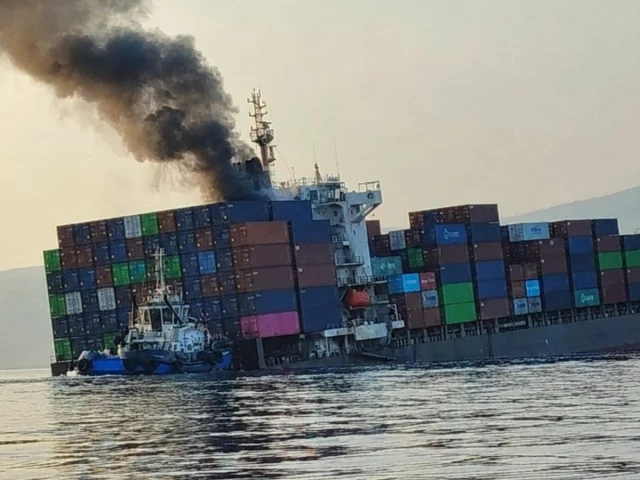
Iran’s navy said an oil tanker caught fire after striking a naval mine in the eastern Strait of Hormuz, Iranian media reported on Saturday, as regional diplomatic efforts continued to prevent a fresh escalation in the conflict involving the United States and Iran.
The reported incident came amid renewed diplomatic activity, with Iranian Foreign Minister Abbas Araghchi holding telephone conversations with 12 foreign ministers over the previous 48 hours to discuss regional developments.
In a post on Instagram, Araghchi said he outlined Tehran’s “fundamental positions” and discussed the need to respect national sovereignty, end aggression and threats, avoid harmful foreign interference and prevent the spread of insecurity.
He also called for regional security arrangements without the involvement of powers from outside the region.
Araghchi said his discussions included separate calls with his counterparts from Türkiye, Pakistan, Qatar, Oman, Egypt, Jordan, the Greek Cypriot administration of Southern Cyprus, Saudi Arabia, the United Arab Emirates, Kuwait, Tunisia and Iraq.
Qatar Continues Mediation Between US and Iran
Qatar’s Prime Minister, Sheikh Mohammed bin Abdulrahman Al-Thani, said Doha’s mediation efforts between Washington and Tehran were continuing to prevent the regional situation from spiralling out of control.
Pakistan and Sudan Sign Visa-Free Travel Agreement for Diplomatic, Official Passport Holders
Speaking about the diplomatic process, Al-Thani said the US administration remained willing to pursue a solution despite the Democrats’ victory in the US midterm elections.
He said significant progress had been made and expressed confidence that a settlement could be reached.
“We cannot wait to reach a perfect agreement; we hope to reach a good agreement,” he said.
Meanwhile, Iran’s semi-official Tasnim news agency reported that two missiles had struck Qeshm Island. However, it said there was no official information about possible damage.
US President Donald Trump said on Saturday that his administration was talking to representatives from Tehran, adding that “we are doing very well with Iran.”
Iran has repeatedly warned that it would retaliate against any fresh US attacks by targeting American and Israeli interests in neighbouring countries.
Trump Says US Could Become an ‘Occupier’ in Iran
Trump suggested on Friday that the United States could become an “occupier” in Iran, while claiming that American forces controlled the Strait of Hormuz and were extracting record quantities of oil from the strategic waterway.
Speaking to reporters after an address at a NASA facility in Florida, Trump compared the conflict with Iran to the Russia-Ukraine war, which he claimed had killed 25,000 people in October.
“That’s called a war,” he said, referring to the fighting between Moscow and Kyiv.
Trump argued that the conflict with Iran, which was then in its ninth month, could not be described as a war because “nobody’s even wounded” in several months.
“All we are is maybe an occupier. (We) could be an occupier,” he added.
He also repeated his claim that Washington controlled the Strait of Hormuz and was taking out more oil than at any previous time in the waterway’s history.
Asked about reported US strikes near Qeshm Island on Friday, Trump initially declined to discuss the operation but acknowledged limited military action.
“I don’t want to talk about. We do minor strikes,” he said.
He added that US forces had destroyed an Iranian anti-aircraft installation shortly after it was constructed.
Vance Leads Indirect Push for New Iran Deal
US Vice President JD Vance has reportedly taken a leading role in indirect negotiations with Iran over the past two weeks, seeking a new ceasefire and the resumption of nuclear talks.
According to Axios, citing two sources familiar with the discussions, Vance has been speaking almost daily with Qatar’s Prime Minister Sheikh Mohammed bin Abdulrahman Al-Thani, Pakistan’s Chief of Army Staff Field Marshal Asim Munir and other mediators.
White House envoy Steve Witkoff and presidential adviser Jared Kushner are also involved in the diplomatic initiative.
The report said Vance and the mediators had discussed arranging a working-level technical meeting between Washington and Tehran in the coming days, although no such meeting had taken place at the time of reporting.
Vance also reportedly sent a letter to Mohsen Rezaei, secretary of Iran’s Supreme National Security Council, proposing a return to direct negotiations. Iranian officials said the letter had generated positive momentum.
Iran Claims It Shot Down US MQ-9 Drone
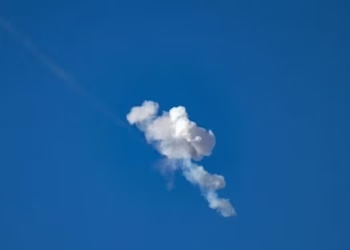
Iran’s army said its air defence forces shot down a US MQ-9 drone over Qeshm Island on Friday.
According to Tasnim news agency, the army’s public relations office said the aircraft had been targeted and destroyed by advanced systems operating within Iran’s integrated air defence network.
The statement described the drone as belonging to the “invading American enemy” and referred to the US military as a “terrorist army.”
The United States had not publicly confirmed the reported drone loss.
Qeshm, Iran’s largest island, is located in the southern province of Hormozgan near the northern approaches to the Strait of Hormuz, a strategic passage connecting the Gulf with the Gulf of Oman.
US Warns Americans of Possible Attacks in Middle East
The US State Department urged American citizens in the Middle East to exercise heightened vigilance, citing an increased threat of armed attacks by Iran-backed Houthi forces and Iranian efforts to target US government officials in the region.
In an advisory posted on X, the department warned Americans about the potential security risks and called for greater caution.
The warning came amid continuing military tensions and concerns that the conflict could spread to other parts of the region.
Iran Warns of Retaliation Against Any New US Attack
Iran’s army warned on Friday that the United States could launch another military operation despite reports of American naval vessels withdrawing from the region.
Army spokesperson Brigadier General Mohammad Akraminia said the possibility of renewed US military action could not be ruled out, suggesting Washington might resort to another attack because of its political difficulties.
He warned that any fresh attack would face a decisive response from Iran’s armed forces.
Citing instructions from the country’s supreme leader, Akraminia said the military’s response must be immediate and effective, without geographical restrictions.
He added that US bases and interests beyond West Asia and the Gulf were within the range of Iranian missiles and drones and could be targeted in the event of another attack.
The spokesperson also said the Strait of Hormuz remained under Iran’s strategic control and would not reopen until Tehran’s conditions were met.
Iran’s armed forces, he added, remained fully prepared to defend the country.