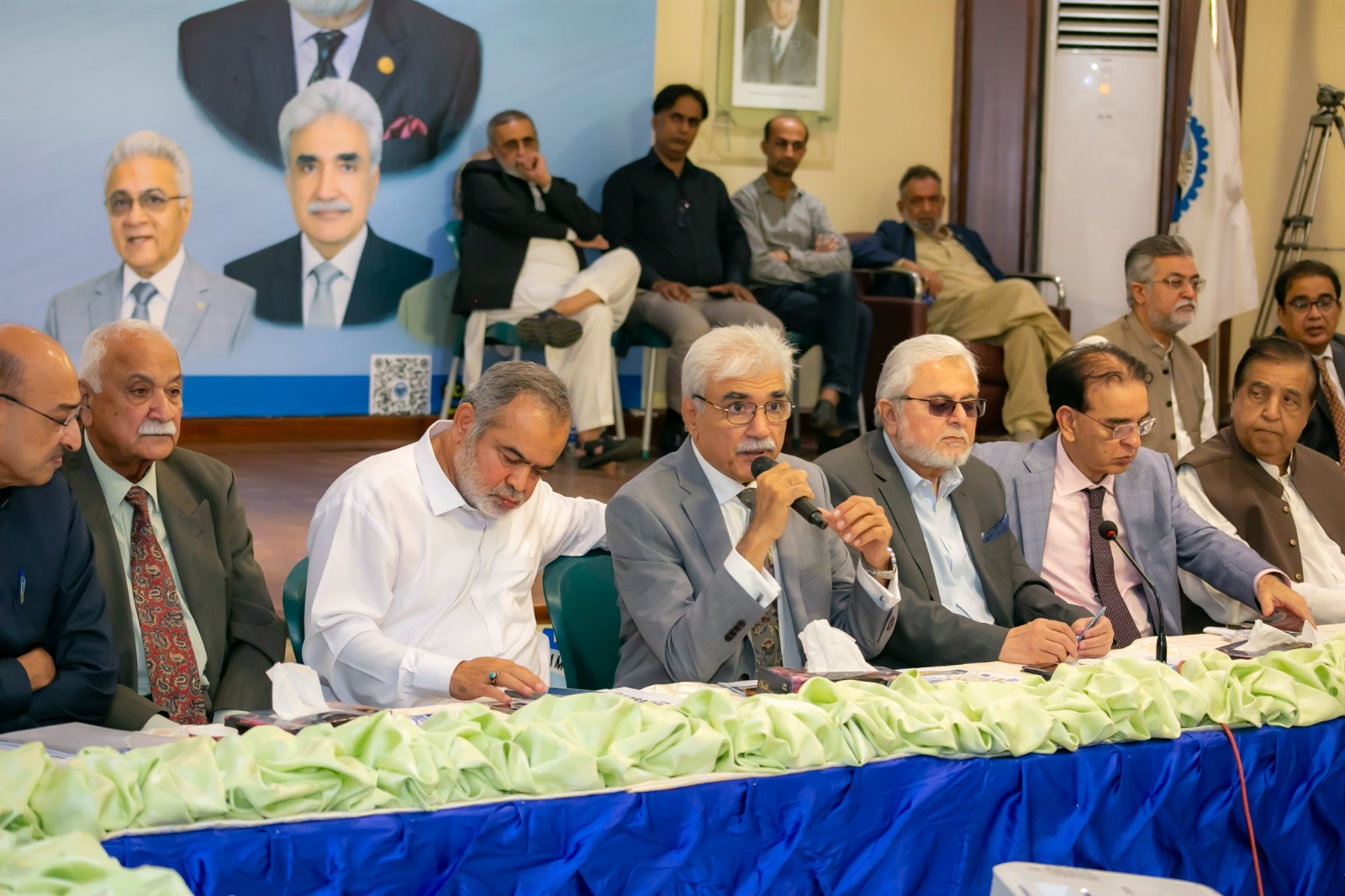
Karachi’s business community has called for urgent and coordinated action to address the city’s worsening civic and economic challenges, citing deteriorating roads, water shortages, unreliable utilities, street crime and alleged corruption.
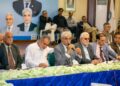
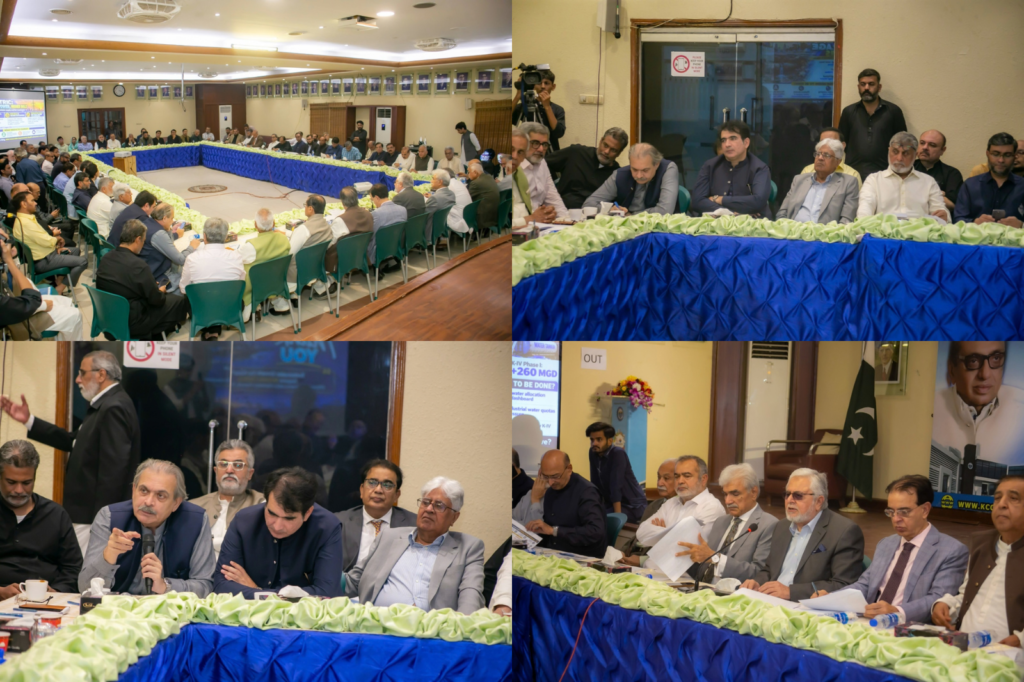
Businessmen Group (BMG) Chairman Zubair Motiwala raised the concerns at a high-level meeting attended by representatives of Karachi-based trade bodies and industrial town associations. He urged stakeholders to replace repeated assurances with measurable targets, clear responsibilities and time-bound action.
Motiwala said Karachi contributes approximately 67 per cent of federal revenue and 54 per cent of Pakistan’s national exports, yet continues to face serious infrastructure and public service problems.
CRS Associates and CBC Karachi Organize Seaview Beach Cleanup Drive
He called for a coordinated reform agenda to improve the city’s livability, security and economic competitiveness.
Business Leaders Demand Five Immediate Priorities
Motiwala urged trade and industrial associations to identify five immediate priorities, assign responsibility to relevant institutions and establish deadlines and performance indicators.
He highlighted unreliable electricity and gas supplies, inadequate infrastructure and low industrial capacity utilization as factors increasing production costs and weakening business competitiveness.
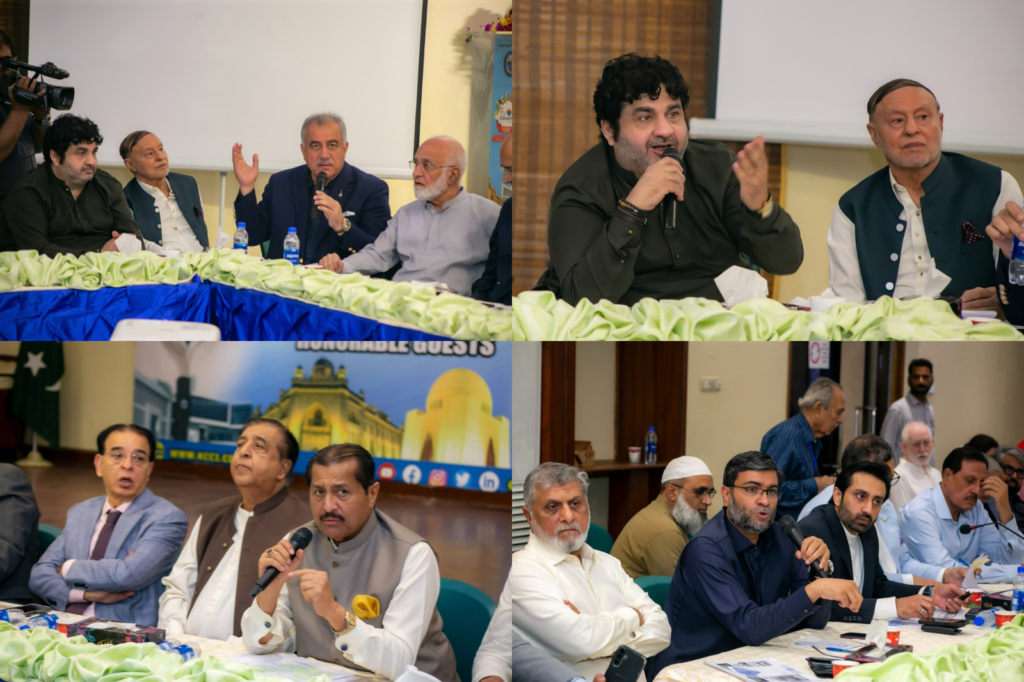
His proposals included completing the K-IV water project, making the Safe City system fully operational, developing a Karachi Bypass to divert heavy traffic, and introducing mandatory road-restoration guarantees.
He also called for independent engineering audits, transparent electricity billing, automatic consumer compensation for service failures, regionally competitive gas prices, digitized land records and faster tax refunds.
Motiwala emphasized that Karachi’s business community should unite behind a common platform to press federal, provincial and local authorities for practical solutions.
BMG Leaders Call for Coordinated Action
BMG Vice Chairman Anjum Nisar urged trade and industrial bodies to develop a unified agenda instead of limiting their efforts to highlighting problems.
He proposed a joint documentary to present Karachi’s ground realities, including alleged corruption, extortion, excessive taxation and deteriorating infrastructure.
Nisar also called for permanent solutions to water shortages, completion of K-IV and a fiscal framework that gives local governments adequate resources. He proposed joint pre-budget consultations involving KCCI and trade associations to develop common recommendations.
BMG Vice Chairman Jawed Bilwani identified the Safe City project, street crime, land grabbing and protection of public land as urgent priorities.
He questioned repeated road excavation, alleged illegal occupation and resale of public land, missing manhole covers and encroachments on the Lyari and Malir riverbeds. He called for greater business community oversight of public works contracts to improve construction quality and prevent waste.
Bilwani also proposed a coordinated response to serious attacks on traders, including the possibility of a citywide shutdown if a trader were killed.
KCCI Seeks Reform Agenda Within 15 Days
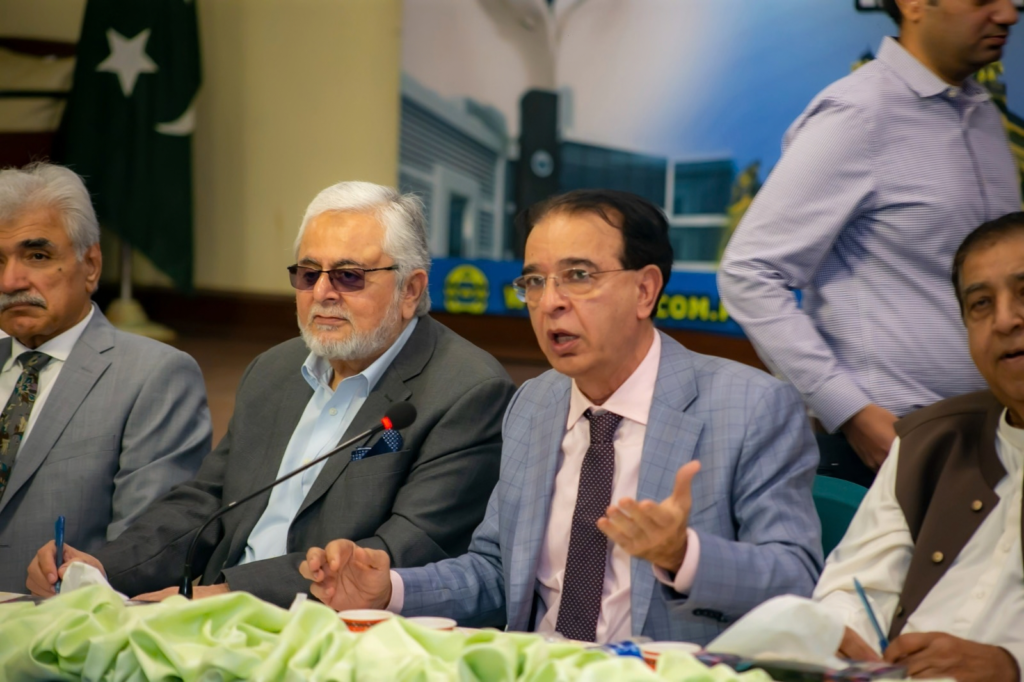
Karachi Chamber of Commerce and Industry (KCCI) President Talat Mahmood proposed forming a representative committee of trade and industrial associations to prepare an actionable reform agenda within 15 days.
He called for issue-specific subcommittees, comprehensive terms of reference and regular progress reports to KCCI and town association leadership.
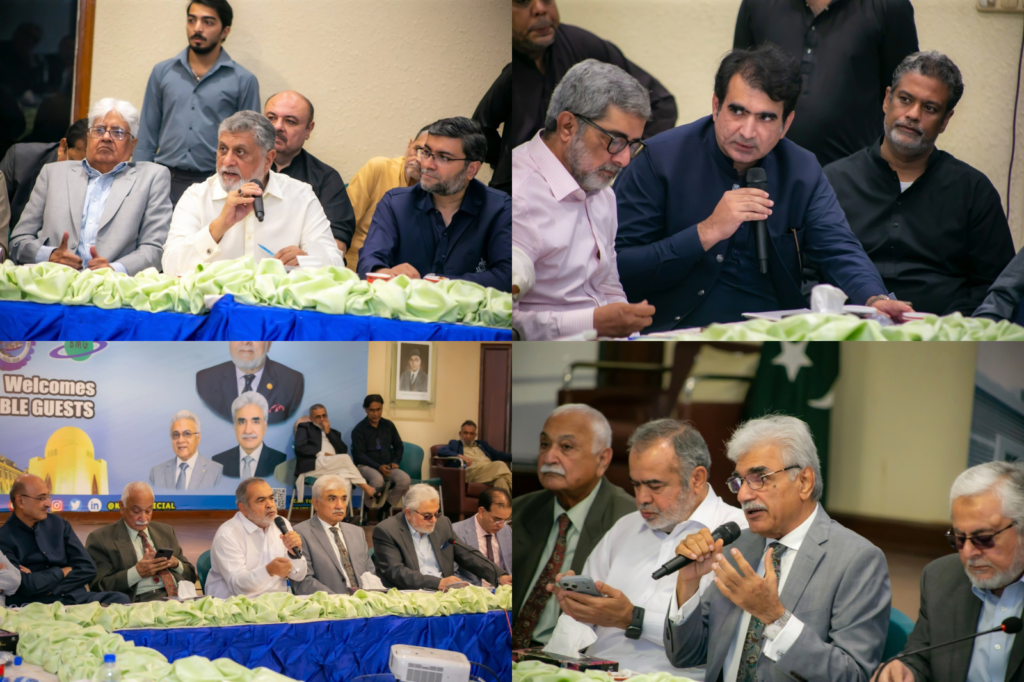
Mahmood also proposed a joint press conference involving industrialists, traders and small businesses to present the business community’s demands to federal and provincial governments.
He called for an anti-corruption initiative to investigate complaints involving public offices, including the Sub-Registrar’s Office and the Sindh Building Control Authority. He cited allegations of substantial unofficial payments despite prescribed fees.
Concluding the meeting, Mahmood proposed five committees comprising nominees from participating trade and industrial associations. The committees would prepare recommendations and terms of reference within 15 days, with regular reviews to track progress.
Business Community Seeks Greater Representation
BMG Vice Chairman Mian Abrar Ahmed called for permanent representation of Karachi’s business community in government bodies and public-sector institutions responsible for the city’s infrastructure, utilities and economic development.
He identified the Sindh Assembly, Karachi Metropolitan Corporation and K-IV project among the institutions where he believed stronger business participation was necessary.
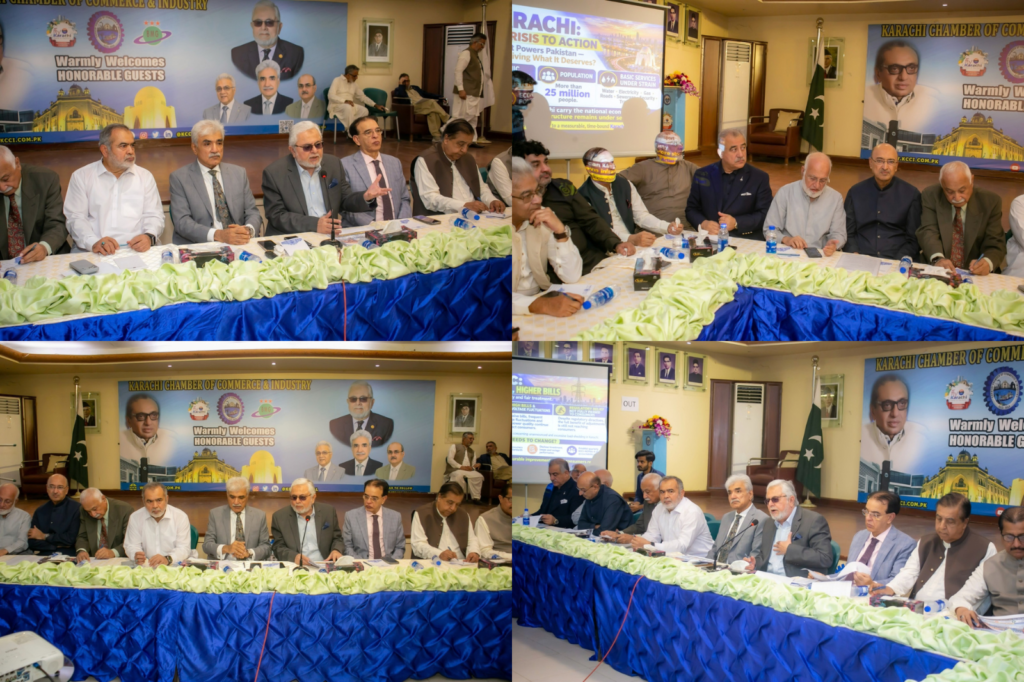
Ahmed argued that formal representation would improve transparency, strengthen accountability and allow business leaders to communicate local concerns directly to policymakers. He also backed a KCCI resolution passed on September 30 calling for greater institutional participation.
Former KCCI President Saleem Parekh similarly called for business community representation in the Karachi Water and Sewerage Board, K-Electric, Sui Southern Gas Company and KMC.
K-IV, Electricity and Industrial Gas Supplies
MNA Mirza Ikhtiar Baig pledged parliamentary support for Karachi’s civic and economic priorities, including K-IV and the proposed Lyari elevated expressway.
He said these projects had been raised through parliamentary committees and that efforts were underway to address funding gaps.
Baig opposed prolonged area-wide electricity load-shedding that affects regular bill-paying consumers because of other customers’ defaults. He proposed a meeting involving Federal Minister for Energy Awais Leghari, KCCI, Karachi’s MNAs and K-Electric to seek immediate solutions.
He also called for further engagement over the withdrawal of gas supplies to industrial captive power plants, warning of possible effects on production costs and competitiveness.
Korangi Association of Trade and Industry (KATI) Deputy Patron-in-Chief Zubair Chhaya called for coordinated road and utility works, digitized land records, stronger action against encroachments and a dedicated authority to manage Karachi’s fragmented sewerage system.
Chhaya also raised concerns about untreated municipal and industrial wastewater, pollution and the enforcement of environmental laws against both public and private entities.
Questioning the transparency of revenue allocation, he cited reported Sindh Revenue Board collections of Rs372 billion, approximately 95 per cent of which he attributed to Karachi. He also estimated annual infrastructure development cess collections at Rs150 billion to Rs175 billion and called for full disclosure of collections and expenditure.
Trade Bodies Raise Concerns Over Tax Compliance
Several participants highlighted concerns about taxation, regulatory compliance and the cost of doing business.
KATI President Sheikh Umer Rehan criticized what he described as excessive compliance requirements for documented businesses, including digital invoicing and surveillance-camera requirements. He called for broadening the tax base and improving the Federal Board of Revenue’s governance and capacity.
Pakistan Petroleum Dealers Association Chairman Malik Khuda Baksh sought KCCI’s intervention over 15 FBR notices reportedly issued to petrol pumps concerning digital invoicing.
He argued that petroleum dealers operate as commission agents and questioned whether the law requires them to issue digital invoices in the manner demanded. He said the association had already met the Chief Commissioner Inland Revenue twice and had another meeting scheduled with the FBR chairman on Tuesday.
Khuda Baksh sought legal guidance from KCCI to help the association develop a unified position.
North Karachi Association of Trade and Industry President Faisal Moiz also urged KCCI to seek a more streamlined and business-friendly administrative framework for industrial estates, commercial markets and economic hubs.
Calls to Address Corruption and Land Grabbing
BMG Vice Chairman Tariq Yousuf identified alleged corruption and networks facilitating illegal activities as major obstacles to improving Karachi’s civic conditions.
He questioned the occupation of roads and public spaces by commercial establishments, tolerance of traffic violations and the existence of illegal electricity connections. He urged authorities to investigate and dismantle mechanisms that enable the misuse of public spaces and civic resources.
Former KCCI President Zakaria Usman called for a sustained campaign against corruption, fraudulent property documentation and land grabbing. He argued that Karachi’s problems were already well documented and required decisive action rather than more ceremonial meetings.
Association of Builders and Developers Chairman Hanif Gauher also called for stronger action against extortion, deteriorating law and order, land grabbing and alleged corruption in regulatory institutions. He urged KCCI, ABAD and industrial estate associations to pursue a shared agenda.
Former KCCI President Abdullah Zaki proposed that the business community consider a boycott if meaningful progress on land grabbing was not achieved within six months.
Proposals for a 100-Day Action Plan
Pakistan Cloth Merchants Association leader Ahmed Chinoy proposed establishing an implementation committee under KCCI to oversee a time-bound 100-day action plan.
Under his proposal, the first 15 days would focus on prioritizing issues and assigning responsibilities. By day 30, the committee would engage relevant government departments and seek firm commitments. Progress would then be monitored systematically from day 31 to day 90.
Other participants called for regular meetings to review progress, a joint resolution setting out shared priorities and clear mechanisms for pursuing complaints with relevant authorities.
Warehouse and Logistics Association Chairman Naveed Farooki proposed monthly or quarterly meetings to monitor Karachi’s civic and economic challenges. He also raised concerns about alleged unofficial payments involving regulatory bodies, including the Sindh Food Authority, EOBI and SESSI.
Federal B. Area Association of Trade and Industry President Raza Hussain urged the participating associations to identify the relevant authorities, assign responsibilities and establish effective follow-up mechanisms.
Pakistan Hotels Association representative Ather Bhutto called for long-term infrastructure planning and stronger governance, citing Shanghai as an example of urban transformation. He advocated universal water metering, better revenue recovery, ring roads, modern transport infrastructure and improved public facilities.
Business Community Seeks Measurable Results
The meeting reflected a shared demand among Karachi’s trade and industrial representatives for stronger coordination, clearer accountability and practical measures to address the city’s longstanding problems.
Participants called on KCCI and the relevant trade associations to consolidate their proposals, establish committees and pursue a common agenda with federal, provincial and local authorities.
The proposed committees and action plans are intended to turn the meeting’s recommendations into measurable outcomes. Their effectiveness will depend on follow-through, institutional cooperation and concrete commitments from the authorities responsible for Karachi’s infrastructure, utilities, public safety and economic development.