Ousted Venezuelan President Nicolas Maduro has asked a US judge to dismiss criminal drug-trafficking charges against him, arguing that international law protects him from prosecution as the head of a sovereign state.
Maduro’s lawyers filed the motion on Wednesday in Manhattan federal court, challenging the jurisdiction of US District Judge Alvin Hellerstein. They argue that heads of state and foreign officials acting in their official capacities have long enjoyed immunity from criminal prosecution abroad.
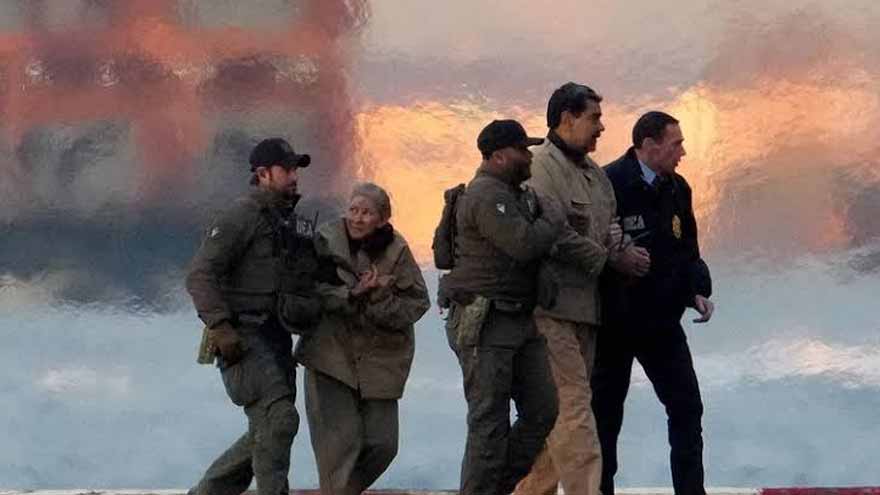
The case stems from the US military operation that captured Maduro in Caracas on January 3. He has remained in a federal jail in Brooklyn and has pleaded not guilty. If his dismissal bid fails, his trial is scheduled to begin on June 1, 2027.
Maduro Claims Absolute Immunity
Maduro’s lawyer, Barry Pollack, said the court lacks jurisdiction because Maduro was Venezuela’s head of state and the alleged conduct involved his official duties.
Trump Signs Stopgap Funding Bill to Avert US Government Shutdown
“This unprecedented prosecution violates the absolute immunity from criminal jurisdiction” traditionally afforded to heads of state and foreign officials acting in their official capacities, Pollack wrote in the motion.
Pollack also said Maduro was falsely accused and “vehemently denies” the allegations.
The Manhattan US Attorney’s Office, which brought the case, did not immediately respond to a request for comment.
Legal Experts See Difficult Path
Maduro faces a significant legal challenge because the United States has not recognized him as Venezuela’s legitimate president since 2019.
US courts generally give considerable weight to the executive branch when determining whether another country’s leader holds official recognition.
Cases involving foreign heads of state in US criminal courts remain extremely rare. A 1990 ruling involving former Panamanian military leader Manuel Noriega offers little support for Maduro’s argument. A federal judge in Miami rejected Noriega’s claim of head-of-state immunity, partly because he had never formally held the presidency.
The US stopped recognizing Maduro after his 2018 election, which Washington said was fraudulent. The US also rejected his 2024 re-election.
Maduro has denied wrongdoing and has repeatedly accused Washington of seeking to remove him to gain greater control over Venezuela’s oil resources.
Pollack argued that US recognition of Maduro’s legitimacy should not determine whether he qualifies for immunity.
He said the executive branch does not dispute that Maduro served as Venezuela’s head of state, but instead argues that Maduro did not legitimately hold the position after 2019.
Delcy Rodriguez Leads Venezuela
Since Maduro’s capture, Venezuelan Vice President Delcy Rodriguez has taken control of the government and expanded cooperation with the Trump administration.
According to the filing, the United States and Venezuela reached an unprecedented agreement last month involving US control over about one-fifth of Venezuela’s oil reserves.
Pollack argued that Washington’s dealings with Rodriguez weaken its position on Maduro’s immunity because Rodriguez was appointed by Maduro.
He also cited earlier statements from Rodriguez and members of her government indicating that they continued to regard Maduro as Venezuela’s legitimate leader.
The Venezuelan government has since stopped publicly addressing the issue, while some murals depicting Maduro in Caracas have reportedly been painted over.
Court Sets Next Steps
US prosecutors have until October 2 to respond to Maduro’s request to dismiss the indictment.
Judge Hellerstein has scheduled a hearing on the motion for November 17.
The ruling could test how US courts apply international-law principles concerning immunity when Washington does not recognize a foreign leader as legitimate.