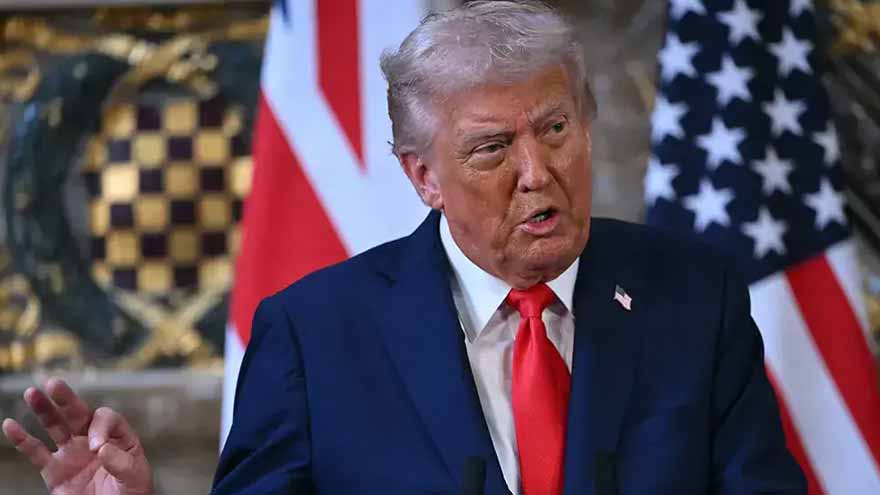
US President Donald Trump has signed a temporary funding bill into law, averting a government shutdown ahead of the November midterm elections.
The White House confirmed that Trump signed the legislation on Wednesday after the House of Representatives approved the measure a day earlier. The Senate had passed it on August 8.
The bill extends current federal funding through December 11, allowing government agencies to continue operating beyond October 1, when existing funding was due to expire at the start of the new fiscal year.
House Approves Funding Extension
The House passed the spending extension by a vote of 370-48 on Tuesday.
The temporary measure became necessary after Congress failed to complete any of the 12 annual spending bills required to fund federal programmes for the fiscal year ending September 30, 2027.
JI Announces Nationwide Strike on September 3 Over Petroleum Levy
Those spending bills cover a wide range of government functions, including homeland security, federal law enforcement, energy, housing and defence.
Parties Avoid Another Shutdown
Congress has faced prolonged political disputes since the beginning of Trump’s second term, with Republicans controlling both chambers and Democrats holding the minority.
The political deadlock has contributed to three partial government shutdowns, which together lasted 161 days, according to the supplied report.
Previous disputes have centred on issues including health insurance subsidies and restrictions on federal immigration enforcement.
Neither party wanted another shutdown before the midterm elections, as lawmakers campaign for re-election amid voter concerns over the cost of living and rising energy prices.
Political tensions have also intensified over the US-Israeli war on Iran and tariffs on foreign goods, which have placed additional pressure on consumers and farmers.
Spending Decisions Delayed Until December
The stopgap bill keeps the government running but does not resolve the broader fiscal challenges facing Washington.
The US national debt recently crossed the $40 trillion mark, while affordability remains a major concern for voters.
The legislation also delays major spending decisions for another 15 weeks. Congress will therefore face pressure in December to negotiate and pass all 12 full-year spending bills.
Midterm Elections Could Shape Budget Talks
The November 3 congressional elections could play a major role in the next round of budget negotiations.
Control of Congress will be at stake, potentially determining whether Republicans or Democrats enter the December spending talks from a stronger position.
With the temporary funding deadline approaching, lawmakers will have limited time to reach agreement on the government’s full-year spending priorities.