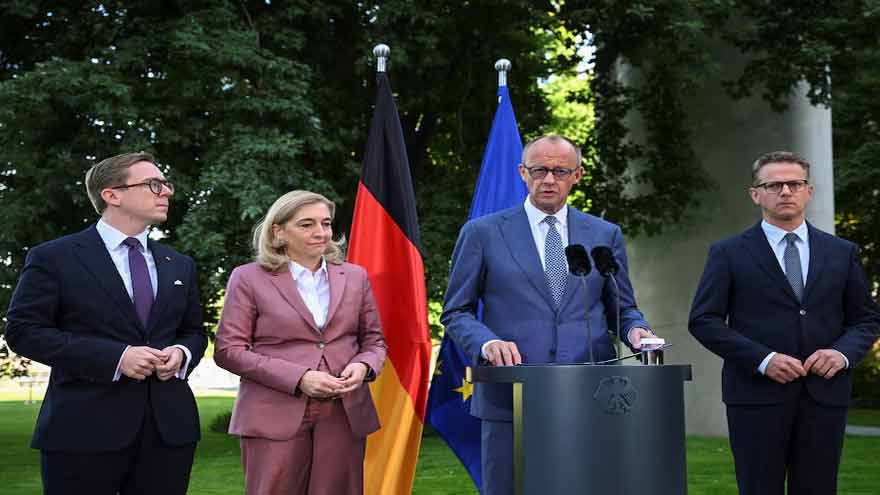
Germany Politics is entering a challenging period as Chancellor Friedrich Merz faces growing criticism after a cabinet reshuffle. The move has also exposed divisions within his conservative bloc and raised fresh questions about his leadership.
Swat Operation Elite Force Constable Martyred During Anti-Terror Raid
Party Vote Tests Merz’s Support
On Wednesday, lawmakers from Merz’s CDU/CSU alliance will vote to elect Thorsten Frei as the new parliamentary faction leader.
Although the vote is usually a routine process, a weaker-than-expected result could highlight growing dissatisfaction within the ruling party.
Polls Show Falling Popularity
Meanwhile, Merz has completed his first year in office with declining public support. His conservative alliance now trails the far-right Alternative for Germany (AfD) in national opinion polls.
In September, Germany will hold important state elections in Saxony-Anhalt and Mecklenburg-Vorpommern. There, the AfD hopes to secure its first state-level government.
According to a recent RTL/ntv poll, only 15% of respondents approved of Merz’s performance. In addition, fewer than half of CDU supporters expressed satisfaction with his leadership.
The survey also found that the AfD has overtaken the conservatives in public perceptions of competence.
Government Pushes Reform Agenda
If elected, Thorsten Frei will coordinate closely with the centre-left Social Democrats. Together, the coalition plans to advance reforms aimed at reviving Germany’s economy.
However, a CDU executive board member told Reuters that recent events had weakened Merz’s standing within the party.
Despite the criticism, Merz remains confident. He said tensions would likely ease before parliament reconvenes in September.
Cabinet Reshuffle Triggers Backlash
Earlier, the reshuffle followed the resignation of senior conservative politician Jens Spahn. He stepped down after controversy over his decision to have a child through surrogacy abroad.
Following his departure, Merz appointed Thorsten Frei to replace Spahn. He also named Health Minister Nina Warken as his new chief of staff.
At the same time, Merz removed Transport Minister Patrick Schnieder. As a result, conservative lawmakers in Rhineland-Palatinate strongly criticised the decision.
In a leaked letter, regional CDU lawmakers refused to meet the chancellor. They argued that the relationship required greater trust and mutual respect.
AfD Continues to Gain Ground
For now, Merz remains politically secure because no strong challenger has emerged within the CDU.
Nevertheless, the AfD now leads national polls with 27%. By comparison, the CDU/CSU alliance has fallen to 21%, its lowest rating since last year’s federal election.
Moreover, the AfD has gained support by promoting stricter migration policies. The issue returned to the spotlight after a deadly attack at Berlin Pride over the weekend.
According to authorities, the suspect was a German citizen of Lebanese background. Officials also said he had pledged allegiance to the militant group Islamic State before police shot him.
Finally, former junior health minister Tino Sorge criticised the reshuffle. He said Merz informed the media about his dismissal before notifying him personally.
Likewise, AfD co-leader Tino Chrupalla accused Merz of treating eastern German politicians unfairly. He also described the decision as cold and unjust.