World Bank Downgrades Pakistan Tax Reform Programme Over Slow Progress
World Bank Pakistan Tax Reform Rating Cut
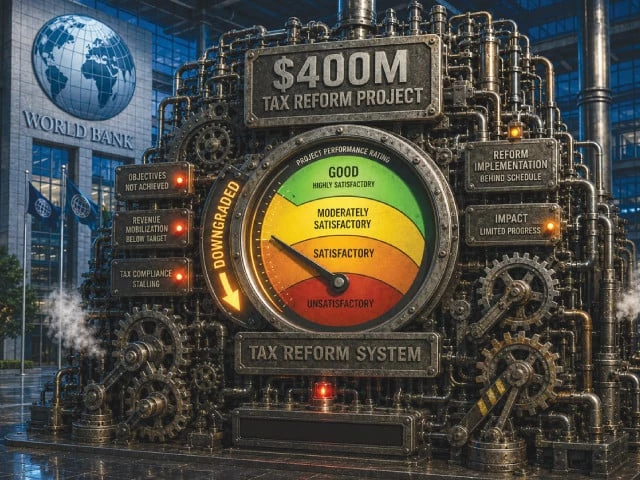
Tax reform efforts in Pakistan have come under renewed scrutiny after the World Bank downgraded the $400 million Pakistan Raises Revenue programme to “moderately satisfactory.”
The downgrade reflects slow progress in improving revenue collection and simplifying the tax system. Moreover, it highlights persistent structural weaknesses in implementation and compliance mechanisms.
Pakistan Raises Revenue Programme Under Review
The programme, supported by the World Bank, was launched in 2019 with a goal of raising Pakistan’s tax-to-GDP ratio to 17%. However, revised targets were later lowered due to underperformance.
According to the Implementation Status Report, overall progress has remained “moderately satisfactory.” In addition, key reforms have not advanced at the expected pace.
FBR Tax Collection and Compliance Gaps
Pakistan’s Federal Board of Revenue continues to struggle with compliance enforcement. The report shows that although registered taxpayers increased, only 7 million filed returns out of 16.2 million.
The tax reform process remains incomplete as compliance rates stay low. Furthermore, withholding tax dependence continues to dominate revenue collection structures.
World Bank Tax Reform Performance Concerns
The World Bank noted that progress in customs modernization and taxpayer facilitation remains uneven. Some indicators, especially related to compliance, lack updated data.
It also stated that administrative reforms and unified tax procedures are still not fully approved. Consequently, implementation delays continue to affect overall performance.
Pakistan FBR Structural Challenges
The Federal Board of Revenue (FBR) has collected significant revenue through withholding taxes, which account for nearly 60% of total collections. However, this approach has created liquidity challenges for businesses.
The tax reform process is also affected by refund delays and administrative inefficiencies. Moreover, IT and telecom companies continue to face double withholding taxation issues.
Tax Reform and Business Sector Impact
Industry stakeholders argue that withholding taxes create cash flow pressure, particularly for service-based companies. Refund delays further increase financial strain on businesses.
Although systems like Track and Trace and e-filing have been introduced, full integration remains incomplete. Therefore, businesses continue to experience operational inefficiencies.
World Bank Review and Future Outlook
The World Bank plans to conduct a further implementation review in 2026. It has acknowledged ongoing efforts by Pakistani authorities to address structural issues.
However, the tax reform programme still faces challenges in achieving its original objectives. Moving forward, improvements in compliance systems and administrative reforms will remain critical for success.