
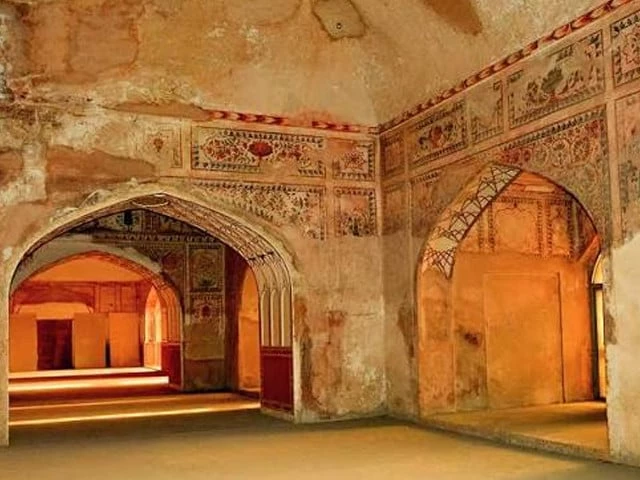
Restoration work uncovers maze-like Mughal-era tunnels beneath Lahore Fort, sparking debate over their historical purpose.
LAHORE: Beneath the historic Lahore Fort lies a vast and largely hidden network of underground chambers and corridors that has remained concealed for centuries, only recently re-emerging during restoration work.
The subterranean complex consists of dozens of interconnected rooms and passageways, forming what appears to be a second structure beneath the main fort. Experts estimate the network includes around 35 chambers linked through narrow corridors and vaulted passages.
Over time, historians and researchers have proposed multiple theories regarding the purpose of these underground spaces. Some believe they may have served as shelters for Mughal royalty during emergencies, while others suggest they were used as detention cells or punishment areas. A third view holds that the chambers were part of the fort’s broader defensive and structural design.
Speaking on the findings, Aga Khan Cultural Services Pakistan Conservation Manager Naheed Iftikhar said historical records do not clearly explain the function of these spaces, making them one of the most uncertain chapters of the fort’s architectural history.
She noted that during restoration work, the chambers were found buried under layers of soil, dust, and moisture, with significant structural decay including damaged ceilings and cracks in several walls. According to her, each stage of excavation revealed new architectural details and raised further historical questions.
The underground network features narrow staircases, dimly lit corridors, and rooms with no visible ventilation or natural light. Some walls contain niches believed to have once held oil lamps used for illumination.
Experts suggest that different sections of the underground structure may have been built during different Mughal periods, with some elements potentially dating back to the reign of Emperor Jahangir and others reflecting the architectural style of Shah Jahan.
Above ground, the fort is known for iconic Mughal landmarks such as the Sheesh Mahal and Alamgiri Gate. However, the newly explored underground complex has added a hidden dimension to its historical and architectural significance.
Researchers continue to study the site to better understand its origin, purpose, and evolution within the broader Mughal-era fortification system.