
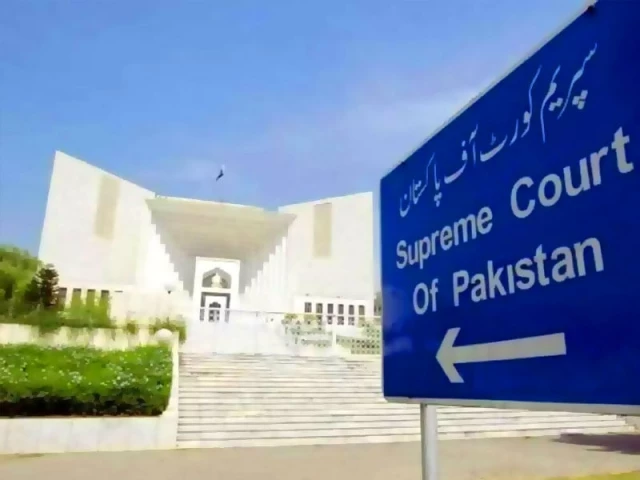
Supreme Court of Pakistan observed that politicians, especially parliamentarians, remain vulnerable to false criminal cases filed with mala fide intent by public officials.
The remarks appeared in an eight-page judgment authored by Justice Jamal Khan Mandokhail.
He headed a three-member bench that acquitted an MQM politician in a murder case.
Earlier, a trial court sentenced the accused to life imprisonment in 2016 on the basis of a confessional statement. Later, the Sindh High Court upheld the conviction.
Supreme Court Questions Confession
The Supreme Court ruled that the prosecution’s entire case depended only on the judicial confession attributed to the accused.
Therefore, the bench stressed that courts must carefully examine whether a confession is voluntary, truthful, and reliable.
The judgment also noted that courts must exercise extra caution when an accused later retracts a confession.
Furthermore, the bench highlighted serious flaws in the process through which authorities implicated the appellant.
Court Highlights Detention Irregularities
According to the judgment, Rangers detained the appellant in 2016 under preventive detention laws.
Police had registered the FIR almost six years earlier.
However, the court noted that authorities failed to produce any notification authorising the detention under Section 11EEEE of the Anti-Terrorism Act, 1997.
Later, Rangers handed the accused over to police on June 21, 2016. Police recorded that date as the official arrest date.
In addition, police kept the accused in custody for eight days before a magistrate recorded his statement under Section 164 of the Criminal Procedure Code (CrPC).
Magistrate Ignored Legal Safeguards
The Supreme Court explained that the law requires magistrates to ensure confessional statements are voluntary.
The law also requires protection against pressure, threats, inducement, or coercion.
However, the judgment observed that the magistrate ignored important legal safeguards while recording the statement.
Moreover, the court emphasised that parliamentarians represent the people of their constituencies. Therefore, magistrates must exercise greater caution before naming them in criminal cases.
Finally, the bench ruled that the prosecution failed to establish a lawful and reliable basis for conviction. Consequently, the court acquitted the appellant.