By Sobia Ali
Karachi rarely pauses. The city moves relentlessly forward, its streets alive with traffic, ambition and noise. Yet along some of its older roads, beneath the shade of mature trees and beside buildings that have witnessed generations come and go, time seems to slow down.
Behind an unassuming doorway and up a flight of old stairs lies Theakada, a small creative space where books, art, cinema and open conversation find room to breathe. In a world increasingly shaped by short videos, shrinking attention spans and the constant pull of social media, the space invites visitors to do something increasingly rare: sit together, watch an entire film and discuss the ideas it leaves behind.
At Theakada, those conversations matter.
The space is the creation of Kulsoom Aftab, a Pakistani dramatist, poet, actor, director, academic and social activist with more than two decades of experience in the performing arts. She spent 20 years at the National Academy of Performing Arts (NAPA), led two departments and established Pakistan’s first theatre masterclass. She also translated Konstantin Stanislavski’s An Actor Prepares into Urdu, voiced a character in Pakistan’s first animated feature, 3 Bahadur, and directed the award-winning documentary Our Jacob.
Malaysian Consulate Celebrates National Sports Day 2026 in Karachi
Aftab’s work is guided by a commitment to original content and empowerment, principles that also shape Theakada. The initiative describes itself as Pakistan’s only woman-led film and theatre academy offering a combined, practice-based curriculum. Its small-group approach encourages participants to learn through practice and build a creative community together.
Its film-screening programme extends that mission by bringing independent cinema to audiences seeking stories beyond the mainstream.
But Theakada’s significance lies in more than its programming. In a climate where people can feel reluctant to express unpopular opinions or explore challenging ideas, it offers a welcoming environment for open discussion without fear of judgement. The old house, with its quiet warmth and layers of history, becomes part of the experience.
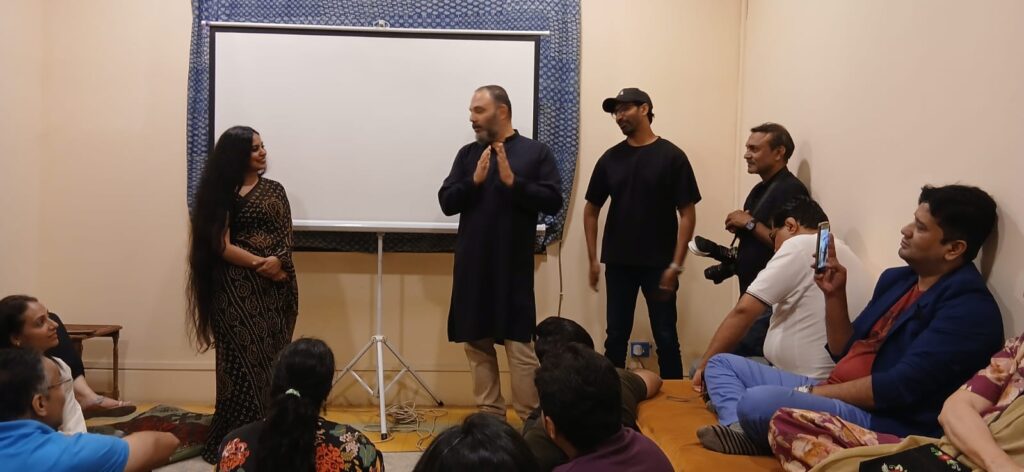
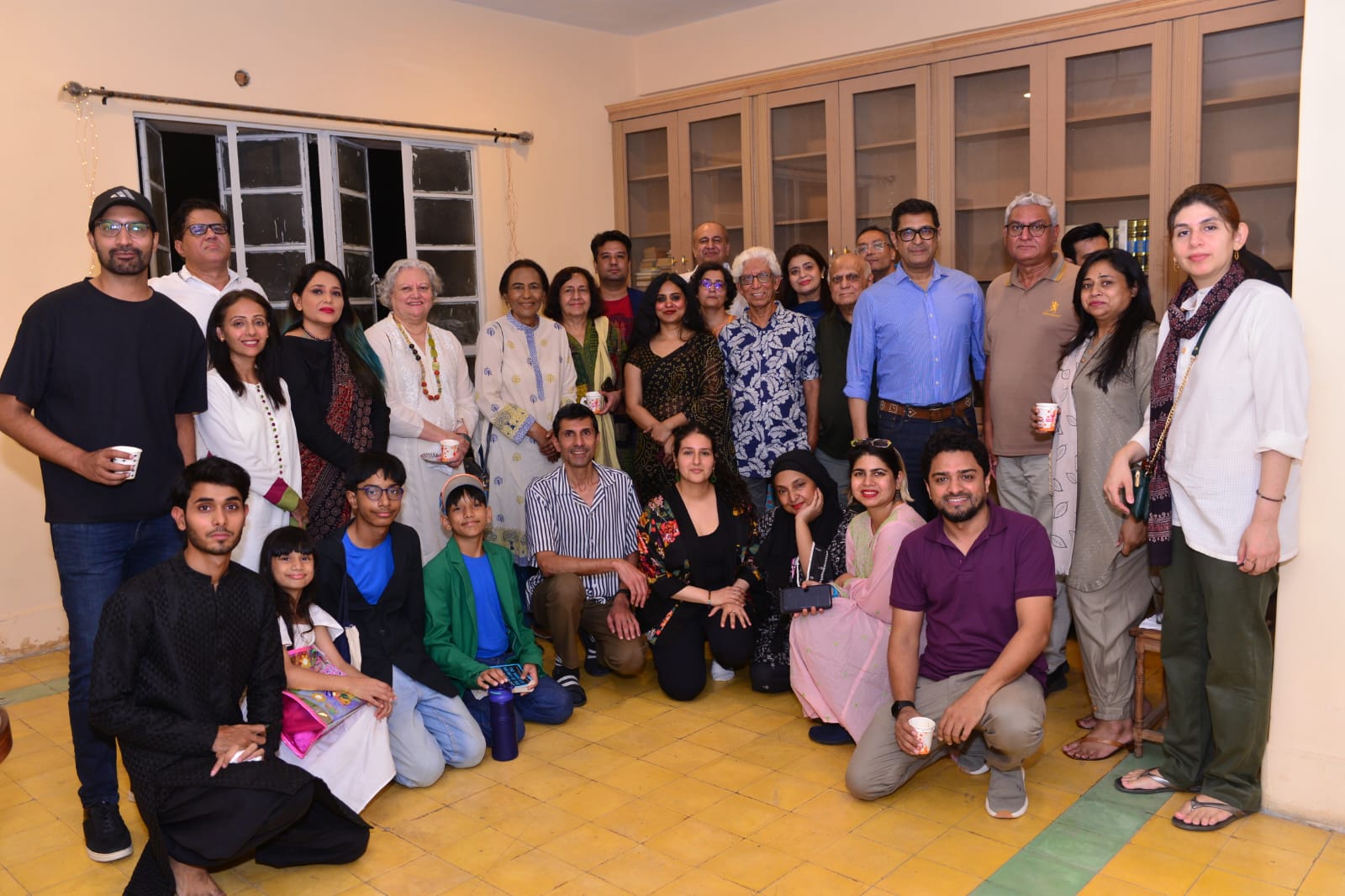
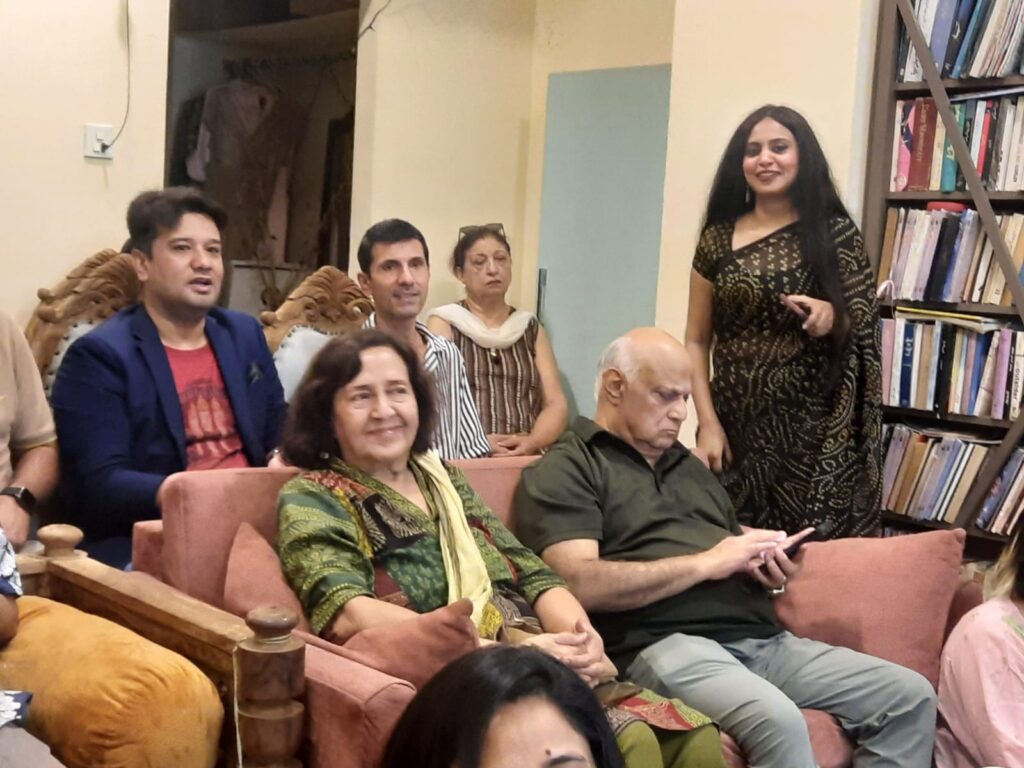
It was here, on a Sunday evening, that Karachi hosted the Pakistan premiere of Crones: A Celebration, a feature documentary by Joshinder Chaggar.
Among those attending were Mahnaz Rahman, veteran journalist and women’s rights activist who led the Aurat Foundation in Sindh, and Ameena Saiyid, former managing director of Oxford University Press Pakistan, director of the Adab Festival and founder of Lightstone Publishers.
The audience also included figures from the worlds of film, art and literature, among them Jami, Saima Saleem, Mahera Omar, Aquila Rehman, Niilofer Farrukh, Ajmal Kamal, Talha Ahmed, Maria Rubab and Sobia Ali.
What unfolded on screen was a gentle but determined challenge to one of society’s most persistent assumptions: that a woman’s life has an age limit.
Somewhere along the way, an unwritten rule took hold that older women should retreat from public life, abandon their ambitions and accept that their most meaningful years are behind them. Their dreams are dismissed as unrealistic, their bodies judged against youthful ideals and their presence increasingly overlooked.
Crones challenges that expectation. Its makers describe the film as “a joyful and defiant celebration of ageing and visibility”.
Reclaiming the Word ‘Crone’
The title itself is an act of reclamation. In modern usage, “crone” often evokes the ugly, wicked old woman of fairy tales. Yet the word has also been associated with the wisdom and authority of older women. The film seeks to recover that dignity, turning a term of ridicule into a statement of identity and strength.
The prejudice at the heart of the documentary is known as ageism. It extends beyond individual insults or assumptions, shaping how people are perceived, treated and included in society.
The World Health Organization’s Global Report on Ageism, published in 2021 with other United Nations bodies, found that one in two people worldwide holds ageist attitudes.
For women, the burden can be especially visible. Grey hair and age may lend men an air of distinction, while women can face pressure to become less visible as they grow older.
In Pakistan, as in other parts of South Asia, older women are often valued as elders within families and communities, yet their individual ambitions and identities can receive less recognition. The film also explores a subtler form of prejudice: the internalised belief that certain dreams are no longer appropriate simply because of age.
Its message is not that ageing should be denied. Rather, it argues that growing older should not mean surrendering the right to ambition, creativity, pleasure or reinvention.
Three Women, Three Journeys
Filmed over five years, beginning in March 2020, the 67-minute documentary follows three women whose lives intersect through Bollywood dance and Melbourne’s independent theatre scene.
Its observational style allows their experiences to unfold gradually, without forcing them into neat lessons. As one woman pursues a long-held ambition, her determination inspires those around her to reconsider what might still be possible.
Karin Kuusk, 72, is an amateur Bollywood dancer who has carried a childhood dream of visiting the Taj Mahal. When the film first encounters her, the journey seems distant.
Through weekly dance classes and the friendships formed there, Kuusk gradually regains her energy, confidence and enthusiasm. In October 2023, well into her seventies, she finally travels to India to see the monument.
Her journey provides some of the film’s most moving moments, capturing both the difficulties and the exhilaration of pursuing a dream long postponed. The filmmakers present her experience as a reminder of “the power of a dream, at any age”.
Natalie Gamsu, 62, brings a different perspective. An experienced performer, she was born in Namibia and trained in drama at the University of Cape Town. She built a following in South Africa through solo cabaret performances before spending a decade in New York, singing at venues including the Oak Room and the Russian Tea Room. Her work earned her a Backstage Bistro Award and a MAC Award for Outstanding Female Vocalist.
Her career in Australia has included appearances in Mary Poppins, Barrie Kosky’s Women of Troy and Baz Luhrmann’s Strictly Ballroom. She has also appeared in the television soap Neighbours and the film Ali’s Wedding.
Despite that experience, acting opportunities become harder to secure as she enters her sixties, reflecting an entertainment industry in which older women often struggle to find roles.
Gamsu responds by creating her own opportunity. Rather than waiting for someone to cast her, she writes and stages a one-woman show, transforming her frustration into a creative statement. The documentary follows the production from its early development to opening night, capturing her humour, determination and questions about identity and self-worth.
Her story challenges the idea that a woman’s professional life must diminish as she grows older.
A Dance Class That Becomes a Community
Around Kuusk and Gamsu is a lively group of older women who attend a Bollywood dance class in Melbourne.
Often dressed in bright Indian costumes, the women meet weekly to dance, exercise and enjoy one another’s company. Their energy and exuberance challenge familiar images of older women as frail, withdrawn or uninterested in new experiences.
In unhurried conversations, they discuss the word “crone” and consider what it might mean to claim it for themselves. The camera observes them in class and backstage, capturing the small acts of affection and support that sustain their friendships.
These moments give the film much of its warmth. The women are not presented simply as examples of ageing well; they emerge as individuals with humour, anxieties, aspirations and complicated lives.
Together, their stories question three familiar stereotypes: that older women are necessarily fragile, that their dreams have expired and that public performance belongs primarily to the young.
The Filmmaker’s Own Story
The final thread of the documentary belongs to Chaggar herself.
In her late forties, she pursued her long-held ambition to make a feature film. Her decision to undertake the project becomes part of the documentary’s wider argument: the freedom to begin something meaningful should not depend on being young.
Born in India and raised in Nigeria and Australia, Chaggar previously lived and worked in Karachi. She taught movement at NAPA and choreographed television and music videos, including Zeb and Haniya’s Aitebar.
Her work has centred on storytelling, women’s empowerment, humour and challenging restrictive labels. She has spent two decades working in dance and theatre and has engaged with older communities since 2018. She recently completed a PhD focused on intercultural identity and storytelling.
Her earlier short documentary, More Than Cute, explored the same Bollywood dance class. It won Best Documentary at the Reel Sisters of the Diaspora Film Festival in New York in 2022 and was selected for festivals in Melbourne, London, Mumbai, Karachi, Lahore and Islamabad.
Crones: A Celebration marks her first feature documentary. Chaggar directed, produced and filmed the project herself. Its creative team includes executive producer Jan Allan, editor Lucy Paplinska, creative producer Erika M. Martinez, Emmy-winning impact producer Jackie Turnure, composer Thomas “Soup” Campbell and Pakistani documentary filmmaker Tazeen Bari as consulting editor.
The film’s personal and professional dimensions come together in Chaggar’s decision to make a feature about women who refuse to be defined by the limits others place on them.
Cinema as a Space for Change
Film, art and theatre can make social assumptions visible in ways that direct argument sometimes cannot. Crones: A Celebration uses colour, music, movement and intimate observation rather than lectures to explore the costs of ageism.
Its stories move between humour and vulnerability, allowing audiences to laugh with the women, share their disappointments and recognise the familiar anxieties beneath their individual experiences.
The result is a documentary that treats older women not as symbols of decline, but as people still creating, changing, dreaming and discovering new possibilities.
That message felt particularly resonant at Theakada, a space built around the belief that art can create room for ideas and voices that might otherwise go unheard.
As the audience left the old house and descended its stairs into Karachi’s restless streets, the film’s central thought remained: a woman’s dreams do not come with an expiry date.