Unitree has priced its Shanghai initial public offering at 150.8 yuan per share, with subscriptions set to begin on Monday as the Chinese robot maker targets 6.1 billion yuan ($904 million).
World Liberty Trump-Linked AI Financial Sells Canadian Unit to PrimeDelta
The listing could make Unitree the first mainland-listed manufacturer of humanoid robots. The company has emerged as one of China’s leading robotics firms and is helping drive a wave of potential listings in the sector.
From robot dogs to humanoids
Engineer Wang Xingxing founded Unitree in Hangzhou in 2016. The company initially gained attention for producing relatively affordable quadruped robots, widely known as robot dogs.
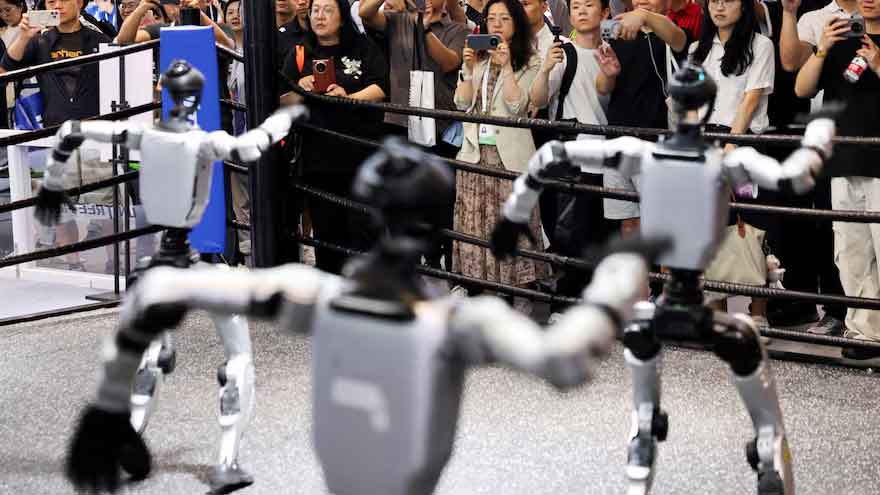
Unitree later expanded into humanoid machines. Its G1, H1 and R1 robots have attracted global attention through demonstrations featuring running, dancing and martial arts.
The company competes with Tesla, Boston Dynamics and several Chinese startups developing robots for potential use in factories and homes.
Unitree’s revenue more than quadrupled in 2025, reaching nearly 1.7 billion yuan. Unlike many humanoid robot startups, the company is already profitable. It reported adjusted net profit of about 600 million yuan.
International markets also play an important role. Overseas sales accounted for more than 40% of revenue during each reporting period disclosed in the company’s prospectus.
Why Unitree matters
Unitree has demonstrated China’s ability to manufacture advanced robots at comparatively low prices. The company benefits from China’s extensive supply chains for motors, sensors, batteries and other key components.
Moreover, Unitree has become part of Beijing’s broader push to lead the field of embodied intelligence. The emerging technology combines artificial intelligence with machines that can understand and interact with the physical world.
However, Unitree’s commercial progress does not yet prove that humanoid robots can replace human workers on a large scale.
At present, universities and government-backed projects account for much of the demand. These customers mainly use robots for education, research and demonstrations.
Humanoid machines also face significant challenges. Reliability, dexterity and the ability to perform varied tasks for extended periods remain major hurdles.
Why robot makers want listings
Developing humanoid robots requires substantial investment. Companies must spend heavily on engineers, training data, AI models and manufacturing capacity.
At the same time, widespread demand from factories and households remains uncertain. Public listings can therefore provide robotics companies with capital to expand research, production and commercial operations.
Unitree’s planned Shanghai IPO reflects the growing investor interest in China’s robotics industry. Its listing could also provide a major test of market confidence in the country’s ambitions to become a global leader in humanoid technology.