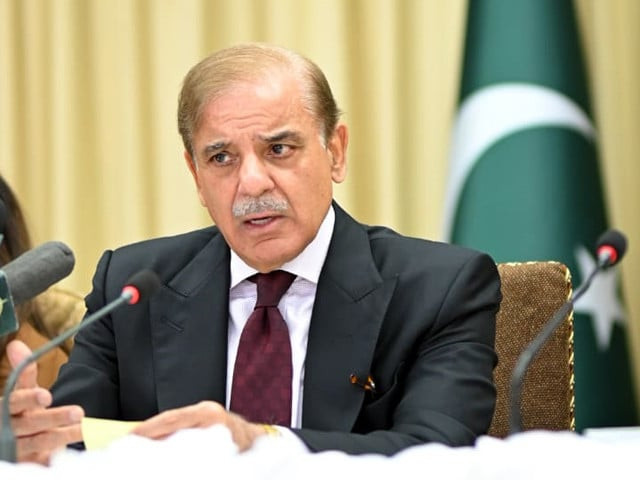
Prime Minister Shehbaz Sharif has accused successive PTI-led governments in Khyber Pakhtunkhwa of neglecting public services, questioning their performance in education, healthcare, policing and counterterrorism during 13 years in power.
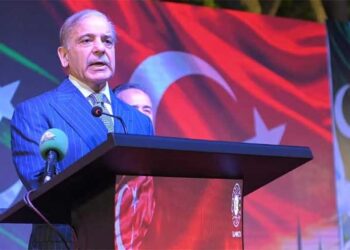
Addressing a meeting of the Pakistan Muslim League-Nawaz (PML-N) parliamentary party and office-bearers from Khyber Pakhtunkhwa, Shehbaz Sharif criticised the provincial government’s priorities and said political slogans and confrontational politics had taken precedence over public service delivery.
The prime minister questioned how many universities and hospitals had been established in the province during the PTI’s tenure.
He said public services had remained neglected across Peshawar, Kohistan, Hazara and southern districts, adding that delays in decisions on public issues could have caused serious consequences.
Shehbaz Recalls PTI’s 2014 Islamabad Sit-in
The prime minister also criticised PTI’s protest politics, recalling the party’s 2014 sit-in at Islamabad’s D-Chowk.
He said the protest disrupted preparations for the planned visit of Chinese President Xi Jinping, which was subsequently postponed. Xi visited Pakistan in April 2015, when the two countries signed major agreements.
World Culture Festival Karachi 2026 Opens with Artists from Around the Globe
Highlights Sacrifices in War Against Terrorism
Shehbaz Sharif acknowledged the sacrifices made by the people of Khyber Pakhtunkhwa, the armed forces, police and other citizens in the fight against terrorism.
Referring to the Army Public School (APS) attack in Peshawar, he described the killing of students and teachers as a tragedy that continued to pain the nation.
The prime minister said Pakistan had lost approximately 80,000 people during the war against terrorism and suffered economic losses estimated at between $150 billion and $200 billion.
He credited the combined efforts of the public, armed forces and police with bringing terrorism under control by 2017–18.
However, he attributed the resurgence of militancy to the return and resettlement of terrorists from Afghanistan during 2019 and 2020.
Shehbaz said thousands of civilians, police personnel and military personnel had been killed in attacks over the past two and a half years.
He added that the federal government had repeatedly called for a united response to terrorism, but its appeals had not received the necessary support.
Questions Use of NFC Funds and Police Resources
The prime minister also questioned how Khyber Pakhtunkhwa had used additional financial resources received under the National Finance Commission (NFC) Award.
He said the province had received an additional one per cent share under the NFC arrangement and claimed that its cumulative receipts had reached Rs800 billion.
Shehbaz asked how many Safe City projects the provincial government had established with these funds and whether it had adequately strengthened the Counter-Terrorism Department (CTD).
He further claimed that around 5,000 police positions remained vacant. He argued that provincial resources should have supported recruitment, modern weapons and improved training for law enforcement personnel.
Credits Nawaz Sharif for Addressing Energy Crisis
Shehbaz Sharif credited former prime minister Nawaz Sharif with addressing Pakistan’s prolonged electricity crisis, saying power outages had previously lasted up to 20 hours a day in some areas.
He praised Nawaz Sharif’s efforts to overcome the energy crisis and also acknowledged the role of political and military leadership in efforts to stabilise the economy.
The prime minister recognised that international developments and the Gulf conflict had contributed to a significant rise in energy prices.
His remarks covered provincial governance, counterterrorism, financial accountability and economic challenges, while renewing his criticism of PTI’s record in Khyber Pakhtunkhwa.