Pakistan has approached the United Nations Security Council again, urging it to call on India to fully implement the Indus Waters Treaty (IWT) and comply with decisions issued by the Permanent Court of Arbitration (PCA).
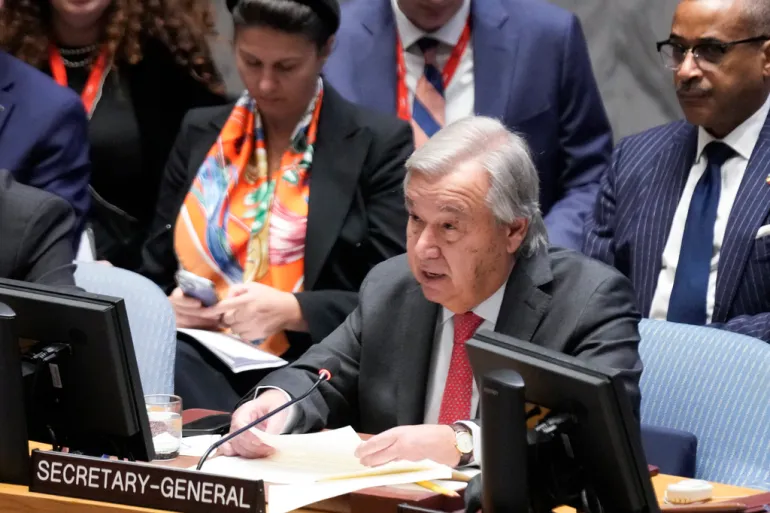
In a letter to UN Secretary-General António Guterres, Deputy Prime Minister and Foreign Minister Ishaq Dar warned that any attempt to stop, divert, restrict or otherwise interfere with water flows allocated to Pakistan under the treaty could have humanitarian, economic and security consequences.
The letter marks Pakistan’s latest diplomatic effort to draw international attention to the dispute over the treaty. UN records show that Pakistan has repeatedly raised concerns over India’s position on the IWT at the Security Council.
Dar referred to the PCA’s August 31 ruling, which Pakistan says reaffirmed that the Indus Waters Treaty remains in force and binding on both countries. Pakistan’s Foreign Ministry has said the ruling rejected India’s unilateral attempt to place the treaty in “abeyance” and confirmed that the treaty’s dispute-settlement mechanisms remain operative.
The letter also referred to interim measures concerning construction work at the Ratle Hydroelectric Plant in Jammu and Kashmir. Pakistan said the court had restricted India from completing specified portions of the dam and power-intake structures until 90 days after the neutral expert issues a final determination on whether the project’s design complies with the treaty.
Tarar Warns Pakistan Will Respond to Attempts to Destabilise Country
According to Pakistan’s submission, the neutral expert’s final decision is expected in July 2027.
Pakistan told the UN that the Indus Basin is critical to the country’s population, agriculture, food security, economy and environmental sustainability. Islamabad argued that interference with treaty-based water flows could therefore have consequences beyond the bilateral dispute.
Dar urged the Security Council to call on India to comply with the treaty and arbitration decisions, resume treaty-mandated cooperation and information sharing, and refrain from measures that Pakistan considers inconsistent with its obligations.
Pakistan also warned that allowing a state to disregard treaty commitments on political grounds could undermine confidence in other transboundary water agreements and weaken the broader international legal framework.
The letter said Pakistan had exercised restraint since India announced its decision to place the treaty in abeyance and remained committed to dialogue and the peaceful resolution of disputes.
At the same time, Pakistan reiterated a position previously expressed by its National Security Committee that any attempt to stop or divert water allocated to Pakistan under the treaty would be treated as an act of war. A similar position appears in Pakistan’s official communications to the UN.
Pakistan also raised concerns over what it described as ongoing treaty violations and construction of projects, including diversion canals, and asked the Security Council to take action under its responsibility for maintaining international peace and security.
The dispute has intensified since India announced in April 2025 that it was placing the Indus Waters Treaty in abeyance. Pakistan has rejected that move, maintaining that the treaty does not provide for unilateral suspension. The treaty itself was concluded in 1960 and registered with the United Nations.
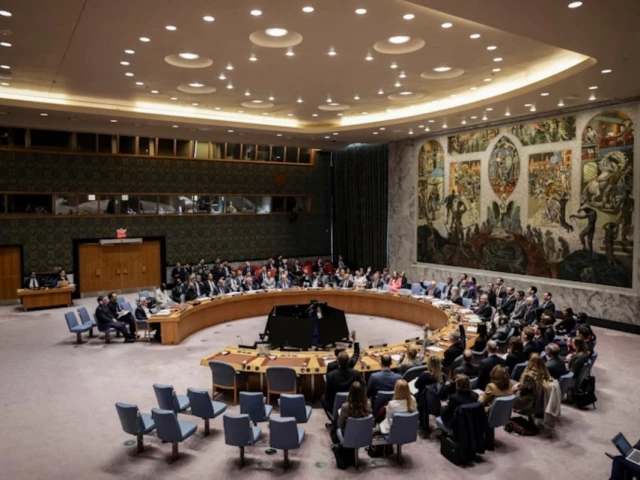
Pakistan requested that Dar’s latest letter be circulated as an official document of the Security Council under the agenda item “The India-Pakistan Question.”